
Language and Truth
Many songs have been written about language. One begins, 'Oh merciful heart, you know so many fine things — is there anything finer than language?'
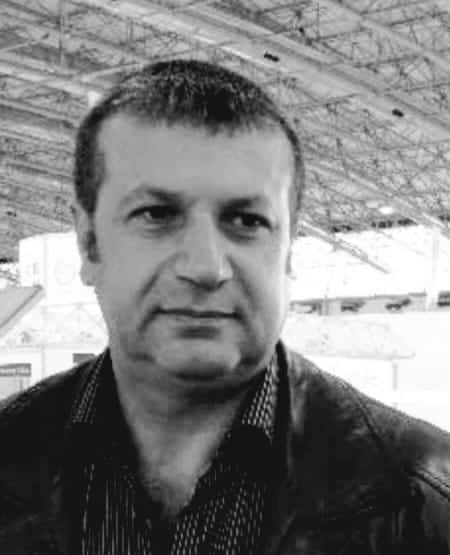
RastinewsMany songs have been written about language. One begins with the line “Oh merciful heart, you know so many fine things — is there anything finer than language?” And speaking of truth: over the years I have heard many sayings from my elders, among them “the elders say truth is the milk of God; the elders say truth is bitter; the elders say truth pleases no one. ” Language builds a nation, and a nation builds a homeland. Unfortunately, over the past thirty years the Kurdish language — particularly in North Kurdistan — has been under sustained assault and stands at real risk of disappearing. That is why the truth about language must be told, and why a thorough debate on the Kurdish language is needed. For me, the existence of Rastî offers a chance to speak about the damage being done to the language, to trace the causes of its decline, and to set out my own criticism and proposals. I also want to point to certain features of Kurdish and the harm being done by the work carried out on it. The present situation calls for a broad and detailed debate on language.
First, my greetings to the founders, staff and readers of Rastî. In the past I wrote on various subjects for a number of magazines. For a long time now I have been writing novels, poetry and magazine pieces, so I know well the difficulties of writing in Kurdish.
I have also spent a long time reading Kurdish books, to see how each writer uses the language — for every author who writes in Kurdish, I read at least one of their books. Sometimes the style of a book's language leaves me short of breath. There are times I put a book down and never finish it. Instead of writing in plain, orderly language, many authors write in a forced style, with twisted sentences and needlessly heavy prose. That, too, is a subject worth its own debate.
I have read mostly books written in the Kurmanji and Sorani dialects. Unfortunately, beyond the dangers facing the language itself, the efforts and initiatives meant to address them are themselves confused and tangled. That confusion is as dangerous as the threats to the language. Seeing this, I regard writing about language as a duty I cannot avoid.
As noted, language builds a nation, and a nation builds a homeland. Language gives people shared feelings, emotions and affections. Kurdish has been spoken for thousands of years, and across the depths of history it developed on its own, without deliberate cultivation, taking hold across a varied geography among the Kurdish people and advancing day by day. Kurdish has become an ocean of words, the language of a rich and golden culture. It has left a considerable mark on the languages of neighboring nations.
Unfortunately, Kurdish has never become an official language throughout history. Every effort made on its behalf has come from those devoted to it and who cherish it. Under the Ottoman state, Kurdish was used devotedly and selflessly in Kurdistan's madrasas by religious scholars and teachers, and instruction was carried on in it there. But unfortunately, when those devoted defenders of the language wrote, their usage fell under the influence of the official languages of the time. As a result, the Kurdish works created and printed in that era do not match the language as it is actually spoken and used by dengbêj. In their writing, they used foreign words and borrowed the grammar and conventions of neighboring nations' languages and of the ruling power's language. In my view, if work is to be done on the language, more weight should be given to the speech of the dengbêj than to works created and printed across the depths of history. That alone is a subject that deserves its own writing and debate.
Until the last century, Kurdish was written in Aramaic script. In the last century, the late Celadet Bedirxan worked on the Kurdish language and introduced the Latin alphabet. At that time, the newspaper Hawar used Kurdish in Latin letters, and through its continued publication, corrections to spelling were made. In the same period, among the Kurds of the Caucasus, writers such as Erebê Şemo wrote novels in the Cyrillic alphabet, and intellectuals of that region published the newspaper Riya Teze.
In this piece, I want to name the dangers facing the language one by one, and in future writing I intend to treat each danger and each source of confusion separately, as its own detailed subject. In my view, the central misfortune is statelessness and the absence of political authority. Looking back through history, when Kurdish emirs held power and their rule was strong, Kurdish was used as the language of instruction in the madrasas under their authority, and the language flourished — literary works were produced.
Statelessness and the lack of political authority are why we remain without a common language. The protection, development and standardization of a language are carried out by institutions and committees established by a state, and are run with state backing. Success and progress in language do not come from individual efforts alone — they only add to the confusion. In this world, statelessness is the greatest form of dispossession. The absence of Kurdish-language education, and the fact that Kurdish is not an official language, poses a grave danger to it. Given how far technology has advanced in our era, if a language is not made official and is not taught in schools, its disappearance becomes all but certain.
For centuries now, Kurdish has never been an official language. With the partition of Kurdistan, the occupying powers banned the Kurdish language for a hundred years. There is no doubt that a language spoken for thousands of years will endure, and will still be spoken thousands of years from now. But in North Kurdistan there is a serious danger of the language disappearing, because in the villages and towns of North Kurdistan our people increasingly speak Turkish instead. In the days ahead, we will make the question of a common language, and the influence of political power over language, a subject for further writing and debate.
The other dangers are social in nature and fall into two main categories. The first concerns speech and everyday use of the language. The second concerns standardization and spelling. Under these two main headings, we can further break things down into separate points.
The first danger : speech and use of the language.
- In North Kurdistan especially, the Kurdish people's indifference toward their own language has grown severe, to the point of becoming almost a psychological affliction.
- Over the past thirty years, the pronunciation of Kurdish on social media, on television and in videos has grown careless.
- Across all four parts of Kurdistan, foreign words are used in everyday speech, and vocabulary is vanishing from people's minds.
- People speak with Kurdish words but with the mindset of dominant languages, mimicking the languages of neighboring nations.
Standardization and spelling
Standardization and spelling in newspapers and magazines over the past thirty years have dealt the greatest blow to the Kurdish language.
- In each region of Kurdistan, writing follows local dialects and accents.
- Correct spelling has been left to the discretion of individual publishing houses.
- No official, common body has established a standard, and this has had a harmful effect on the language and on word usage.
- There is a lack of Kurdish-language software in modern technology.
- The language is left without oversight, without regulation, and without anyone taking responsibility for it.
Beyond these problems, there are many other dangers and points of confusion. We will examine them in detail in future writing.
The problems, difficulties and dangers set out above will be the subject of my future writing, along with many other issues concerning the Kurdish language. In this first piece, I did not want to tire or overburden the reader. In each column, I intend to lay out the problems and dangers facing the language briefly and clearly, and present them to Rastî's readers.
Once again, my regards to the founders, staff and readers of Rastî, along with my wishes for its continued success.
The views expressed here are the author's own; they may or may not coincide with the editorial line of Rastinews. Rastinews is a free platform open to differing views.