
Veysi Dağ in Jerusalem Post: Kurds should not be leverage against Ankara, Tehran
🔶 Veysi Dağ, a researcher at Tel Aviv University's Moshe Dayan Center, has urged Israel in a Jerusalem Post op-ed to turn its relationship with the Kurds into an institutional partnership. Dağ wrote that Reza Pahlavi-aligned monarchists are working to drive a wedge between the Kurds and Israel.
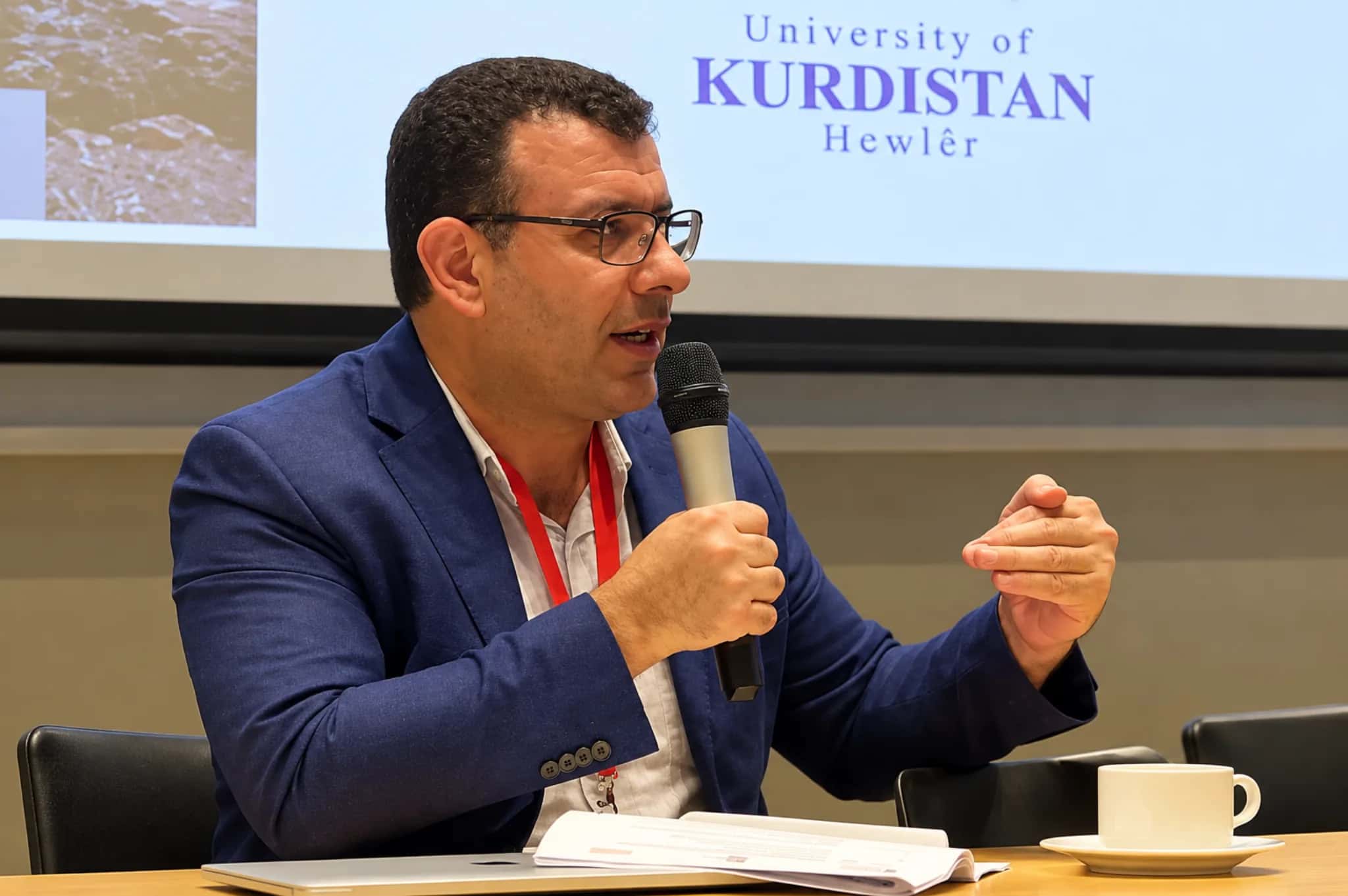
RastinewsVeysi Dağ, a researcher with the Kurdish Forum at Tel Aviv University's Moshe Dayan Center, argued that Israel must stop treating the Kurds as a temporary ally.
Kurdish demands, Dağ wrote, have long been dismissed as a permanent strategic commitment and instead used as a convenient talking point against Ankara and Tehran.
Sa'ar's message and a call to Netanyahu
Dağ said Israeli Foreign Minister Gideon Sa'ar's message to the Jewish-Kurdish conference held in London on September 6-7 marked the first time the Kurdish-Jewish relationship had been explicitly elevated to a strategic level.
In his video message, Sa'ar said the Kurds are a people divided among four countries who have yet to achieve political independence.
For that stance to translate into lasting trust, Dağ wrote, Prime Minister Benjamin Netanyahu must personally endorse Sa'ar's position and institutionalize it as government policy.
Criticism of monarchists and Turkish media
Dağ said the sharpest backlash to the conference came from Turkish media and Reza Pahlavi-aligned monarchists, who he said spread distorted narratives about the Kurds.
According to Dağ, the monarchists use the charge of "separatism" to delegitimize Kurdish autonomy. He said these accusations, along with the attacks on Sa'ar, amount to a deliberate attempt to drive Kurds and Israel apart.
Dağ added that this stance also divides the Iranian opposition and shields the regime.
From Mahabad to Jina Amini
The op-ed recalled that the Pahlavi dynasty's policy of centralized Persian nationalism suppressed minorities, the Kurds foremost among them. Dağ wrote that in 1946, Mohammad Reza Pahlavi's government crushed the Mahabad Republic of Kurdistan and executed its leading officials.
Kurds have remained a primary target of the Islamic Republic since 1979, Dağ said, pointing to Jina Amini's death in the custody of Iran's morality police as emblematic of that repression.
Dağ also said that since the war that began on February 28, Iran's regime has killed more than 100 Kurds, most of them civilians, and wounded more than a thousand.
"Kurdish parties favor a federal Iran"
Dağ said Kurdish political leadership seeks a democratic, decentralized, federal Iran rather than unilateral secession. Parties in this camp include the Kurdistan Democratic Party of Iran (KDP-I), PJAK, Komala and the Kurdistan Freedom Party (PAK).
At a panel held at the Moshe Dayan Center, the op-ed noted, representatives of Kurdish parties said they were ready to work with "transformative powers," including Israel and the United States, on regime change and democratization.
Second conference in the London series
The London conference, titled "Jewish-Kurdish Relations in a Changing Middle East," was organized by the Jewish Kurdish Network, with the Kurdish Studies Program at the Moshe Dayan Center among the co-hosts. The first meeting in the series was held in Berlin on September 7, 2025.
In his inaugural speech as foreign minister in November 2024, Sa'ar had described the Kurds as Israel's "natural allies."