
Remazan Bakur: Occupation and Language
Throughout history, occupiers have targeted the language of the peoples they subjugated — banning their tongues and imposing their own in its place.
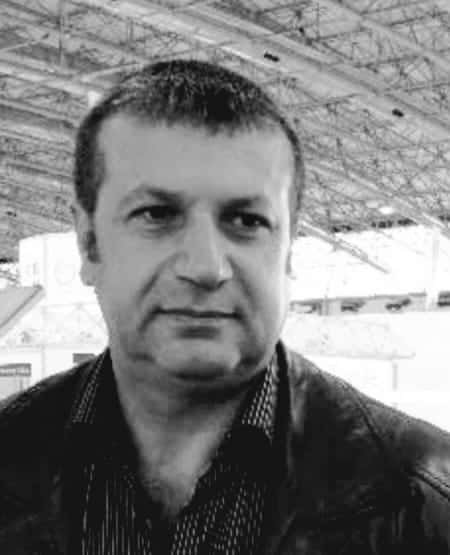
RastinewsThroughout world history, occupiers have always made the language of subjugated nations their target. They have banned languages and imposed their own tongue on the peoples they ruled. Today, countries around the world officially recognize invented languages, imposed languages and natural languages side by side. Among many nations, the official language is not their own natural one. Multinational states often contain several distinct languages, while many nation-states elsewhere still speak their own natural tongue. It is a source of sorrow that in some countries the official language is that of the occupier and its exploiters. Yet despite all this injustice, life goes on.
In pre-Christian history, in the Middle East, the Assyrian state was the first to ban the languages of the nations it brought under its rule. It deported the peoples it subjugated and turned their cultural and religious sites into centers of its own culture and belief. One example is the Deyrulzafaran Church in Mardin; another is the Deyrulumur Church — known in Syriac as the Mor Gabriel Monastery — in the Hezex (İdil) district of Şirnex (Şırnak). Before Christianity, both churches were sites of sun worship, centers of the Zoroastrian faith, and their basements still hold chambers built for greeting the dawn. Once in power, the Assyrians turned these sites into centers of their own belief. They remain in use today as churches and monasteries, and have become well-known tourist attractions.
From that era to this day, occupiers have banned the languages of the countries they occupied and forced their own upon them — just as the occupiers of our own occupied homeland ban our language today. But despite all this injustice, no ancient language has vanished, nor will it. Languages have always resisted, and continue to resist, just as we resist for our language today. However much pressure and threat hang over our language in North Kurdistan, it will not die — it will endure. It is spoken across four states and in many parts of the world, and it is used to produce literary and scholarly work.
Let me give a few examples of countries where the official language is not the people's own, but that of the occupier and its exploiters. In most African states, English, French and Portuguese are the official languages. Britain, France and Portugal imposed their languages on African countries during the era of colonialism. In Nigeria and Ghana, for instance, the official language is English; in Senegal, it is French; in Mozambique, Portuguese. Yet in these countries, people still speak their own original languages. In India, too, English remains in official use.
The world also has modernized and constructed languages. Most modernized languages belong to European countries, whose language institutions have worked to make them lighter and simpler to use. As for constructed languages, two examples come from the Middle East: Persian and Turkish, both built from the languages of surrounding peoples. Persian, in terms of vocabulary, was formed from three languages — Kurdish, Arabic and Turkmen. Turkish, too, was built from Kurdish, Arabic and Turkmen. Especially after the founding of the Turkish state, the Turkish Language and History Institution (Türk Dil ve Tarih Kurumu) worked on the language and shaped the Turkish spoken today.
Looking at the history of literature, no literary works were produced or published in today's Turkish. In the Ottoman era, a distinct language was used for literary work. Writers such as Nefî, Nabî and Bakî all wrote in that language, which is known today in Turkey as Ottoman (Osmanlıca). Readers in Turkey today cannot understand that Ottoman language.
It is a matter of pride that we Kurds produced literary work in our own language in past eras, and today, without a state, we still produce and publish literary work in our language. Among our people there remains a strong will to protect and use the language. Our nationalists place great value on speaking and preserving Kurdish. I believe — and hope — that Kurdish will become an official language in the future.
The views expressed here are the author's own; they may or may not coincide with the editorial line of Rastinews. Rastinews is a free platform open to differing views.