
PJAK on PKK's Dissolution: 'It Doesn't Bind Our Party'
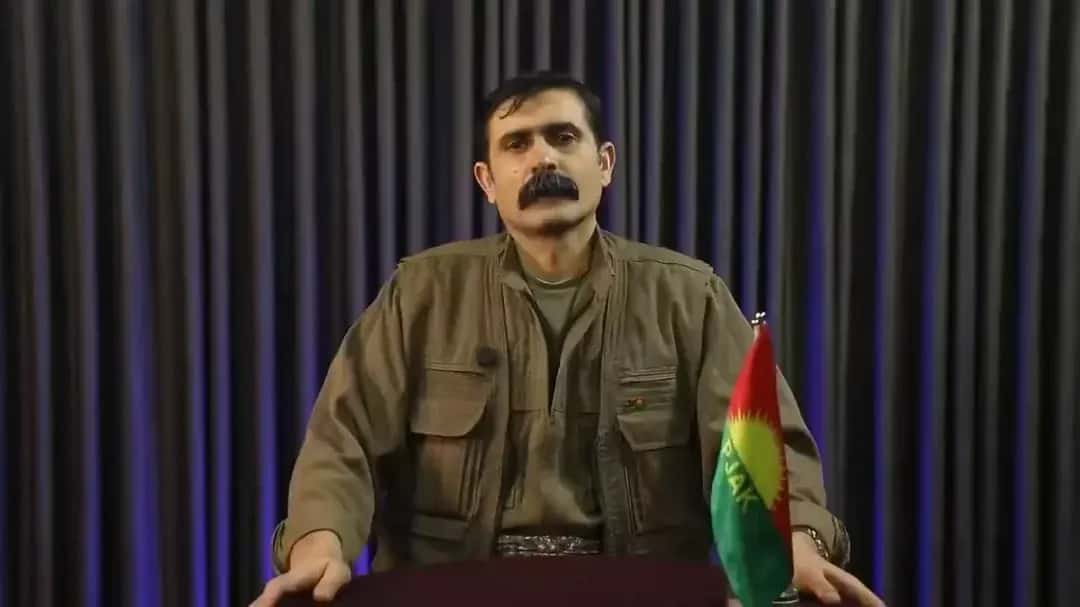
RastinewsThe Kurdistan Free Life Party (PJAK), known for its activities in Rojhilat, says the dissolution of the PKK has no direct connection to the group.
PJAK (Partiya Jiyana Azad a Kurdistanê) spokesperson Rêwar Avdanan acknowledged the party's ideological closeness to the PKK, but insisted it is politically and organizationally independent. He said PJAK would consider a similar process if Iran launched a genuine democratic transition.
In remarks to The Amargi, Avdanan said the PKK's dissolution has no "direct connection" to PJAK, and that the party would welcome a similar move if Iran proposed a genuine democratic process.
On August 10, the Turkish Parliament passed a 12-article law titled the "Law on Strengthening National Solidarity and Social Integration." The law calls for disarming organizations "linked" to the PKK. That wording raises a question beyond Turkey's borders: how far will the category of "PKK-linked" organizations be stretched? The Iran/Rojhilat-based Kurdistan Free Life Party (PJAK), often described by governments and analysts as a PKK offshoot, rejects that label.
Rêwar Avdanan, a member of PJAK's Executive Council and its spokesperson, said the law passed in Turkey has no "direct connection" to his organization.
PJAK is an Iranian Kurdish political and armed organization operating mainly in Rojhilat. Its program states that it is ideologically aligned with Abdullah Öcalan's political philosophy. Active militarily since the 2000s, PJAK demands political and cultural rights for Kurds in Iran.
Kurdistan Free Life Party (PJAK): 'We Are Not a Branch of the PKK'
Against assessments that cast PJAK as the PKK's Kurdish extension in Iran, Avdanan maintains the group is politically and organizationally independent. Calling descriptions of PJAK as a PKK branch "false narratives," he stressed that the organization makes its own decisions.
"PJAK is an independent Kurdish political party operating in Rojhilat and Iran. The dissolution of the PKK/KCK has no direct connection to PJAK."
Avdanan did not, however, deny PJAK's link to Öcalan's political thought.
"In terms of worldview and the philosophy of struggle, PJAK believes in the ideas and roadmap of Önder Apo [Abdullah Öcalan]."
Avdanan said PJAK plans to pursue its struggle in Iran and Kurdistan through what he called "democratic politics," and that armed struggle would be confined to situations the organization regards as legitimate self-defense.
'The Process Should Not Be Seen as Disarmament Alone'
Avdanan said the initiative in Turkey should not be viewed merely as a technical disarmament process. In his view, the framework law can become a meaningful political opening only if it leads to a far broader transformation in Turkey.
"The framework law is an important step in the change and transformation under way in Turkey and Kurdistan, but it remains inadequate and carries serious shortcomings."
For Avdanan, the core question is whether Turkey can overcome a political impasse nearly a century old and move the Kurdish issue out of the realm of security policy and onto legal and political ground.
Avdanan argued this cannot be achieved through the dissolution of an armed organization alone. He said it requires legal recognition of Kurdish identity and political status, constitutional reform, and a transition to what he called a "democratic republic."
If such a transformation takes place, Avdanan said, Kurds would no longer be viewed as a regional "pressure card," and Kurdistan could become "a corridor and bridge linking democracy across the Middle East."
But Avdanan warned that disarmament would not be permanent if Ankara continues to treat the Kurdish issue primarily as a security problem.
Claim: PKK Members Will Join PJAK
The PKK's possible dissolution also raises the question of what happens if members are unwilling or unable to return to Turkey. One scenario floated is that some members could join other Kurdish armed groups, including PJAK.
Avdanan rejected that assumption. He said a successful political process must be comprehensive enough to allow PKK members to return to Turkey and take part in political life.
"The idea here is not simply for people to passively go home. Rather, a new form of struggle will begin, one in which Kurds take part in politics not only in Kurdistan but at the center of Turkey."
PJAK to Maintain Presence in Rojhilat
While PJAK supports the possibility of such a transformation in Turkey, it is not signaling any short-term change to its own organizational or military presence.
Asked whether PJAK would maintain its presence in the Kandil Mountains after the PKK's dissolution, Avdanan gave a brief answer:
"We will continue our struggle in every area where our presence remains necessary."
According to Avdanan, PJAK's future will be shaped less by the PKK's dissolution than by political developments in Iran.
PJAK's armed struggle is directed mainly at the Iranian state. If the process in Turkey is understood as a shift from armed struggle to political negotiation, the question arises of whether PJAK would consider a similar move should Iran offer the same.
Avdanan did not rule out such a scenario:
"If the Islamic Republic of Iran were to make such a proposal, and if it showed genuine preparation, planning and serious will for fundamental change in Iran, and if we judged such a process to align with the interests of the Kurdish nation, we would examine it and act in line with our own roadmap, plans and program."
PJAK is not signaling that it would dissolve outright in exchange for negotiations. Avdanan tied any such possibility to fundamental democratic change and to the recognition of Kurds' political, cultural, economic and social rights.
"If such a democratic and political resolution process begins in Iran, we would welcome it. But unlike in Turkey, no sign of such change has yet emerged in Iran."
Avdanan's remarks left unanswered the question of how Turkey will interpret the phrase "PKK-linked organizations" in the new law.
Source: Rûdaw