
Özel on framework law: 'How can we say no as PKK disarms?'
New Party leader Özgür Özel defended his party's "yes" vote on the disarmament framework law drafted under the peace process. Responding to critics, he said: "Those of us aspiring to govern the country —"
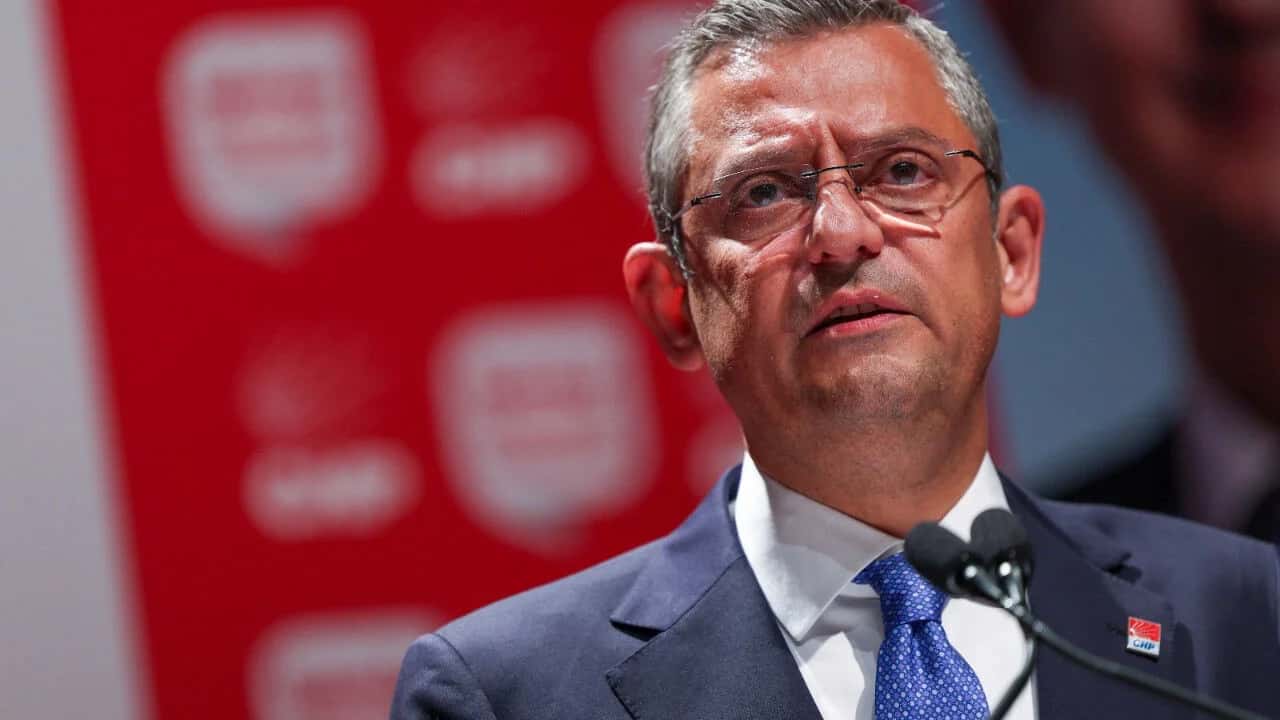
RastinewsNew Party leader Özgür Özel has defended his party's "yes" vote on the disarmament framework law drafted as part of the peace process. Responding to critics, Özel said, "We aspire to govern this country — how can we say 'no' to the PKK laying down its arms?" He stressed that his party's support for disarmament was a matter of principle. Özel said the process had so far left out its democratization component, adding, "We said 'yes' to ending terrorism and to disarmament. Now we will fight for democratization."
Özel spoke to Cumhuriyet. He addressed criticism of his party's "yes" vote on the framework law for what the government calls the "Terror-Free Turkey" process, the protests over the status rights of the families of the fallen and veterans, the operations against CHP-run municipalities, and the Mecca Agreement.
-There has been criticism of your party's stance on the framework law. How do you view this?
Our party's position is a matter of principle. For years we've wanted this issue resolved in parliament. A terrorist organization is laying down its arms. It looks like the fighting is over. Even the MHP, the process's fiercest opponent, has acknowledged this is a start. Those of us who aspire to govern this country — how can we say "no" to the PKK disarming? So on principle, we had to say "yes." History won't forgive standing against that. Of course, we understand the criticism. Mostly, people object that we said "yes" while so much harm has been done to us, while anti-democratic practices continue.
Everyone says "yes" to ending terrorism. But is this process sincere? They say "no." As people determined to govern this country, we have to act on principle, not emotion. This issue has a security dimension, a democratic dimension, and a development dimension. The development angle matters too. We believe democratization steps must be taken. We think this, above all, represents a development opportunity — because we've spent something like 2 trillion fighting terrorism, and there are gains we've missed out on because of it. A party that says "we will govern the country" needs to take the broadest possible view. But we told our MPs to weigh the sensitivities of their own provinces. They decided accordingly: 35 MPs voted "yes," 54 voted "no."
- Does that trouble you?
Not at all. If anything, I expected numbers close to these. Before the closed-door group meeting, I told our people, "Gather and write up the views of our 91 MPs." Then we held the closed session. I saw that opinions varied widely by region. Given that, I told them: "My commitment to you is a party without a leader's veneer, one that doesn't impose group decisions unless necessary, where everyone can do politics freely and we build policy together. Let everyone act according to the sensitivities of the people they represent." So I'm satisfied with the outcome. What came out of it is an important result the New Party's new style of politics has successfully weathered. Because everyone in the group says, "We made the right call." Both those who voted "yes" and those who voted "no" say, "The grassroots understood us."
"We were clear: we said we wouldn't go to İmralı — and we didn't"
- There's a public perception that "the New Party said yes to a government, an AKP project." Was this your own independent decision?
The idea of a commission was something we already supported. In the New Party's new politics, we call right "right" and wrong "wrong." Legislating on disarmament today is the right thing to do, and we had to say "yes" to it. But this is only the sixth section of the commission's report. The seventh section also has to be honored — that's where the removal of trustee appointments sits, along with fixes to the strange laws threatening journalism. We voted "yes" on ending terrorism and disarmament; now we'll fight for democratization. Could they walk away from it? They could. But we won't turn around later and say, "Oh no, the AKP fooled us, we shouldn't have said yes." In the first 150 days of our own government, we'll deliver that democratization package ourselves. We'll say, "The People's Alliance handled article 6, article 7 was left to the New Party." We don't take on things we don't believe in. And when we're in government, we would have pushed for the PKK's disarmament anyway. Here's something else I notice: the AKP had all sorts of calculations while doing this, which is why the process sometimes stalled. They went to İmralı — we didn't. They tried to hide their visits by saying, "We're just having him examined." They were sometimes secretive, sometimes sheepish. We were very clear. We said, "We'll join the commission" — and we did. We said, "We won't go to İmralı" — and we didn't. We voted "yes" on the report. We voted "yes" on principle on the law too, but out of respect for people's concerns, we left our group free to vote as they wished.
-You mentioned democratization steps. Could you elaborate? The DEM Party, for instance, frames "equal citizenship" as introducing ethnic elements into the constitution — education in one's mother tongue, removing the word "Turk." What do you mean by "democratization"?
We understand it within the framework of the report we submitted to the commission. Our own program already treats mother-tongue rights as a right. But we've said from the start that this shouldn't turn into a constitutional amendment. All the political parties said as much at the outset. I understand equal citizenship not just in ethnic and sectarian terms, but as economic equality, equal opportunity, and firm, meaningful intervention against the inequalities that exist today. Those who ought to be paying the most tax are paying just 11 percent of it — that, for instance, needs to be addressed. I understand it in the sense that the poor have a stake in the inheritances of the very wealthy. In the same way, I understand equal citizenship as Kurds and Alevis feeling they belong to this state. Beyond its ethnic and sectarian dimension, discussing the economic and sociological dimensions of equal citizenship is, in my view, the issue most likely to bind Kurdish youth to this state. I believe equal citizenship will be the guarantee of the unitary state — a conception of the state that leaves no one behind.
"Democratization runs through parliament"
- Terrorist ringleader Abdullah Öcalan has made several remarks that reached the public, including some about you and the statement "the road to democracy runs through İmralı, not Silivri." How do you read these?
The İmralı delegation never informed us of any such meeting. Nothing came through official state channels either. Things are leaking out from somewhere. We're at a point with high potential for manipulation. The İmralı delegation used to visit parties before; this time, after the August 1 meeting, it visited a few parties. They didn't request an appointment with us, and no one mentioned any of this to me. So I haven't put it on my radar. But broadly speaking, I route democracy through parliament, not through prisons or cities. It's not a matter of "not through this prison, through that place instead" — if we're to be a democratic republic, the road runs through the Grand National Assembly of Turkey, through the ballot box.
"Caught red-handed"
- After what emerged in the Etimesgut and Menderes municipalities, do you see the CHP — now under a leadership voided by the courts — as a partner of the People's Alliance?
We can see that the people still there are acting as enablers for the People's Alliance. But their presence hasn't delivered what the Alliance expected. They wanted to split the CHP down the middle like a watermelon. But as we've said, all they're left holding is the stem. What's happening in these municipalities amounts to being caught red-handed — it's plain to see what's what. Given how much public support we still command, I'd rather not spend much energy analyzing the conduct of an appointed leadership imposed on a party that was seized from us by force.
A call to Numan Kurtulmuş over fallen soldiers' families and veterans
- One of the hottest topics on the agenda is veterans. They were removed from Güvenpark, and some very ugly scenes emerged. What do you have to say about this?
The veterans and families of the fallen in this country don't deserve this. Neither veterans nor the families of the fallen are being looked after. Certain arrangements are being made regarding people convicted of terrorism offenses. In making these arrangements, they've produced only feeble measures that fail to meet the expectations of veterans and the families of the fallen. If terrorism is truly ending, then consider this: the group represented by the friends currently protesting numbers 6,000 people. They're being paid below minimum wage. They can't access any benefits. They're given the cheapest prosthetics available. If the army has moved toward professional soldiering, these demands amount to nothing within such large budgets. Yet they didn't act. The greatest obstacle to public support for arrangements made in hopes of ending terrorism is the images that emerge from situations like this. Every step taken without resolving the plight of someone who lost an arm or a leg fighting terrorism erodes public support for this process in the conscience of society. I'm calling on Numan Kurtulmuş. The Grand National Assembly needs to hear the voices of veterans. He needs to call the Assembly into an extraordinary session. A general debate can be opened; the relevant commission can convene. There are bills already submitted. We've submitted bills repeatedly. The Speaker of the Assembly, in his impartial capacity, should take this step.
- The Mecca Agreement matters for both domestic and foreign policy. It looks like a regional restructuring. At the same time, it appears to be a move away from the West. How do you assess it? You had called on the West, saying "Don't leave us alone." Has there been any response to that?
We're not calling on the West for our own sake. We're calling on them so that their relations with Turkey remain healthy. There can be no stability, no sustainable stability, with an undemocratic neighbor. Turkey needs to be invited onto democratic ground; principled alliances need to be built. Doing what Merkel did — "Take the Euro, keep the Syrians" — isn't a proper alliance. "You keep your power, I'll turn a blind eye to Turkey's anti-democratic developments" isn't a principled alliance either. They've dropped Turkey down a league. Do you ever hear the West criticize Egypt or Libya on human rights? They're in a different league. Turkey used to be in a league that faced criticism but was still part of the Western alliance. Now, alongside Tom Barrack, Turkey is being viewed as part of the Middle East. Europe, for its part, sees us as a buffer zone holding back migration. That's the real problem. In the past, states fought proxy wars through organizations. Now they're folding organizations into states — what's happening here isn't any different — and building teams across regions. They've made Turkey a team with Pakistan and Saudi Arabia. On top of that, they signed the agreement you mentioned. It's a single-page agreement, and the parties themselves say "there's no need for it to pass through parliament." Underneath, it states that "an attack on Saudi Arabia will be considered an attack on Turkey." There's no way an agreement like this can take effect without passing through parliament. It's an agreement shaped to Trump's liking, drawn up within the framework Barrack laid out, one that shuts out institutional politics and parliament. It also carries risks for Turkey's security. We are not a country that will strike a "a thousand kicks from me for anyone who kicks my brother" deal with Saudi Arabia and Pakistan just because it suits Trump's mood.