
Iraqi Hezbollah Sets Three Conditions to Disarm: US, Turkish Troops Out, Peshmerga Dissolved
The Iran-aligned Iraqi Hezbollah Brigades laid out their terms in the debate over bringing weapons under state control. The group demanded a full withdrawal of US and Turkish forces from Iraq and the dissolution of the Kurdistan Region's constitutional security force, the Peshmerga, while warning Prime Minister Ali Falih al-Zaidi's government that its patience is running out.
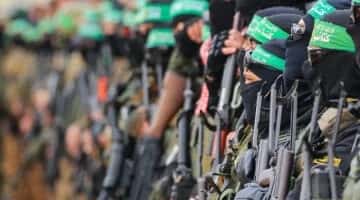
RastinewsThe Iran-aligned Iraqi Hezbollah Brigades have set three conditions for cooperating with Baghdad, as debate continues over confining weapons solely to state control. The group demanded a complete withdrawal of US forces from Iraq, an end to Turkey's military presence in the country, and the dissolution of the Peshmerga forces. It also delivered a pointed warning to the recently formed government of Prime Minister Ali Falih al-Zaidi: "Our patience is running out."
As debate continues in Iraq over consolidating weapons exclusively under state authority, the Iran-aligned Iraqi Hezbollah Brigades have put forward three conditions for cooperating with the Baghdad government.
Abu Mujahid Assaf, the group's security official, said in a statement that US forces must withdraw completely from Iraq, that the Turkish military's presence in the country must end, and that the Peshmerga forces must be dissolved.
The statement also contained sharp language directed at the government of Prime Minister Ali Falih al-Zaidi, who took office only recently.
First condition: a full US withdrawal
Iraqi Hezbollah's first condition is the complete end of the US military presence in Iraq.
The group said a withdrawal from bases alone would not be enough. It is demanding a total end to American military presence on Iraqi territory and in Iraqi airspace, along with guarantees that US forces will not return afterward.
The statement also called for Iraq's political and economic decisions to be freed from what it called "American hegemony."
The US military presence in Iraq has long been a central grievance for Iran-aligned Shiite groups. Iraqi Hezbollah regards the presence of American troops in the country as a violation of Iraqi sovereignty and ties the debate over its own weapons to that issue.
Second condition: Turkish forces must leave Iraq
Iraqi Hezbollah's second condition is directed at Turkey.
The group demanded that Turkish Armed Forces withdraw completely from Iraqi territory.
Turkey maintains numerous military positions inside Iraq, particularly within the Kurdistan Region, as part of its cross-border operations against the PKK. Ankara defends this presence as necessary for border security and the fight against the PKK, while Baghdad has in the past protested some operations as violations of its sovereignty.
Iraqi Hezbollah places the US and Turkish military presence under the same heading of "foreign forces."
Under the group's position, before Iraqi armed factions can be asked to hand their weapons to the state, foreign troops must first be removed from Iraqi soil.
The most striking condition: dissolve the Peshmerga
Iraqi Hezbollah's third condition concerns the Kurdistan Region directly.
The group said that in order to cooperate with Baghdad on disarmament and security matters, the Peshmerga forces must be dissolved.
This demand stands on different legal footing from the other two.
While US and Turkish forces are foreign military powers as far as Iraq is concerned, the Peshmerga is part of the Kurdistan Region's official security structure.
Article 121 of Iraq's 2005 constitution allows federal regions to form their own internal security forces. The constitution explicitly recognizes police, security forces, and regional guard forces under this provision.
That constitutional provision is one of the legal bases for the Peshmerga's status.
Iraqi Hezbollah's call to dissolve the Peshmerga therefore touches not only on the future of an armed force, but directly on the Kurdistan Region's constitutional powers and on Iraq's federal system.
Iraq's weapons debate widens
One of the central, long-running questions in Iraq is the future of armed groups operating outside — or intertwined with — state institutions.
After ISIS seized large parts of Iraq in 2014, the Popular Mobilization Forces (PMF) were formed following a mobilization call from Shiite religious authority Grand Ayatollah Ali al-Sistani, and became a major component of Iraq's security apparatus as the war went on.
The PMF later gained legal status and was folded into the state budget.
But some factions under the PMF umbrella have continued to maintain their own command structures, political ties, and regional connections, a persistent problem for Baghdad.
Accusations that groups with close ties to Iran conduct military activity without the knowledge or approval of the Iraqi government sit at the center of the debate over confining weapons to the state.
Iraqi Hezbollah and the Nujaba Movement are cited as among the main groups that have resisted handing their weapons to the state.
Iraqi Hezbollah's latest statement has widened that debate further. The group now ties the future of its own weapons not only to a US troop withdrawal, but also to Turkey's military presence in Iraq and to the fate of the Peshmerga.
To PM Zaidi: we tolerated 100 days
One of the sharpest parts of the statement was aimed at Prime Minister Ali Falih al-Zaidi.
Abu Mujahid Assaf singled out the new government's first 100 days, saying the group had "tolerated" the prime minister's policies during that period.
Accusing Zaidi of ignoring political advice, Assaf said:
"Ali al-Zaidi paid no heed to political advice and instead leaned on other parties and on US envoy Tom Barrack."
Recent security operations are also central to Iraqi Hezbollah's grievances with the government.
Assaf accused the Baghdad government of raiding the homes of people linked to armed factions, claiming the operations had frightened the families of "martyrs, the wounded, and members of the resistance."
He then issued this warning to the government:
"Our patience with these disturbing and irresponsible acts is running out."
Without naming names, Assaf called on political and religious figures he described as "great and wise elder brothers" to intervene, saying such intervention was needed to prevent a new "security vacuum" in the country.
Who are Iraqi Hezbollah?
The Iraqi Hezbollah Brigades are among the most powerful Iran-aligned Shiite armed factions to emerge after the fall of Saddam Hussein's regime in 2003.
Abu Mahdi al-Muhandis played a key role in the group's rise.
Muhandis, who had close ties to Iran's Islamic Revolutionary Guard Corps Quds Force, later became one of the most influential figures within the PMF.
Iraqi Hezbollah first became known for attacks on US and coalition forces.
Ideologically aligned with Iran's concept of Velayat-e Faqih, the group has made ending American military and political influence in Iraq one of its core goals.
When ISIS seized Mosul in 2014 and advanced toward Baghdad, Iraqi Hezbollah became one of the significant armed factions fighting ISIS under the PMF banner.
That period also increased the group's weight within Iraq's security landscape.
Even after the PMF later gained official status within Iraq's state structure, Iraqi Hezbollah's retention of its own organizational and military structure kept the debate over its status alive.
The United States has designated the Iraqi Hezbollah Brigades a Foreign Terrorist Organization since 2009. Washington accuses the group of close ties to Iran's Revolutionary Guard and of carrying out attacks on American forces.
Abu Mahdi al-Muhandis, one of the group's most prominent figures, was killed alongside Quds Force commander Qassem Soleimani in a US strike near Baghdad International Airport on January 3, 2020.
Following Muhandis's death, Iraqi Hezbollah retained its military and political weight in Iraq.
Do the Peshmerga and Shiite armed groups hold the same status?
The Peshmerga condition in Iraqi Hezbollah's statement touches one of the most sensitive points in Iraq's weapons debate.
That is because the Peshmerga and Iran-aligned Shiite armed groups do not hold the same legal status.
The Peshmerga are the Kurdistan Region's official security force, established under its constitutional framework. The Kurdistan Regional Government has a Ministry of Peshmerga Affairs, and a reform process aimed at unifying the separate KDP- and PUK-aligned forces under a single command has been underway for years.
Iraqi Hezbollah, by contrast, is one of the factions that, despite having legal and financial ties to the state through the PMF system, has retained an independent organizational identity.
For that reason, the demand to dissolve the Peshmerga is not, legally speaking, the same file as Iraqi Hezbollah handing its own weapons to the state.
Any fundamental change to the Peshmerga's status would become a constitutional matter touching the Kurdistan Region's powers and Iraq's federal structure.
Weapons debate becomes a federal system debate
Iraqi Hezbollah's three conditions complicate the equation facing Baghdad further.
On one side is the Iraqi state's goal of becoming the sole authority over armed forces within the country. On the other are powerful groups that tie the future of their weapons to regional and international developments.
Iraqi Hezbollah's latest statement marks a new threshold in this regard.
The group tied disarmament to three conditions: a US withdrawal, Turkish Armed Forces leaving Iraq, and the dissolution of the Peshmerga.
While the first two demands are part of the sovereignty debate over foreign military presence in Iraq, the Peshmerga condition reaches directly into the country's internal political and constitutional order.
As a result, the disarmament debate in Baghdad is no longer just a question of whether militias will lay down their weapons.
The debate is reviving questions not only about who will hold ultimate authority over armed force in Iraq, but also about the limits of the federal system and how the Kurdistan Region's constitutional security powers will be protected.