
Haseke Deputy Governor: Integration of Three Main Brigades Complete, Fourth Brigade in Training
Haseke Deputy Governor Ahmed al-Hilali said around 4,500 SDF fighters have been integrated into the Syrian army so far, with the Derik, Qamishli and Haseke brigades' merger complete.
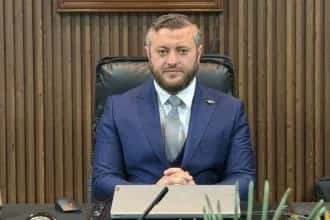
RastinewsHaseke Deputy Governor Ahmed al-Hilali said around 4,500 fighters from the Syrian Democratic Forces (SDF) have been integrated into the Syrian army so far. "The merger of three main brigades is complete: the Derik, Qamishli and Haseke brigades. These three brigades finished their training in the Nebek area. The fourth brigade, the Kobani brigade, will soon undergo the training required under the Defense Ministry's plan," he said.
Al-Hilali, spokesperson for the Presidential Team Implementing the January 29 Agreement, answered questions from Rudaw Media Network journalist Nalin Hesen.
Speaking on the integration process between the Syrian government and the SDF, al-Hilali laid out the roadmap for the future of the military and civilian institutions involved.
Asked what comes next after the SDF's dissolution was announced, and how many fighters, from which brigades, have joined the army so far, al-Hilali said: "The dissolution of the SDF is not the end of the road — it is the beginning of the final phase of implementation. We are moving from an independent structure to a stage where the agreements reached become formalized. The next step is completing the military and administrative procedures. This includes reviewing name lists, regularizing legal status, and determining ranks and specializations. Those who meet the requirements will be assigned to units within the Defense Ministry and the official chain of command."
'Merger of three main brigades complete'
Asked how many SDF members have been integrated into the army so far, Ahmed al-Hilali said: "Around 4,500 fighters have been integrated so far. The merger of three main brigades is complete: the Derik, Qamishli and Haseke brigades. These three brigades finished their training in the Nebek area. The fourth brigade, the Kobani brigade, will soon undergo the training required under the Defense Ministry's plan. I must stress: we measure success not just by the number of people joining the army, but by the end of the old structure as an independent force, and the full transfer of authority, weapons and jurisdiction to the Defense Ministry."
'There will no longer be institutions outside the state'
Al-Hilali said major progress has been made on the military and security side of the integration process, adding: "There are civilian files still awaiting administrative and organizational transfer, including some educational institutions, civil registry offices, and passport and migration departments. There will no longer be institutions outside the state. These bodies are on their way into the state structure — what remains is simply handover and administrative registration. Our basic rule is this: once every institution has a clear government authority, budget and staff, the past 'dual structure' will come to an end."
Ahmed al-Hilali said students and teachers would not be harmed as educational institutions in Kurdish-majority areas are integrated into the Syrian state system, adding:
'Kurdish will officially enter schools as a two-hour-a-week elective'
"We are planning an orderly transition for the 2026-2027 school year, without creating any gap. Schools will continue operating; teachers and students will not bear the cost of this administrative merger. Work is underway to regularize the status of education staff and bring them under the Directorate of Education, affiliated with the Ministry of Education. On curriculum, the National Curriculum will serve as the basis, with a transition period planned for the former 'Self-Administration' curricula. Our goal is not to lose a school year to integration, and to move gradually toward a single national education system. There is a very clear, official direction toward protecting the linguistic and cultural rights of Kurds. This is no longer just political rhetoric — under Decree No. 13 of 2026, Kurdish was recognized as a 'national language' and permitted to be taught in state schools in areas with a significant Kurdish population. Accordingly, Kurdish will officially enter schools starting in the 2026-2027 school year as a two-hour-a-week elective course. A dedicated curriculum is being prepared, and the necessary teaching staff are being provided. The Kurdish language issue is a technical and academic matter, not a political crisis. Our key message here is this: Kurdish is not a rival to, or in competition with, Arabic. We want a national education system that preserves the unity of the education system while respecting the linguistic and cultural diversity of the people of Haseke."