
World Press Reads Turkey's 'Terror-Free' Law Differently Than Ankara Does
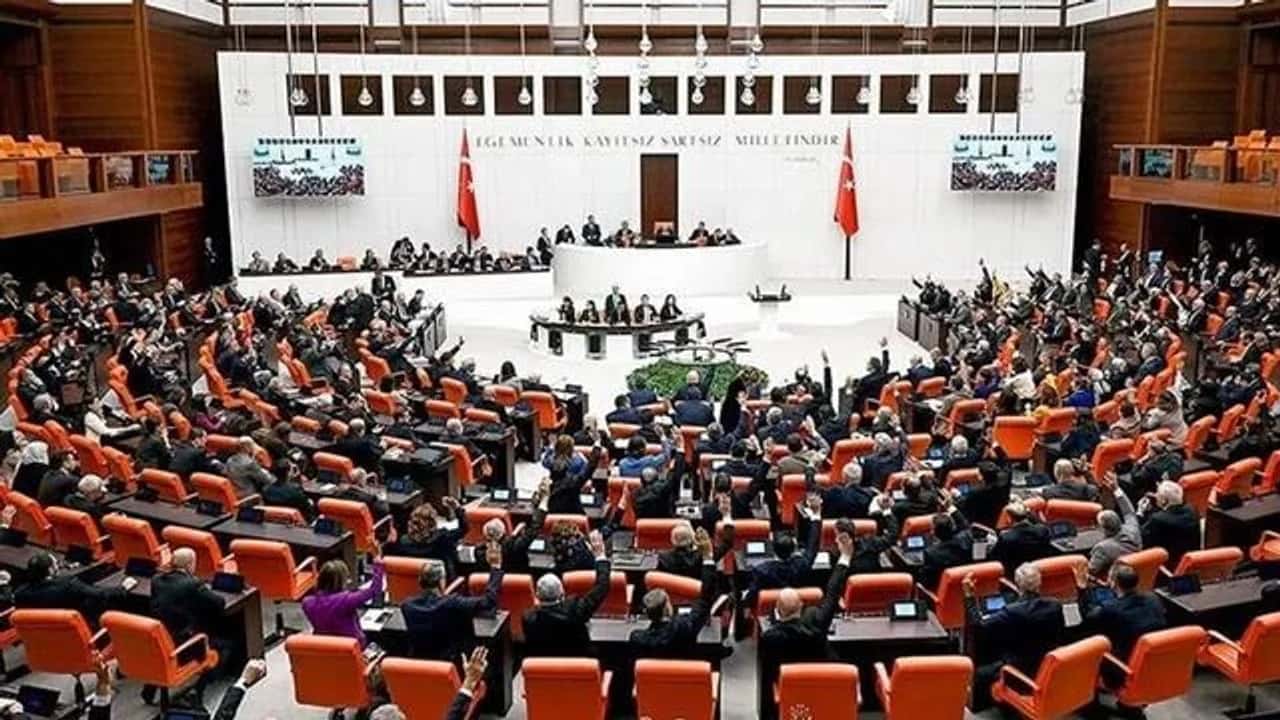
RastinewsAs Turkey's parliament passed a 12-article framework law billed as a cornerstone of the "Terror-Free Turkey" process, international coverage diverged sharply from Ankara's own language. The Associated Press called it an "amnesty-like law," Reuters described it as "historic legislation advancing the peace process with the PKK," and the Financial Times framed it as a law "aimed at ending a 40-year conflict with Kurdish militants." All three outlets looked beyond disarmament, focusing also on Kurdish rights, Öcalan's status, President Erdoğan's political future and the potential fallout for Syria and Iraq.
Rastî — The law, titled "Strengthening National Solidarity and Social Cohesion," passed with 468 votes in Turkey's parliament and drew wide coverage abroad.
The first thing that stood out in the international coverage was the choice of words.
Instead of Ankara's preferred term, "Terror-Free Turkey," the Associated Press (AP), Reuters and the Financial Times (FT) opted for phrases such as "peace initiative," "peace process with the PKK," "ending the conflict with Kurdish militants," "conditional amnesty" and "reintegration into society."
AP: "Amnesty-like law for thousands of PKK members"
The Associated Press (AP) reported the parliamentary vote under the headline "Turkey's parliament approves amnesty-like law for thousands of PKK members."
AP described the measure as a "conditional amnesty" meant to advance the government's peace initiative with the PKK. It noted the law's implementation hinges on Turkish authorities confirming the PKK has fully disarmed.
The American news agency pointed out that the law's implications could extend well beyond Turkey's borders.
According to AP, the process could help draw Turkey and Iraq closer together, and could also affect the integration of Kurdish-led SDF-controlled areas in Syria into the government in Damascus.
In AP's reading, then, the law is not just a Turkey-PKK matter but part of a broader regional realignment spanning Iraq and Syria.
Reuters: "Historic step, but Kurdish rights and Öcalan's status left out"
Reuters ran its story under the headline "Turkey's parliament passes historic law to advance PKK peace process."
The agency described the law as a significant legal step toward ending a conflict that has lasted decades and killed more than 40,000 people. It reported that the measure offers some former PKK members legal protection, suspended sentences and a path to reintegration into society.
But Reuters' main emphasis fell on what the law leaves out.
The agency stressed that the legislation does not address Kurds' broader political and cultural demands, does not touch anti-terrorism law, and says nothing about Abdullah Öcalan's status.
Reuters also noted a gap between how Ankara and the Kurdish political movement read the law: the government presents it as part of its "Terror-Free Turkey" vision, while Kurdish politicians see it as merely a starting point for broader democratic and legal reform.
In that light, Reuters framed the law not as a resolution of the Kurdish issue but as a legal foundation for ending armed conflict.
Financial Times: End of 40-year conflict could also shape Erdoğan's political future
The Financial Times likewise left Ankara's "Terror-Free Turkey" terminology out of its headline.
The paper reported the news as "Turkey's parliament passes historic law to end conflict with Kurdish militants," noting the measure includes conditional amnesty provisions for thousands of PKK members.
FT's analysis centered on two political questions: Erdoğan's future and Turkey's regional standing.
The paper wrote that ending more than 40 years of conflict could strengthen President Recep Tayyip Erdoğan's political position and affect the calculus around an early election that would allow him to run again.
FT also noted that the peace initiative is bolstering Turkey's relations with Iraq and, alongside developments in Syria, adding to Ankara's regional geopolitical weight.
The paper pointed to a core contradiction: despite calling the measure historic, FT noted that developments such as the arrest of Istanbul's mayor mean doubts about the process have not disappeared.
Ankara says "Terror-Free Turkey"; world press says "peace" and "end of conflict"
What emerges across AP, Reuters and the Financial Times is the same law read through different political vocabularies at home and abroad.
The process Turkey's government calls "Terror-Free Turkey" became, in AP's telling, a "peace initiative and conditional amnesty"; in Reuters', a "PKK peace process"; and in the Financial Times', an "initiative to end a 40-year conflict with Kurdish militants."
All three outlets agreed on one more point: passage of the law is not the end of the process.
AP focused on regional consequences, particularly the Syria-SDF equation; Reuters on the unresolved status of Kurdish political and cultural rights and of Öcalan; and the Financial Times on Erdoğan's political future and Turkey's shifting regional position.
Seen through the lens of the foreign press, the law passed by parliament is not simply what Ankara calls an end to "terrorism" — it marks a new phase in the shift from four decades of armed conflict to politics, one that could reshape Turkey's internal balance, the Kurdish issue, and the power dynamics along the Syria-Iraq axis.