
Lake Van's pollution reaches COP31 agenda
Lake Van, where shorelines have receded and wastewater has flowed in for years, will be discussed at the UN Climate Change Conference (COP31) in Antalya. A study on microplastic pollution and oxygen loss in the lake will be presented on November 16.
RastinewsPollution in Lake Van is on the agenda of the UN Climate Change Conference (COP31), held in Antalya from November 9 to 20. A study conducted at Van Yüzüncü Yıl University, examining microplastic distribution and oxygen dynamics in the lake, will be presented at the November 16 session.
The research is based on monthly measurements taken across different water layers, from surface to lakebed. Dissolved oxygen, temperature, nutrient salts and microplastic density are monitored at the same stations.
The lake has no outlet
Covering roughly 3,600 square kilometers, Lake Van is the world's largest soda lake. Most of the streams feeding it pass through residential areas. No river flows out of the lake. As a result, every pollutant that reaches it stays there.
The main source of pollution has long been untreated domestic wastewater. According to data from the Ministry of Environment, Urbanization and Climate Change, only 38.4% of wastewater in Van was treated in 2020. The ministry says that figure rose to 99.8% across the basin by the end of 2025. A parliamentary question submitted to the Turkish Grand National Assembly last year noted that untreated water was still flowing into the lake from districts along its shore.
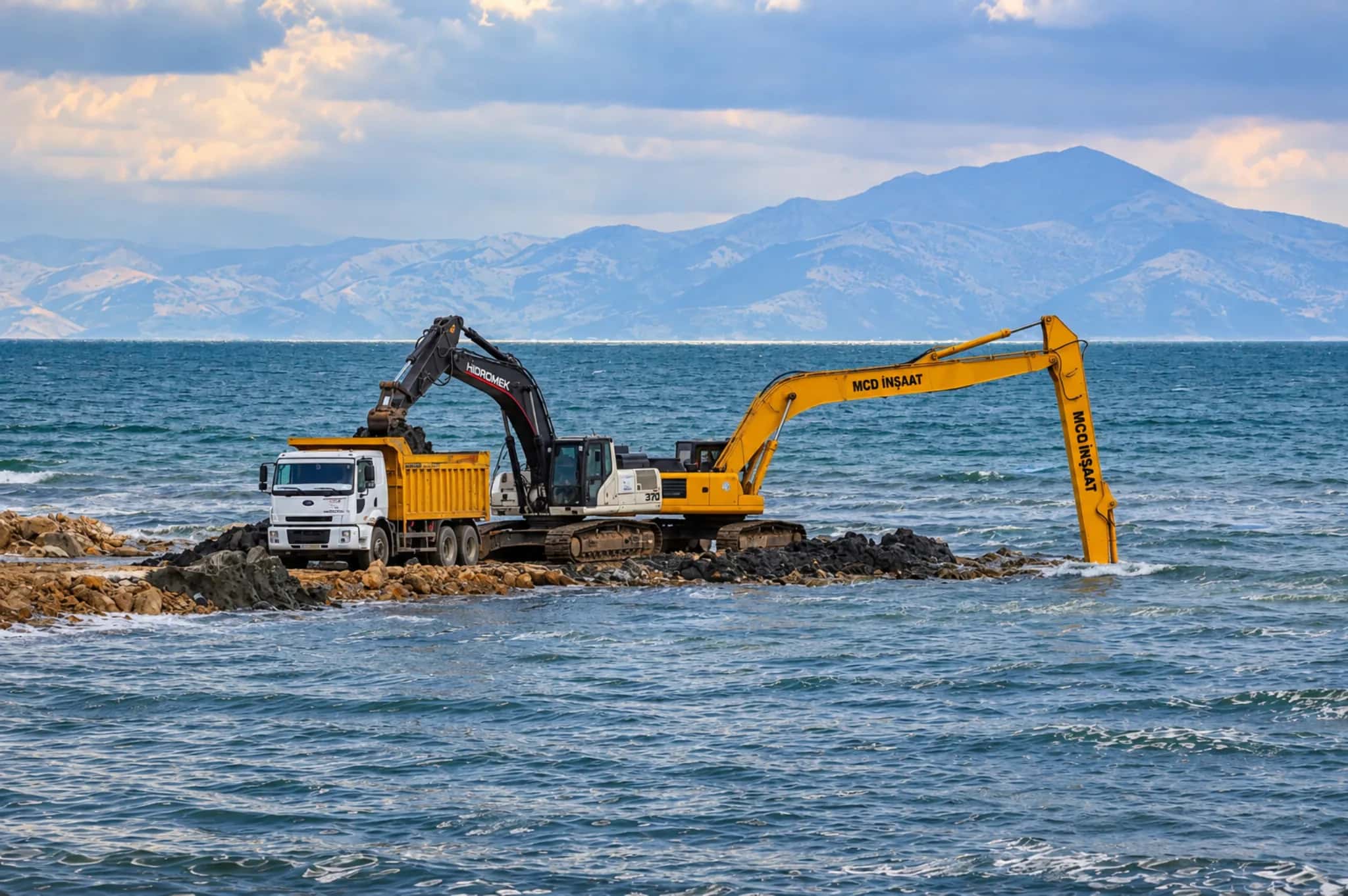
Sediment buildup on the shore is a separate problem. According to figures released by the Van Metropolitan Municipality in late October, 2,385,000 cubic meters of bottom sludge have been removed from the lake bed so far. The target is to clear another 2.8 million cubic meters.
Plastic found in pearl mullet
Measurements taken by Van Yüzüncü Yıl University in the Gulf of Van found microplastics in surface waters. Plastic particles were also detected in sediment samples taken from the lake bed.
Microplastics were found in the stomach of the pearl mullet, a fish that can survive only in this lake's salty, soda-rich water and lives nowhere else in the world. The fish feeds on plankton. Lightweight plastic particles disperse in the same surface layer as plankton.
Shrinking shoreline, falling oxygen
In recent years the lake's shoreline has visibly receded. Researchers say rising air temperatures combined with pollution are preventing water layers from mixing, which in turn is depleting oxygen in deeper waters. The process is increasing the lake's nutrient load, raising the risk of eutrophication, in which the ecological balance breaks down.
Cleanup work continues along the shore, but no monitoring system regularly measures what effect it is having on the lake's health.