
Turkey's Framework Law on PKK Disarmament Takes Effect
The bill, popularly dubbed the "framework law" and formally titled the Law on Strengthening National Solidarity and Social Integration, was published in the Official Gazette after clearing parliament, taking effect as part of what the government calls the "Terrorism-Free Turkey" process.
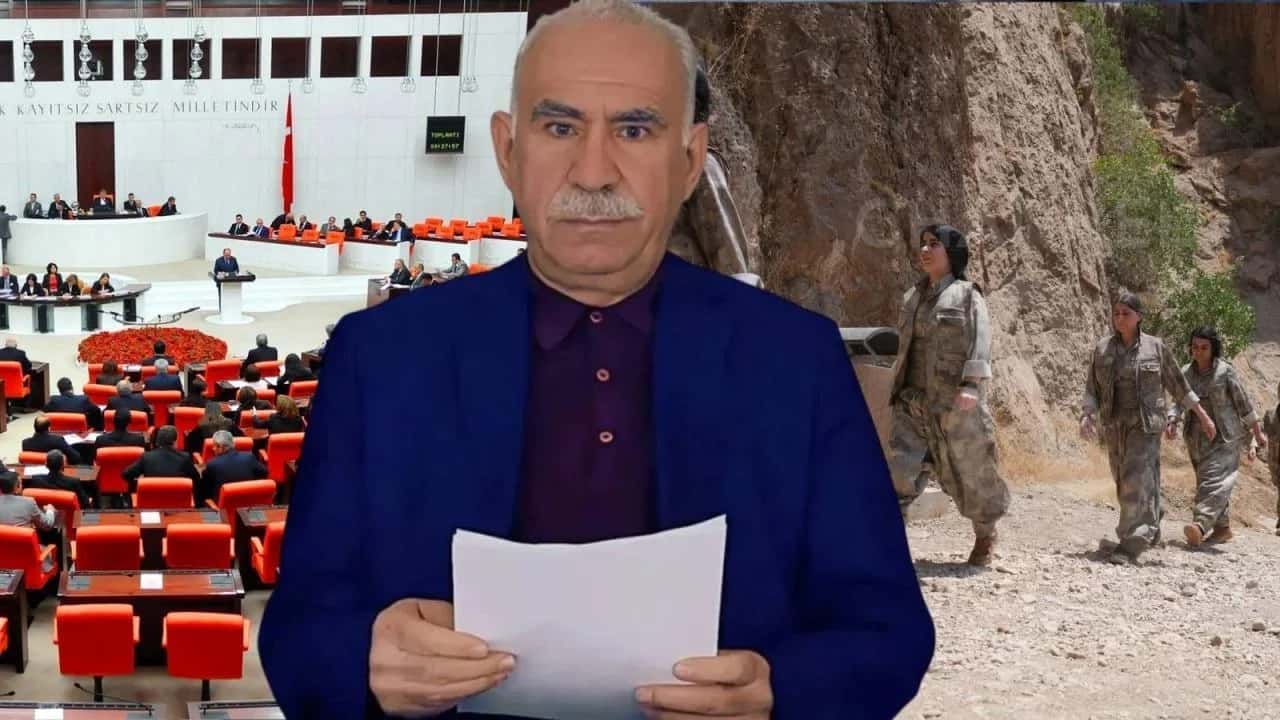
RastinewsThe Law on Strengthening National Solidarity and Social Integration — widely known as the "framework law" in the process the government has branded "Terrorism-Free Turkey" — took formal effect after being published in the August 18, 2026 edition of the Official Gazette, following its passage in parliament.
ERDOĞAN POSTS OFFICIAL GAZETTE LINK
President and AKP leader Recep Tayyip Erdoğan personally shared the link to the Official Gazette. In a post on X, he thanked Nationalist Movement Party (MHP) leader Devlet Bahçeli, parliament Speaker Numan Kurtulmuş, the AKP caucus, and the political party groups and lawmakers who took a "constructive stance" on the framework law. Notably absent from Erdoğan's statement was any mention of the DEM Party.
Erdoğan wrote on X:
"I hope the Law on Strengthening National Solidarity and Social Integration — adopted in our Grand National Assembly as a historic example of consensus with the support of 467 of our lawmakers, and taking effect as of today — brings good fortune.
To those who contributed to this important step toward a peaceful, prosperous and secure future for Türkiye:
To our People's Alliance partner Devlet Bahçeli and the Nationalist Movement Party caucus…
To Grand National Assembly Speaker Numan Kurtulmuş…
To my valued companions and comrades in the AK Party caucus…
I extend my heartfelt thanks to all political party groups and lawmakers who, though positioned differently, took a constructive stance.
I congratulate the institutions and officials of our state who contributed to bringing this process safely this far.
With an approach that takes into account the sensitivities of our entire nation — above all the families of our martyrs and our veterans — we will continue to manage this process on the ground set out by the Law, under the leadership of the relevant institutions and boards, with the same sincerity and diligence."
I hope the Law on Strengthening National Solidarity and Social Integration — adopted in our Grand National Assembly as a historic example of consensus with the support of 467 of our lawmakers, and taking effect as of today — brings good fortune.
For Türkiye's peaceful, prosperous and…
— Recep Tayyip Erdoğan (@RTErdogan) August 17, 2026
PUBLISHED IN THE OFFICIAL GAZETTE
The framework law, as published in the Official Gazette, reads article by article as follows:
ARTICLE 1- (1) The purpose of this Law is to determine the postponement of ongoing investigations and prosecutions and the enforcement of convictions, along with other related measures, following security agencies' determination that the PKK/KCK terrorist organization and any formation connected to it has ended its de facto existence and surrendered all weapons and ammunition under its control, and the publication in the Official Gazette of a National Security Council Decision confirming that determination.
(2) This Law covers the offenses of founding or leading the PKK/KCK terrorist organization, membership in it, knowingly and willingly aiding it, and disseminating its propaganda, as well as offenses committed within the organization's activities and offenses committed in its favor as defined under Law No. 6415 of 7/2/2013 on the Prevention of the Financing of Terrorism.
Definitions
ARTICLE 2- (1) In this Law;
a) Organization: refers to the PKK/KCK terrorist organization and any formation connected to it,
b) Board: refers to the board to be established under Article 7 of this Law,
shall have the meanings given.
Postponement of investigations and prosecutions
ARTICLE 3- (1) Provided that security agencies determine that the organization has ended its de facto existence and surrendered all weapons and ammunition under its control, and that a National Security Council Decision confirming this determination is published in the Official Gazette, investigations and prosecutions falling under Article 1 shall be postponed for five years where the offense carries a maximum penalty of fifteen years' imprisonment or less, and for ten years where it carries more than fifteen years' imprisonment, life imprisonment, or aggravated life imprisonment — excluding investigations and prosecutions for intentional homicide committed within the organization's activities and for offenses committed before 1/6/2005 that carry life imprisonment or aggravated life imprisonment. The statute of limitations does not run during the postponement period. Case files and evidence relevant to proving these offenses are preserved for the duration of the postponement, starting from the date the postponement decision is issued. A liquidation decision is issued together with the postponement decision for items and assets subject to confiscation, which are recorded as revenue to the Treasury. The decision is served on those entitled to pursue legal remedies, specifying the right of appeal or objection, its deadline, and the competent authority.
(2) Those entitled to legal remedies against decisions issued by a public prosecutor under the first paragraph may apply to the criminal court of peace within two weeks. Court decisions postponing prosecution under the first paragraph may likewise be appealed within two weeks.
(3) Opening an investigation, after the publication date of the National Security Council Decision, into offenses under Article 1 committed before that date is subject to the Board's authorization.
Protective measures and files under appellate review
ARTICLE 4- (1) Protective measures such as pretrial detention and judicial control imposed for offenses eligible for postponement under Article 3 are reviewed by the competent judge or court at whichever stage the investigation or prosecution has reached, or by the regional court of appeals or the relevant Court of Cassation chamber, and are lifted where the conditions for doing so are met.
(2) Files under appellate or cassation review concerning offenses eligible for postponement under Article 3 are remanded with a reversal decision.
Recording of postponement decisions and reoffending
ARTICLE 5- (1) Postponement decisions issued under Article 3 are entered into a dedicated system. These records may be used only for the purpose set out in the second paragraph, and only when requested by a public prosecutor, judge, or court in connection with an investigation or prosecution.
(2) If a terrorism offense is committed during the postponement period, the postponement decision is revoked and the investigation or prosecution resumes. In the event of conviction, enforcement of the sentence is not postponed under Article 6, and the conviction carries all its legal consequences. If the postponement period passes without a further offense, a decision of no grounds for prosecution, or a dismissal decision, is issued.
Postponement of sentence enforcement
ARTICLE 6- (1) Provided that security agencies determine that the organization has ended its de facto existence and surrendered all weapons and ammunition under its control, and that a National Security Council Decision confirming this determination is published in the Official Gazette, for offenses under Article 1 — excluding those convicted of intentional homicide committed within the organization's activities and those sentenced to life imprisonment or aggravated life imprisonment for offenses committed before 1/6/2005 —
a) enforcement is postponed for five years for prisoners sentenced to a total of fifteen years' imprisonment or less,
b) and for ten years for prisoners sentenced to more than fifteen years' imprisonment, or to life imprisonment or aggravated life imprisonment,
by decision of the enforcement judge. Application of this paragraph does not prevent the carrying out of confiscation orders. The statute of limitations on the sentence does not run during the postponement period.
(2) Postponement decisions issued by the enforcement judge under the first paragraph may be appealed.
(3) Postponement decisions issued under the first paragraph are entered into the system established under the first paragraph of Article 5. These records may be used only for the purpose set out in the fourth paragraph, and only when requested by a public prosecutor, judge, or court in connection with an investigation or prosecution.
(4) If a terrorism offense is committed within the deferral period from the date the deferral decision is issued, the execution judge shall revoke the deferral and order the sentence's execution to continue. If the period passes without any offense committed, the sentence is deemed served. Public prosecutors' offices track deferral decisions.
Monitoring, coordination and implementation
ARTICLE 7- (1) Monitoring and evaluation of activities under this Law shall be carried out, following the Law's publication in the Official Gazette, by a Board composed of the Minister of Justice, the Minister of Foreign Affairs, the Minister of Interior, the Minister of National Defense, the Secretary-General of the Presidency, the Head of the National Intelligence Organization (MİT) and the Secretary-General of the National Security Council, chaired by the Vice President. The Board may form subcommittees as needed and may invite representatives of ministries, institutions and organizations, as well as other individuals deemed necessary, to Board and subcommittee meetings.
(2) The Board may make assignments within subcommittees to ensure the process advances within the organization.
(3) Following the publication in the Official Gazette of the National Security Council Decision referred to in Article 1, the Board may conduct periodic assessments, in line with the purpose and scope of this Law, on the organization's complete dissolution and on observation reports concerning this matter. Where the Board deems it necessary, it shall request judicial, administrative and legal arrangements.
(4) Deferral decisions issued under this Law shall be periodically evaluated by the Board following the publication in the Official Gazette of the National Security Council Decision referred to in Article 1, and, where deemed necessary, the Board shall request:
a) From the criminal judgeship of peace or the relevant court, the removal, with all its consequences, of the loss of rights arising from investigations and prosecutions;
b) From the execution judgeship, the removal, with all its consequences, of the loss of rights arising from conviction rulings.
The relevant authority shall rule on the request. These rulings may be appealed. A request under subparagraph (b) of this paragraph may be made only after two years have passed from the date of a five-year deferral decision, or three years from the date of a ten-year deferral decision.
(5) The Board shall regularly inform the Grand National Assembly of Turkey of its work. The Speaker's Office of the Grand National Assembly of Turkey shall establish a Monitoring Committee to oversee activities under this Law. The Monitoring Committee shall monitor activities under this Law and may issue recommendations.
(6) Secretariat services for the Board shall be provided by the Presidency's Secretary-General's Office.
Handover of weapons and equipment
ARTICLE 8- (1) Weapons, ammunition, vehicles, equipment, explosives and all other materiel that members of the organization covered by this Law bring with them or declare shall be recorded.
(2) The procedures and principles for implementing this article shall be determined by the Ministry of Interior and the Ministry of National Defense, after consulting the security agencies.
Deadline
ARTICLE 9- (1) The provisions of this Law shall apply to those who, within six months following the publication in the Official Gazette of the National Security Council Decision referred to in Article 1, notify in writing the public prosecutor's office where they are located, or an institution designated by the Board, that they wish to benefit from the provisions of this Law.
Duty and responsibility
ARTICLE 10- (1) Duties assigned under this Law shall be carried out promptly by the relevant public institutions and organizations.
(2) Persons who carry out duties assigned under the purpose and activities of this Law shall not incur legal, administrative or criminal liability on account of these duties.
Entry into force
ARTICLE 11- (1) This Law shall enter into force on the date of its publication.
Execution
ARTICLE 12- (1) The President shall execute the provisions of this Law.
Source: BirGün