
The Conjunction 'Ku' and the Plural in Kurdish Writing
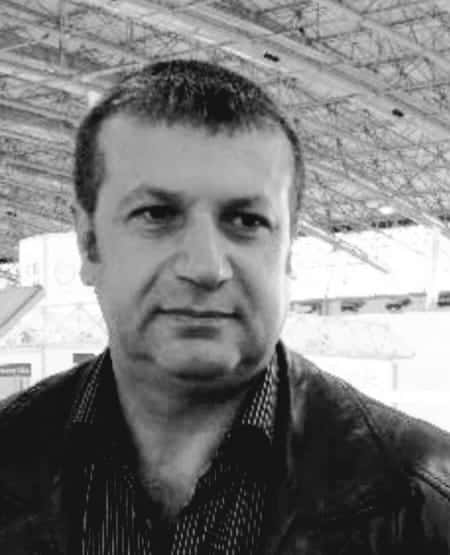
RastinewsBefore anything else, I need to explain what a conjunction is in language, and what the plural means in language. In every language, in writing, conjunction and number are two fundamental things. A conjunction is the foundation of sentence structure — it sits between words and gives the sentence meaning. Number, meanwhile, marks whether something in a sentence is singular or plural. In my understanding and belief, mistakes are made both in the use of conjunctions and in the pluralization of words. In this piece, I will discuss the errors surrounding the conjunction 'ku' and the singular-plural distinction.
Let me say clearly from the outset: I am no expert in grammar, spelling or the etymology of words, and I hold no academic credentials in this field. Naturally, every piece I write will contain errors of spelling. My aim is not to correct the Kurdish language, but to draw attention to mistakes that are being made. As far as I understand, in recent times the pluralization of words has increasingly been done wrong in writing. In short, this piece is about the conjunction 'ku' and the pluralization of words.
I can say with pride, as a writer of the Kurdish language, that I am fluent and well versed in Kurdish, and I will make that clear in everything I write. My purpose, in writing and in speech, is to draw attention to the decline of the language and the erosion of Kurdish words. In everything I write, I will set down my own understanding, conviction and style, and I hope readers will offer fair criticism and open, sincere discussion of the problems I raise. I want every effort made on behalf of our language to protect its authenticity and carry it forward, so that future generations face no obstacle to understanding it. I want our language, spoken and in literature, to take its place among the living languages of the world. The life and survival of the Kurdish language is the life and survival of the Kurdish people and our homeland, Kurdistan.
I noted in my previous piece that this article would turn to the conjunction 'ku' and to number and plural in writing. In that earlier piece, I discussed classical literature. During the Ottoman era, as literary forms such as Diwan, Sufi writing and the Mewlewi style developed across the Middle East, a mixed language came into use. Aruz meter became a shared style of writing throughout the region. That mixed language did not, on the whole, leave a heavy mark on Kurdish, but it did leave a few unfortunate traces — and one of them is the destructive conjunction 'ku', which entered our language from Persian.
In Persian it is 'ke' (midānam ke — I know that); in Turkish it is 'ki' (Biliyorum ki söylüyorum — I know that I am saying); in our language, 'ku' serves the same function. Persian and Turkish are both languages built out of three source languages — Arabic, Kurdish and Turkoman. Anyone who examines the vocabulary of these two languages closely will find that, word for word, they draw heavily on Kurdish, Arabic and Turkoman, though their grammars differ from one another. In the Ottoman era there was no language called 'Turkish' as such — the Turkish language was formed after the founding of the Turkish Republic. Kurdish, by contrast, is an ancient, independent language rooted deep in the history of the Middle East. It has few foreign loanwords, and grammatically it belongs to the Indo-European family.
It may be that in those constructed languages the conjunctions 'ke' and 'ki' carry real meaning, but in Kurdish this word muddles the language and makes it harder to follow. It is a foreign conjunction that brings our language no benefit — it is meaningless, it hinders comprehension, and it weighs the language down. Some will point out that our great classical poets, Ehmedê Xanî and Melayê Cizîrî, used this conjunction, and argue that this alone proves it belongs to our language. My answer is that it was precisely the mixed, Middle Eastern classical literature of their era that introduced this conjunction into Kurdish. In my view it is not a genuine part of the language — it has simply been used in Kurdish literature for a long time, and that long use is why it continues to be accepted and used.
In short, this word does our language no good; instead it weighs it down and becomes an obstacle to understanding. If you want to see how damaging it is, take up a piece of written literature and read it, then listen to a dengbêj's song. You will hear the difference in clarity and feel the true taste of the language. Just as we have a classical written literature, we also have an oral literature that is classical in its own right. Everyone knows that this oral literature belongs to the Kurdish people — it is independent and authentically Kurdish. This conjunction 'ku' does not exist in that oral literature. From the earliest times to today, every dengbêj across Kurdistan bears this out. No one can find this conjunction in a dengbêj's song.
On the literary side, let me offer a few examples for you, dear readers, to weigh for yourselves — think it over, search your memory for the language of our elders, set the examples before you and judge. I will draw a few sentences from Kurdish works. My aim is not to criticize Kurdish writers. On the contrary, Kurdish writers are devoted to their people; they work selflessly, their effort and hardship are considerable, and on top of that, they often cover the printing costs of their own books out of their own pockets, gaining nothing from their labor. Writing is sacred work — any fault here lies with editors and publishers.
Example with 'ku':
1. Bikeve pey min da ku ez te bi goşt û xwarinê têr û xenî bikem — 'Follow me, so that I may fill you with meat and food.'
2. Lê vê carê wekî ku li nava serê wî bide, jan di kete serî — 'But this time, as if it struck him on the head, pain shot through his skull.'
Example without 'ku':
1. Bikeve pey min da ez te bi goşt û xwarinê têr û xenî bikem. — 'Follow me, so I may fill you with meat and food.'
2. Lê vê carê wekî li nava serê wî bide, jan di kete serî — 'But this time, as if it struck him on the head, pain shot through his skull.'
Example with 'ku':
3. Gelek giyanwer hene ku temenê wan bi dirêjîya şevek û rojekê ye — 'There are many creatures whose lifespan is the length of a single night and day.'
4. Ya ku mirov têda dudil û bêqirar — 'The one in which a person is hesitant and restless.'
Example without 'ku':
5. Gelek giyanwer hene temenê wan bi dirêjîya şevek û rojekê ye — 'There are many creatures whose lifespan is the length of a single night and day.'
6. Ya mirov têda dudil û bêqirar — 'The one in which a person is hesitant and restless.'
So I ask you: look at these and consider why 'ku' is placed in the sentence at all. Doesn't it make the sentence more convoluted? Doesn't it make it harder to follow? Isn't the sentence more complete and more meaningful without 'ku'?
Point two (in Kurdish, 'duyê,' not 'duyem'): number and plural in Kurdish sentence structure. In Kurdish, to make a word plural one must use the ending -a, -e, -an or -en. Unfortunately, few people know that some nouns are inherently plural, while others become plural simply by adding -a or -e. But most of our editors and publishers, when writing, confuse singular and plural, creating confusion in the language. When forming plurals, they use -an or -en across the board, treat it as a basic rule, and force everyone to write that way. What they fail to realize is that, used this way, the word loses its meaning. In no language, under any pattern of word-formation, does a word simply lose its meaning; if it does, there is an error in how it is being used.
Let me give a few examples here.
Pluralization:
Deng dihate ber guhan ('Sound was reaching the ears'). Jan dikete piyan ('Pain was shooting into the feet'). Baran ji ewran dibarî ('Rain fell from the clouds'). Bilûrvani destekî bilûran hebû ('The flute player had a set of flutes').
If these words and nouns are used with the -an ending on their own, they lose their meaning and become something else — for example, guhan, piyan, ewran, bilûran. For that reason, the -an ending should not be used to pluralize these words and nouns. In my view, they should instead take the -a ending. For example: Deng dihate ber guha. Jan dikete piya. Baran ji ewra dibarî. Bilûrvani destekî bilûra hebû. Used this way, the words and nouns do not lose their meaning. Singular forms: guh, pî, ewr, bilûr. Plural forms: guha, pîya, ewra, bilûra.
Unfortunately, in three of my own novels I had no choice but to accept my editor's and publisher's decision, and my novels were printed that way. But from today onward, I will no longer write that way in anything I write.
The views expressed here are the author's own; they may or may not coincide with the editorial line of Rastinews. Rastinews is a free platform open to differing views.