
Bakırhan Cites 'Debt of Loyalty,' Hours Later YENİ Party Shuts Door on Monitoring Commission
DEM Party Co-Chair Tuncer Bakırhan told Özgür Özel that "YENİ Party owes us a debt of loyalty." Hours later, YENİ Party notified the Parliament Speaker's Office in writing that it would not appoint a member to the Monitoring Commission.
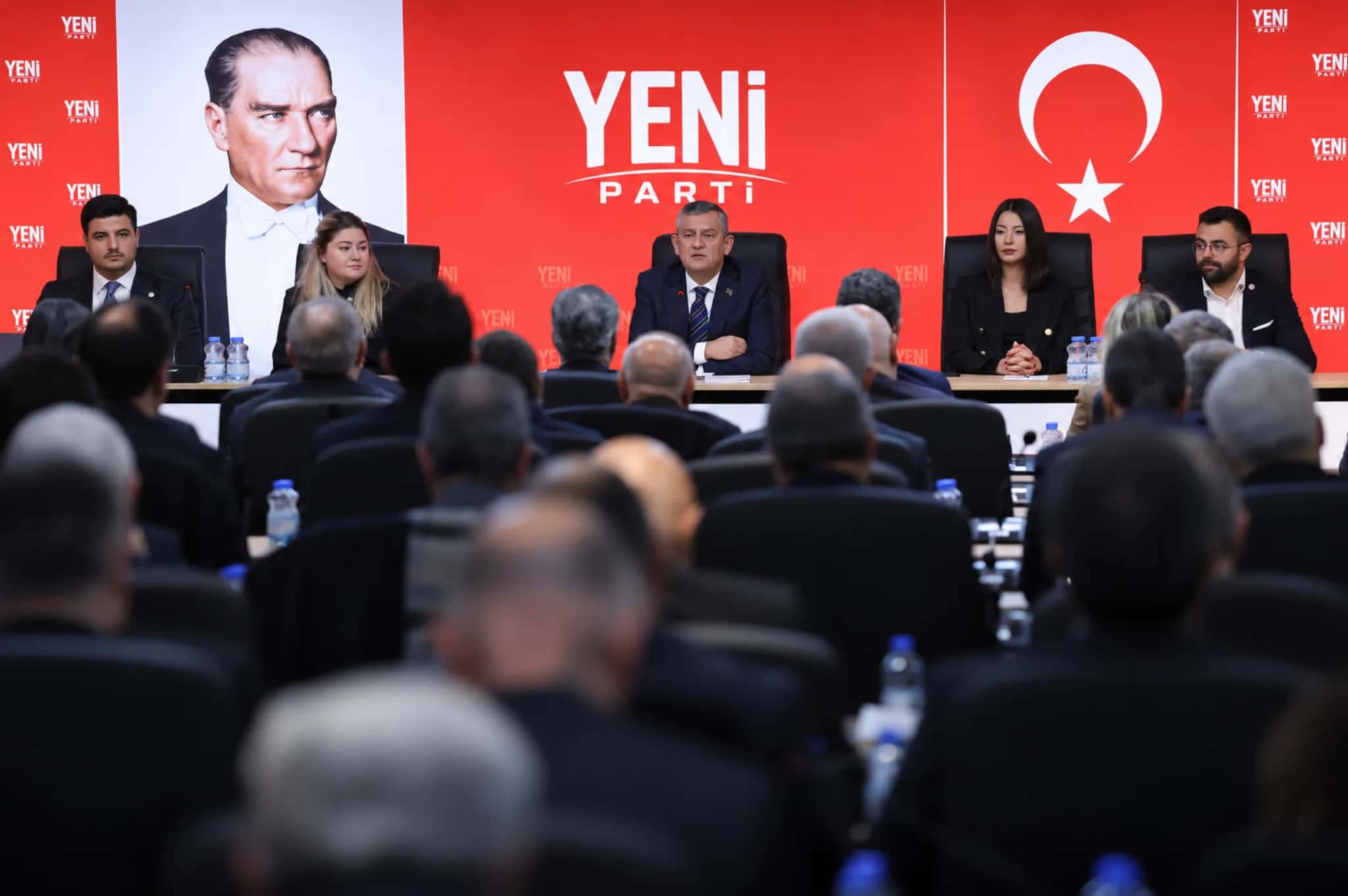
RastinewsYENİ Party has told the Parliament Speaker's Office in an official letter that it will not appoint a member to the Monitoring Commission set up to oversee the process following the PKK's disarmament. The decision came after DEM Party Co-Chair Tuncer Bakırhan appealed directly to YENİ Party leader Özgür Özel.
Speaking earlier in the day, Bakırhan said YENİ Party should take part in the process and reminded Özel of the support DEM Party had given his party in past elections. "YENİ Party also owes us a debt of loyalty. We have voted for YENİ Party candidates in five elections. I am calling on Chairman Özgür from here: let's join forces against the obstacles standing in the way of democracy," he said.
"Not a single step taken in nine months"
In its letter, YENİ Party grounded its decision in the joint report adopted by Parliament's National Solidarity, Brotherhood and Democracy Commission on February 18, 2026. According to the party, none of the democratization proposals in that report have been implemented in the nine months since.
The letter listed demands including full implementation of Constitutional Court and European Court of Human Rights rulings, an end to the trustee practice, pre-trial detention as the exception rather than the rule, and amendments to the Anti-Terror Law. YENİ Party said most of these steps would not even require new legislation — compliance with the Constitution and existing court rulings would suffice.
"The Kurdish issue is not only a matter of terrorism"
YENİ Party wrote that it does not view democratization as a matter to be addressed at the end of the process, but as a precondition for the process's credibility. "The Kurdish issue is not only a matter of terrorism. Undemocratic practices, lawlessness and inequality are also structural problems that damage social peace," the letter said.
The party stressed that its decision should not be read as opposition to the process itself, describing the move instead as an objection to the failure to deliver on democratization commitments.
Öcalan had also appealed to Özel
Besides the AKP and MHP, Abdullah Öcalan had also objected to YENİ Party's decision. According to reports in the press, Öcalan told the DEM Party İmralı Delegation during a meeting that Özel's criticisms had some merit, but that withholding a commission member would not resolve anything. DEM Party officials said they understood YENİ Party's objections but that the decision was disappointing.
Özel announced on November 18, after meeting with Parliament Speaker Numan Kurtulmuş, that his party would not appoint a member to the commission. Of the 19 seats on the commission, YENİ Party holds 3 and the İYİ Party holds 1; the İYİ Party has likewise said it will not fill its seat. Parties must notify the Parliament Speaker's Office of their nominees by 5 p.m. on Monday, November 30.
The full text of YENİ Party's letter to the Parliament Speaker's Office:
TO THE SPEAKER OF THE GRAND NATIONAL ASSEMBLY OF TURKEY
Re: The letter on the "Establishment of a Monitoring Commission" received by the YENİ Party Group on November 25, 2026.
As the YENİ Party Group, formed of political cadres who were the first to acknowledge the existence of a Kurdish issue in our country, we attach importance to ending terrorism and violence, resolving the Kurdish issue through democratic and peaceful means, and establishing social peace permanently on the basis of equal citizenship. We believe these goals can only be achieved by making the democratic rule of law function fully, with all its institutions and rules, and by guaranteeing fundamental rights and freedoms.
The report submitted by our MPs on December 18, 2025, to the National Solidarity, Brotherhood and Democracy Commission, which began its work on August 5, 2025, laid out in detail the legal, political and administrative steps needed for social peace and Turkey's democratization. A significant part of these proposals was also reflected in the seventh section of the joint report the Commission adopted on February 18, 2026.
However, more than nine months after the adoption of the joint report, no concrete step has been taken on the democratization proposals. The main proposals are as follows:
– Full implementation of Constitutional Court and European Court of Human Rights rulings,
– Securing judicial independence and ending the use of the judiciary for political purposes,
– Making pre-trial release the rule and detention the exception,
– Ending the trustee practice to protect the right to vote and be elected,
– Guaranteeing freedom of thought, expression, press, association, and assembly,
– Bringing the Turkish Penal Code and the Anti-Terror Law into line with democratic standards,
– Revising enforcement legislation in line with principles of justice and equality,
– Safeguarding the institutional identity of political parties and democratic political competition.
Moreover, most of these steps do not even require new legislation. Compliance with the Constitution and binding court rulings, and ending administrative practices that obstruct the exercise of fundamental rights and freedoms, would be enough.
While legislation related to the peace process is being taken up, it is unacceptable for the democratization proposals contained in the same joint report to be postponed to an uncertain future. Because the Kurdish issue is not only a matter of terrorism. Undemocratic practices, lawlessness and inequality are also structural problems that damage social peace.
YENİ Party does not view democratization as an arrangement to be carried out at the end of the peace process, but as the fundamental condition for the process's credibility and permanence. The silencing of weapons is of great value, but it is not sufficient to remove the structural conditions that produce violence. The way forward is to expand, not narrow, the space for democratic politics, and to make the rule of law function again with all its institutions.
Whether the joint will expressed under the roof of the Grand National Assembly of Turkey can build public trust depends on its being realized through concrete legal, political and administrative steps. For this reason, we believe that establishing a new commission, before the democratization proposals of the National Solidarity, Brotherhood and Democracy Commission—of which nine of our MPs are members—are implemented, will not make an adequate contribution to resolving the existing problems.
Our decision not to appoint a member to the Monitoring Commission should not be interpreted as a stance against ending terrorism, social peace, or the democratic resolution of the Kurdish issue. This decision is the result of our objection to the failure to fulfill the requirements of the joint will toward democratization.
Today, the shared expectation of our 86 million citizens is rights, law and justice. Lasting social peace cannot be achieved in an environment where, despite constitutional guarantees, fundamental rights and freedoms are arbitrarily restricted, where journalists, intellectuals and civil society representatives are jailed for political reasons, and where even political criticism can be turned into grounds for detention.
While the silencing of weapons is being pursued on one hand, narrowing the opposition's room to maneuver, continuing unlawful interference in democratic politics, and using state resources to neutralize the political opposition on the other hand contradicts the goal of social peace. In an environment where the Constitution and laws are not applied, no trust is built that future political commitments will be honored.
As YENİ Party, we want peace as a guarantee for everyone living in Turkey to coexist on the basis of equal citizenship. However, we do not accept the peace process becoming grounds for the dismantling of democratic politics, turning a blind eye to unlawful acts against the opposition, or neutralizing social opposition.
We believe that the steps needed in the areas of democratization and justice must be addressed with a comprehensive approach that also covers the resolution of the Kurdish issue. Accordingly, we will continue our work through the Grand National Assembly's legislative and oversight mechanisms to implement the democratization proposals contained in the joint report.
For the reasons set out above, and in line with the position we previously announced to the public, we hereby inform you that the YENİ Party Parliamentary Group will not appoint a member to the Monitoring Commission to be established.
Respectfully.