
Barzani's office releases 17 years of warnings to Baghdad: "We will not accept a dictatorship in Iraq"
The office of KDP leader Masoud Barzani has compiled his statements since 2009 warning Baghdad against centralization and a return to dictatorship. Released after Baghdad's decisions on border crossings and oil fields, the document ends with a call for the Kurdistan Region to draft its own constitution.
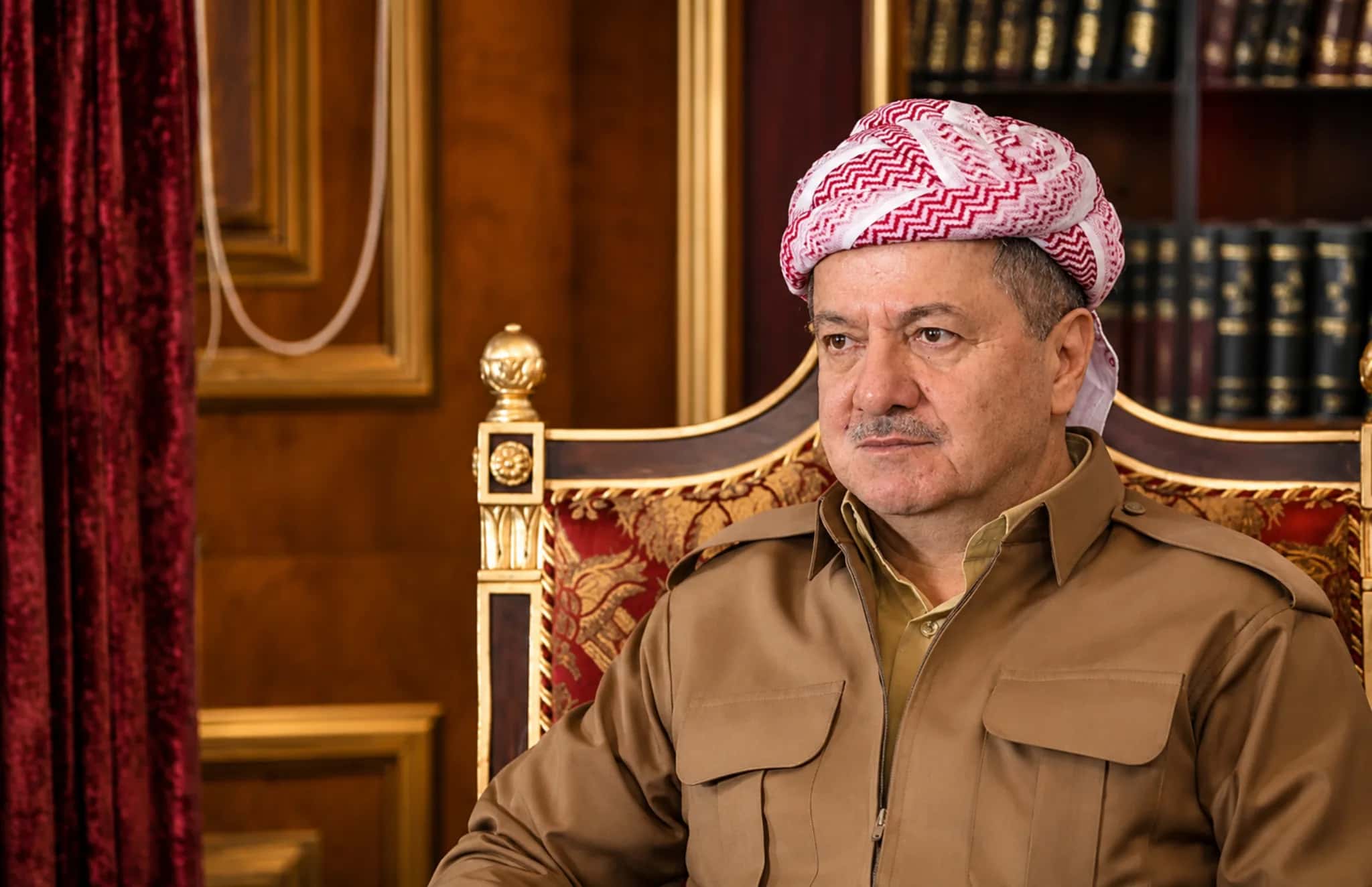
RastinewsKDP leader Masoud Barzani has put 17 years of warnings on public record amid a fresh crisis with Baghdad. A document released by his office lists, with dates and sources, his repeated statements since 2009 that Iraq was sliding back into centralization and dictatorship.
The document's final section speaks to the present. Barzani's office proposed drafting a constitution for the Kurdistan Region and putting it to a referendum. "Our institutional safeguards have not been strong enough," the document said. "Had the Kurdistan Region had its own constitution, many of the problems it has faced could have been resolved, and many developments could have been prevented."
The document appeared four days after Iraqi Prime Minister Ali Zeydi's November 24 decisions placing the Kurdistan Region's border crossings and some of its oil fields under federal control.
"We will not accept a dictatorship in Iraq"
The earliest statement in the document dates to January 11, 2009. In an interview with the Los Angeles Times, Barzani criticized then-Prime Minister Nouri al-Maliki for concentrating power, attempting to amend the constitution, and excluding Kurds from state institutions. "We will absolutely not accept a dictatorially ruled Iraq," he said.
Speaking to Voice of America's Persian service on December 25, 2011, Barzani said Baghdad was ignoring the Kirkuk issue. The solution, he noted, was already written into the constitution. "We will try to abide by the constitution until our last breath, but we will not compromise on this issue under any circumstances," he said.
"Iraq is heading toward a return to dictatorship"
In April 2012, Barzani met then-U.S. President Barack Obama and Vice President Joe Biden in Washington. Speaking to Bloomberg afterward, he said he had called on all Iraqi parties to unite to block a new dictatorship.
Two days later, in an interview with Al-Hayat, his tone sharpened. Calling the concentration of military and security powers in the prime minister's hands unacceptable, Barzani said: "Iraq is heading toward disaster, toward a return to dictatorship."
"The constitution was the only guarantee of Iraq's unity"
In a July 2014 interview with Al Jazeera, Barzani said he and his Shiite and Sunni partners had spent a decade trying to build a democratic, pluralistic, federal Iraq, but that the effort had failed. The Kurdish people, he added, could not wait forever for an uncertain future.
A month before the independence referendum, on August 10, 2017, Barzani told Al-Hayat that Baghdad bore responsibility for the collapse of the partnership. "The constitution was the only guarantee of Iraq's unity. Once it was violated, the chance to preserve that unity was lost too," he said.
A condition for postponing the referendum
The document also includes a lesser-known statement from before the referendum. On August 30, 2017, Barzani said the vote could be postponed if the Iraqi government, the Iraqi parliament and the international community guaranteed they would recognize its result. "Such an option could be considered," he said, adding that the vote could be delayed until September 25, 2018. The referendum was held on September 25, 2017, as originally planned.
In an interview with Radio Monte Carlo, Barzani explained why the referendum had gone ahead at all. "Had federalism actually been implemented and the constitution upheld, we would not have resorted to a referendum," he said. He warned that concentrating power and wealth in the hands of a single group would push Iraq to the brink of collapse.
The "everything must come from Baghdad" mindset
On September 7, 2022, Barzani met a delegation led by U.S. Assistant Secretary of State Barbara Leaf. He named Baghdad's disregard for the constitution, and its abandonment of the principles of partnership, balance and consensus, as the chief cause of Iraq's political crises.
On June 1, 2025, Barzani received Sunni Arab tribal leaders from Nineveh. Noting that post-2003 Iraq had been built on those same principles, he said: "The only way to solve Iraq's problems is for all parties to abide by these principles."
In an interview with Al Sharqiya TV, he said centralization had persisted even after 2003. "It has become clear to us that a culture of centralized governance, built on the belief that everything must come from Baghdad, continues to dominate," he said. Barzani defined federalism as the fair sharing of power and wealth.
"Not a reaction to today's crisis"
According to Barzani's office, the statements show that his concerns over centralization and constitutional violations are not a reaction to the current crisis. The office noted that the same warnings were made years before the September 25, 2017 independence referendum.
A draft constitution for the Kurdistan Region was approved by the Kurdistan Parliament in 2009 but was never put to a referendum because of disputes among the parties. During his 2024 election campaign, Barzani said the new parliament's first task would be to draft a constitution.
KDP and PUK delegations met today in Sulaymaniyah. The disputes between Erbil and Baghdad are expected to be taken up at a national dialogue meeting in Baghdad on December 1.