
As Kurdistan Region defies Baghdad, Bayık's call for Kurdish unity draws attention
As the Kurdistan Region pushes back against Baghdad's decisions on border crossings and oil, Cemil Bayık, a member of the movement's executive council, has issued a notable call for "Kurdish unity." Bayık said political parties, not the public, stand in the way of that unity. The unity he describes, however, points not to federal status but to democratic confederalism.
RastinewsAs tension escalates between Erbil and Baghdad, political parties, the government and the street in the Kurdistan Region have closed ranks. From the KDP to the PUK, from Gorran to the Kurdistan Regional Government, everyone has defended the region's constitutional status against Baghdad's decisions. A rally to "protect Kurdistan's land" is planned for tomorrow in Erbil.
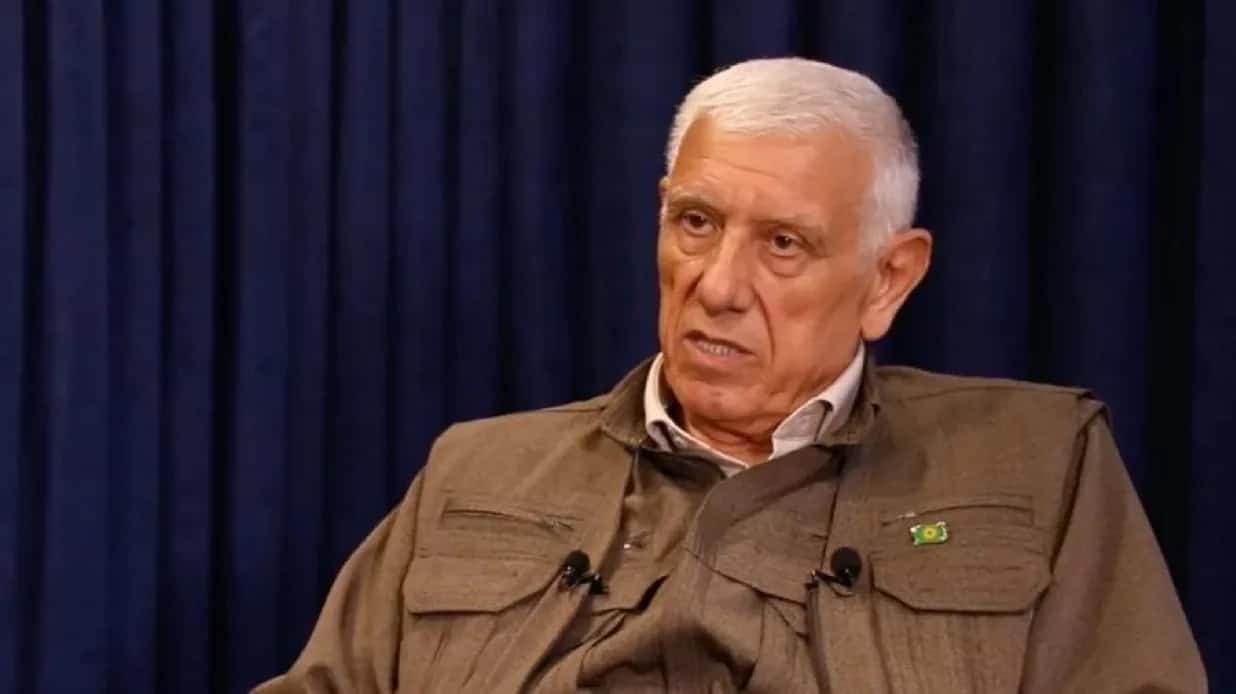
Against this backdrop, remarks by Cemil Bayık, a member of the movement's executive council, have drawn attention. Speaking on a television program yesterday, Bayık called for "democratic unity" among Kurds and said the obstacle to that unity comes not from the public but from political parties and organizations.
He said: "What lies ahead of us now? Building Kurdish unity. National unity has already taken shape among the Kurdish people. But the obstacles ahead come mainly from political forces, from parties and organizations."
The unity Bayık is calling for has a political destination of its own. He said it would form the basis for advancing democratic confederalism in the Middle East. Parties in the Kurdistan Region, meanwhile, are gathering today to defend federal status and constitutional rights against Baghdad.
Bayık said:
"What lies ahead of us now? Building Kurdish unity. National unity has already taken shape among the Kurdish people. But the obstacles ahead come mainly from political forces, from parties and organizations. Every party and organization must put the people's will first. They must place the people's will above their own party interests, so that democratic unity can be built among Kurds. Today the Kurdish people need this more than ever, because the Kurds have become a fundamental force in the Middle East. The Kurdish dynamic has been set in motion. Everyone approaches the Kurds according to their own interests. The Kurds need to make this dynamic work for themselves. For that, they must build democratic unity among themselves. If they do, they will secure a very strong position in the Middle East. They will render a great service both to the Middle East and to humanity.
We also have ahead of us the task of developing a democratic system, a democratic confederalism, in the Middle East. This, too, can only develop on the basis of democratic unity among Kurds. The Kurds can fulfill this role; they can be its driving force. For this reason, building democratic unity among Kurds as soon as possible is essential. On this basis, they can fulfill their responsibility toward the Middle East, and through the Middle East, toward humanity. Beyond this, there is also the question of the international movement. There is the socialist movement, the freedom and democracy movement. However far these efforts have been developed, they remain insufficient. They need to be strengthened and advanced, because the capitalist modernity system sees no obstacle before it.
That is why it attacks everywhere so freely, attacking peoples. It feels safe. Why? Because there is no longer a force left to stand in its way. Within the socialist movement, within the freedom and democracy movement, there needs to be unity, so that this force can stand against the system. Because the system has essentially run its course. If it still survives, on what basis does it survive? There is no substantial force standing against this system. It is exploiting that. For this reason, we must also fulfill our duty toward humanity in this direction."