
Erbil Calls It Unconstitutional; Iraq's Top Court Rules Otherwise, Same Day
Iraq's Federal Supreme Court upheld, on the same day, decisions the Kurdistan Regional Government had branded unconstitutional. The court ruled Baghdad can deploy federal forces along the Kurdistan Region's borders and that the region's authority cannot extend beyond the boundaries that existed on March 19, 2003. The ruling is final and binding.
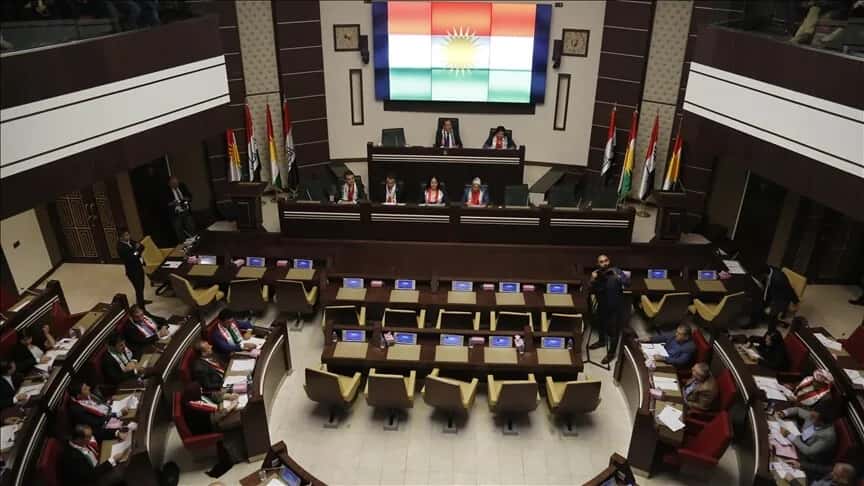
RastinewsIraq's Federal Supreme Court has ruled that restrictive measures imposed by Prime Minister Ali Zeydi on the Kurdistan Region are constitutional. The court found that border protection, control of border crossings, oil revenues and oversight of the region's non-oil revenues fall under federal authority.
The court issued its ruling today on a series of constitutional questions at the prime minister's request. It said the division of powers between Baghdad and the Kurdistan Region "must not infringe on the federal government's exclusive authorities."
The ruling passed by majority vote, with two judges dissenting. It set out seven key points on Baghdad's authority over the Kurdistan Region:
1. Border protection
Protecting and defending Iraq's international borders is an exclusive federal power. The Iraqi government has the right to deploy federal armed forces and take necessary measures along all borders with neighboring countries, including those running through territory administered by the Kurdistan Region.
2. Border crossings
Federal authorities have the right to inspect, monitor and control all of Iraq's border crossings, including those in the Kurdistan Region, while taking into account that customs operations are coordinated with the Kurdistan Regional Government.
3. Digitizing customs
Establishing a unified national system to digitize border crossings and customs operations across Iraq, including the Kurdistan Region, and linking them to federal ministries falls under federal authority.
4. Oil and gas
The federal government, the regional government and producing provinces will jointly manage extracted oil and gas. However, Iraq's Oil Ministry and federal oversight bodies retain the right to supervise, monitor and inspect the fields, processes and contracts involved in oil and gas production, extraction, marketing and export.
5. Non-oil revenues
The federal government has the authority to set fiscal and customs policy, determine a unified customs tariff, and oversee, audit and channel into the general treasury all taxes, fees and non-oil public revenues across Iraq, including the Kurdistan Region.
6. Geographic limits of regional authority
The geographic limits of the Kurdistan Region's authority are determined under Article 53/A of the Transitional Administrative Law and Article 143 of the Constitution. Those limits cover the areas administered by the Kurdistan Regional Government as of March 19, 2003, within Dohuk, Erbil, Sulaymaniyah, Kirkuk, Diyala and Nineveh provinces. Taking into account the constitutional provisions on disputed territories (Article 140), the Kurdistan Region's authority cannot extend beyond this boundary.
7. Areas outside the region's boundaries
In areas falling outside the geographic limits of the Kurdistan Region's authority, constitutional, administrative and executive powers belong solely to federal authorities. Any de facto administrative control exercised by the region beyond these limits does not grant it any constitutional right or authority.
The Federal Supreme Court stated at the close of its ruling that the decision is final and binding on all authorities.