
Perinçek confirms Öcalan's letter, vows to respond
Doğu Perinçek has confirmed receiving a letter from Abdullah Öcalan and says he will respond to it. Perinçek called Öcalan the real actor in the process, said the AKP has fallen far behind him, and argued that Öcalan's February 27 call was never properly read.
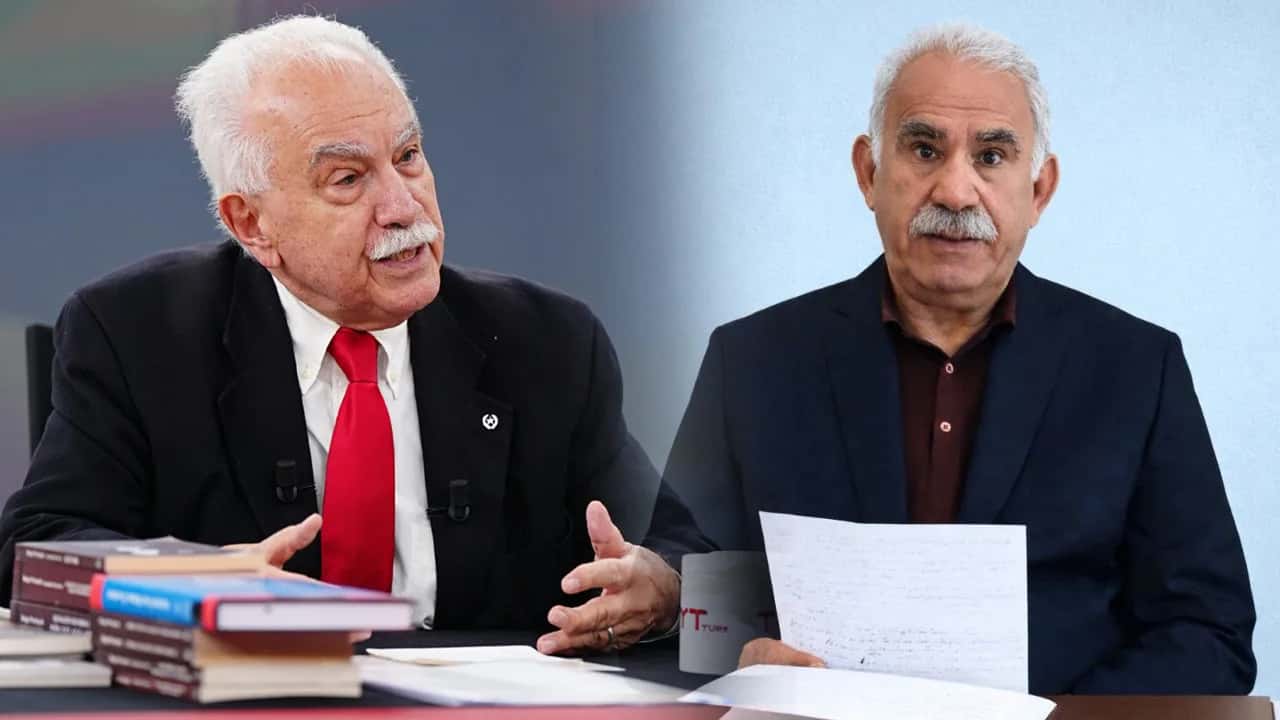
RastinewsPatriotic Party leader Doğu Perinçek spoke to Notbir after receiving a letter from Abdullah Öcalan. He confirmed he had received the letter and said he would reply.
Perinçek said Öcalan remains the process's real actor. "By calling it 'Terror-Free Turkey,' the AKP has fallen far behind Apo (Öcalan) in this process. Öcalan is the actor here," he said.
He also said Öcalan's February 27, 2025 call for the PKK to disarm and disband had not been properly understood. Perinçek underlined the part of the call urging members to "lay down arms and dissolve the party for the sake of integration with the state and society." He said the solution to the issue marks a turning point rooted in 200 years of Turkish revolution.
Doğu Perinçek has confirmed that Abdullah Öcalan sent him a letter and said he would respond to it. Describing the Terror-Free Turkey process as an "integration process," Perinçek told Notbir that the AKP had derailed it, saying, "The guns have fallen silent, but the gun in people's minds has not."
Patriotic Party leader Doğu Perinçek confirmed to Notbir that he had received the letter from Abdullah Öcalan. He said he would reply to the letter, in which Öcalan referred to their past talks in Lebanon's Bekaa Valley and proposed joint work and cooperation. Perinçek also offered pointed assessments of the current process. "The AKP government derailed the process. The guns have fallen silent, but the gun in people's minds has not," he said.
On the letter, Perinçek said: "Yes, Öcalan sent me a letter. Its contents are accurate, as reported in the press. I have never left a letter unanswered, and I certainly won't leave this one unanswered either."
'The AKP steered the process in the wrong direction'
Assessing the Terror-Free Turkey process, Perinçek described it not as the government does but as an "integration process." He said he believes the process will succeed, and argued that the AKP government had steered it in the wrong direction.
'The gun in people's minds has not been silenced'
"The government calls it 'Terror-Free Turkey,' but we call it the integration process. We expect the process to succeed. In fact, this is a process of integration for the state and the nation. But the AKP government derailed it. The guns have fallen silent, but the gun in people's minds has not," Perinçek said.
'The previous peace process was planned by the US'
Asked by Notbir about the difference between the previous peace process and the current one, Perinçek argued that the two had entirely different starting points. He said the earlier process had been carried out under US planning, while the current one grew out of Turkey's own dynamics.
Perinçek compared the two processes as follows:
"The goal here is integration within the Turkish nation. That one (the previous peace process) was a process planned by America. This one, by contrast, started directly from within us. Abdullah Öcalan is playing a very important role here, and we need to make good use of it and not throw away this historic opportunity."
'The AKP has fallen far behind Öcalan'
Perinçek argued that Abdullah Öcalan's February 27, 2025 call to disarm and disband had not been given enough consideration. He said Öcalan's message to the PKK congress needed to be read carefully, and that Öcalan was one of the process's key actors.
The Patriotic Party leader said:
"We need to read the famous February 27, 2025 call carefully... What did Öcalan tell the PKK congress in his letter? 'Gather, and lay down arms and dissolve the party for the sake of integration with the state and society.' That was a very important message. By calling it 'Terror-Free Turkey,' the AKP has fallen far behind Apo (Abdullah Öcalan) in this process. Öcalan is the actor here."
'I firmly believe this peace process will succeed'
Perinçek said the current process should not be judged solely on the basis of current political developments, stating that the matter is tied to Turkey's historical transformation.
Describing the resolution of the terrorism problem as one of the developments underlying 200 years of Turkish revolution, Perinçek said the fact that the process emerged from within Turkey itself raised its chances of success:
"In fact, resolving the terrorism problem is an event rooted in the essence of 200 years of Turkish revolution. Because this peace process, too, emerged from this land, I firmly believe it will succeed."
Öcalan's letter to Perinçek
Abdullah Öcalan sent a private letter to Patriotic Party leader Doğu Perinçek on November 20. The letter, which opens with the words "Oh Doğu!," recalls their 1989 and 1991 meetings in Lebanon's Bekaa Valley and proposes that Perinçek join him in common work and cooperation.
After Patriotic Party leader Doğu Perinçek sent his regards to Abdullah Öcalan, Öcalan in turn wrote a letter addressed to Perinçek. According to reports dated November 20, 2026, the letter was delivered to Perinçek through two figures from Öcalan's secretariat.
Öcalan had previously said, during meetings with Sırrı Süreyya Önder, that he intended to send Perinçek a letter. The latest letter has also revived attention to the two men's past contacts.
Öcalan calls on Perinçek to work together
According to information obtained from people close to Perinçek, Öcalan's letter pointed to the past contributions made by Perinçek and his associates toward recognition of the Kurdish issue. Öcalan argued that, despite the disagreements the two sides have had in the past, common ground exists between them, writing:
"We are at least as patriotic as you are. In fact, beyond the disagreements that have stood out between us until now, we share more common values and concerns than we might think."
Öcalan, who opened his letter with the address "Oh Doğu!," objected to his approach to the Kurdish issue being characterized as separatism. Emphasizing coexistence and democratic politics, he wrote:
"It is wrong to read our approach as separatism. Our demand is not for peoples to grow apart from one another, but for a shared life built on equality, freedom, mutual respect and democratic politics. A democratic resolution of the Kurdish issue matters not only for Kurds, but for the democratic future of Turkey as a whole."
Öcalan objects to Perinçek's past remarks
One of the subjects Öcalan addressed in his letter was Perinçek's past description of them as "America's puppet." Objecting to that characterization, Öcalan signaled that past divisions should be set aside and a new chapter opened.
Calling on Perinçek to work together, Öcalan wrote:
"The point is this: we can make a new start. If we genuinely share concerns about a democratic republic, an independent political will, and peoples living together in peace, we should look for ways to turn these into concrete cooperation. Our intention is not to deepen division. We want to devote the rest of our lives to working and walking together on the basis of mutual understanding, equality and shared responsibility. Because I believe that what Turkey needs, more than continuing to settle scores with the past, is to build together a shared future in which peoples can live equally and freely. We stand behind what we discussed when you came to Lebanon."
The Bekaa meetings 35 years ago
Öcalan's statement in the letter that he stood behind the talks he had held with Perinçek in Lebanon revived attention to their past meetings in the Bekaa Valley.
While serving as editor-in-chief of the magazine 2000'e Doğru, Doğu Perinçek had traveled to Lebanon's Bekaa Valley in October 1989 and April 1991 for two separate meetings with Abdullah Öcalan. Photographs from those meetings showing Öcalan handing Perinçek a carnation drew wide attention at the time.
Claims that these contacts had not resulted solely from Perinçek's personal initiative, but were also influenced by certain circles within the state, had been debated in the past. Assessments suggesting that Perinçek and Yalçın Küçük were used as a channel of contact at the time have also resurfaced.
About three months after the Bekaa visits, an amendment to the Turkish Penal Code lifted Perinçek's political ban. Elected chairman of the Socialist Party in July 1991, Perinçek held rallies that same year in Cizre, Batman, Diyarbakır and Silopi.
Perinçek had explained his past visits to the Bekaa Valley as aimed at informing the public, forestalling US intervention in the region ahead of the Gulf War, and preventing possible conflict among different nationalities and sects.