
Letter from the witness who put Yılmaz Güney behind bars: "I wish I'd said I hadn't seen it"
The case file that branded Yılmaz Güney a "judge-killer" has been reopened after 50 years. It contains a letter in which the judge's wife wrote that she had not seen the incident, and a report showing the bullet entered on an upward trajectory. The family has taken the case to the European Court of Human Rights.
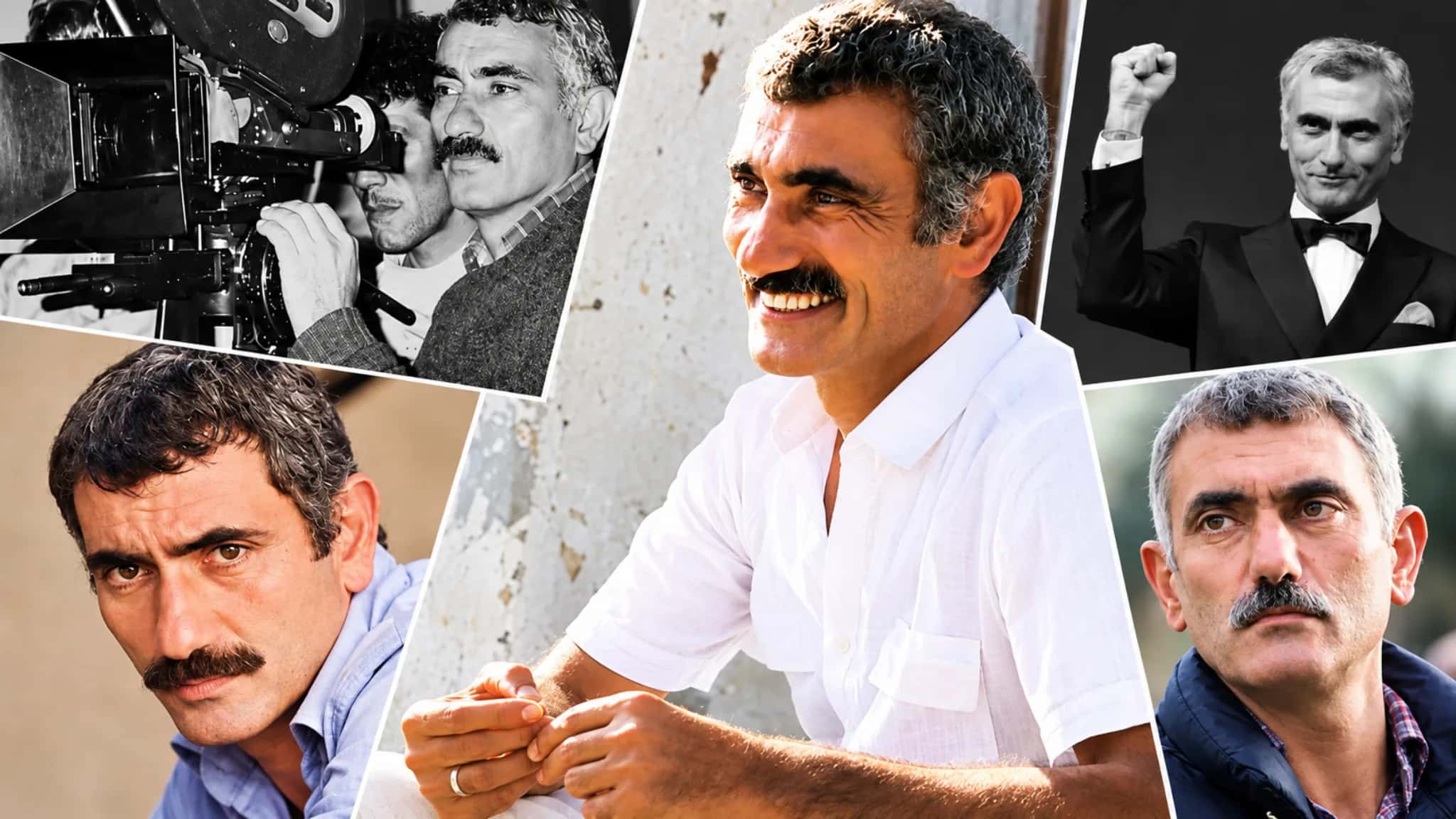
RastinewsThe case file over the 1974 death of Judge Sefa Mutlu in Yumurtalık, a district of Adana — the case that convicted Kurdish filmmaker Yılmaz Güney — has been taken to the European Court of Human Rights (ECtHR), 50 years later.
Bişar Abdi Alınak, the lawyer representing the Güney family, said the file had been kept classified on "security" grounds and that the family had only now gained full access to it. The application argues that Güney acted in self-defense and did not receive a fair trial.
Documents in the file call the 1976 verdict into question. Nuran Mutlu, the only person the court treated as an eyewitness, wrote in a letter — later attributed to her handwriting by experts — that she had not actually seen the incident. In the letter, she said she had felt it "necessary" for "that anarchist dog" to be convicted. A forensic report from the time, meanwhile, found that the bullet had entered from below at an upward angle, a trajectory that could not have come from Güney's position.
Alınak has called for Sefa Mutlu's grave to be exhumed to establish the facts. T24 has published both the case file and the ECtHR application.
The case file in which director, screenwriter and actor Yılmaz Güney was tried and convicted for killing Judge Safa Mutlu in Yumurtalık, Adana, has been pulled off the shelf after 50 years and taken to the European Court of Human Rights. The application states that Güney acted in self-defense and was denied a fair trial, and cites previously undisclosed material from the case file. Lawyer Bişar Abdi Alınak, who filed the application on behalf of the Güney family, said the 1976 court file had been classified on security grounds, and that the family only obtained it in full 50 years later. It also emerged that the ruling handed down at the time cited "unjust provocation" in weighing the evidence now underpinning the claim that the trial was unfair. The court that sentenced Güney wrote in its reasoned decision: "It is concluded that Yılmaz Pütün intentionally and willfully killed Safa Mutlu as a result of the unjust provocation to which he was subjected." The application states that the gun in Güney's hand went off during the assault in which Safa Mutlu struck him with a chair, and submits the forensic medicine report, the expert report, witness statements and the criminology report from the original case. Alınak said it still has not been established that Güney fired the weapon deliberately. "There is not a single witness who claims to have seen the moment Safa Mutlu was shot. Without a geometric and ballistic examination, the incident cannot be explained," he said, calling for Safa Mutlu's grave to be exhumed so the case could be fully clarified.
Yılmaz Güney — the first Turkish director to win the Palme d'Or at the Cannes Film Festival, who died in 1984 — was convicted in 1976 in the case over the death of Yumurtalık judge Safa Mutlu. Güney spent years in prison before dying in France in 1984. Years later, his wife Fatoş Güney, his daughter Güney and his son YılmazGüney, through their lawyer Bişar Abdi Alınak, applied to the court in 2024 seeking a retrial on grounds of self-defense and the exhumation and examination of Mutlu's grave. The Ankara 1st High Criminal Court rejected the request, ruling that all judicial proceedings had long since concluded and that the legal conditions for self-defense had not been met. An appeal against that ruling was also rejected by a higher court.
Alınak then applied to the Constitutional Court (AYM). In a ruling dated December 25, 2025, however, the court found the claim that the right to a fair trial had been violated inadmissible for lack of jurisdiction, and found the claim regarding violation of the protection of physical and moral integrity inadmissible for failure to exhaust legal remedies. Alınak then took the file to the ECtHR — exactly 50 years after the reasoned decision was issued.
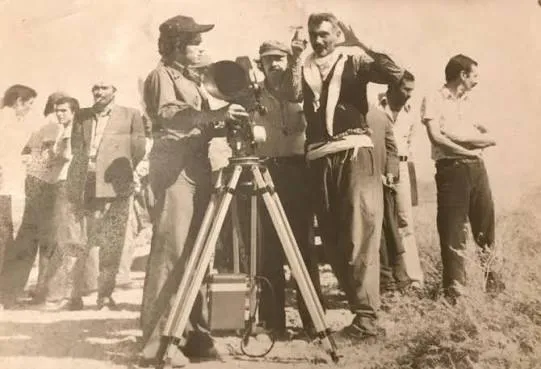
Yılmaz Güney on the film set in Yumurtalık
T24 obtains the 50-year-old case file
T24 has obtained both the file of the "Yumurtalık case," heard before the Ankara 1st High Criminal Court between 1974 and 1976, and the application submitted to the ECtHR.
The incident took place in 1974 at the Belediye Plaj Moteli (Municipal Beach Motel) in Yumurtalık, a district of Adana. According to the case file, Judge Safa Mutlu, his wife Nuran Mutlu, and relatives went to the casino of the hotel where they were staying in a tent. Yılmaz Güney, who was in Yumurtalık filming, was sitting in the same hotel casino with his wife Fatoş Güney; his guest, then-Adana Mayor Ege Bagatur; his assistant at the time, director Şerif Gören; and the film crew.
According to Güney's testimony, cited in the 1976 reasoned decision, a .22 caliber pistol was brought to the table while he was sitting with his guests in the casino, and he told Adana Mayor Ege Bagatur he could fire it if he wished. The casino owner then asked Judge Safa Mutlu, who was also present, for permission to fire the gun. But according to Güney's statement, insults — "not an actor, a p***" — were heard from a nearby table at that moment. Güney said he did not know who had insulted him. He said someone told him, "Shame on you, that's beneath you," and that after a friend at his table said, "He's a judge," he replied, "If he's a judge, what's that to us — he should mind his manners." According to his statement, when a voice from the other table asked, "Who said that?", Güney answered, "I did," and said several people he described as drunk then came toward him.
"They attacked four times; there was an 80cm height difference when the gun went off"
Güney said that on seeing strangers coming at him, he picked up the .22 caliber pistol from the table and got up, and that the gun went off as his friends tried to take it from his hand, with a few more shots fired at the same time. He then said he went up the stairs leading from the casino to the hotel, where relatives of Judge Safa Mutlu and Yumurtalık deputy prosecutor Tuncer Aslan attacked him four times, and that Safa Mutlu then attacked him with a chair, during which he was wounded by a single shot on his left side and fell. In his defense, Güney said there was a 20cm height difference between them at the moment, and that because of a 60cm step, he was 80cm above Mutlu.
Witnesses: Safa Mutlu advanced on Güney, gun went off on fourth attack
Other witnesses questioned at the casino said Yılmaz Güney first fired several shots into the air and stood by the stairs; that Safa Mutlu attacked Güney four times; that Güney kicked him while shouting, "Don't come at me," that Mutlu fell to the ground, then got up and came at Güney again with a chair, and that the gun went off during that fourth attack. Abdullah Bütün, Güney's cousin, who was at the scene, later turned himself in to the Gendarmerie Command and claimed he had committed the killing.
Judge's wife gave conflicting statements
In her witness statement, Nuran Mutlu, Safa Mutlu's wife, said the couple had first gone to their tent by the sea at the Belediye Plaj Moteli, then to the casino after dinner. Like Güney, she said people nearby had asked Safa Mutlu for permission to fire a gun. According to her account, Safa Mutlu said, "No guns are fired here — the prosecutor is off duty, and as a judge, I will intervene immediately," but as they walked back to the tent, three gunshots rang out from the casino, and they turned back. Nuran Mutlu said that when she followed him in, her husband was trying to wrest the pistol from Yılmaz Güney's hand; that the two men were fighting alone when Güney fired; and that her husband was wounded and fell. The case file notes, however, that her preliminary and final investigation statements contained inconsistencies.
The judge's wife's letter: "I wish I'd told the truth, but I felt it was necessary for that anarchist to be convicted"
Güney's lawyer submitted to the court a letter dated January 10, 1976, written by Nuran Mutlu, along with a March 12, 1976 report by a three-member panel of experts confirming that the handwriting on the letter and envelope was hers.
In parts of the letter — addressed to Osman Ö. and entered into the case file — Nuran Mutlu explicitly states that she did not see the incident. It reads, in part:
"I wish back then I had said I hadn't seen the incident — it would be so much better now. But at that moment I spoke thoughtlessly, for my child's sake. You know what was at stake — I also spoke that way because I felt it was necessary for that anarchist dog to be convicted. It would have been so much better if I had told the truth back then and stayed out of this case from the start. But as I said, thinking of my child's future and interests is what drew me into this case."
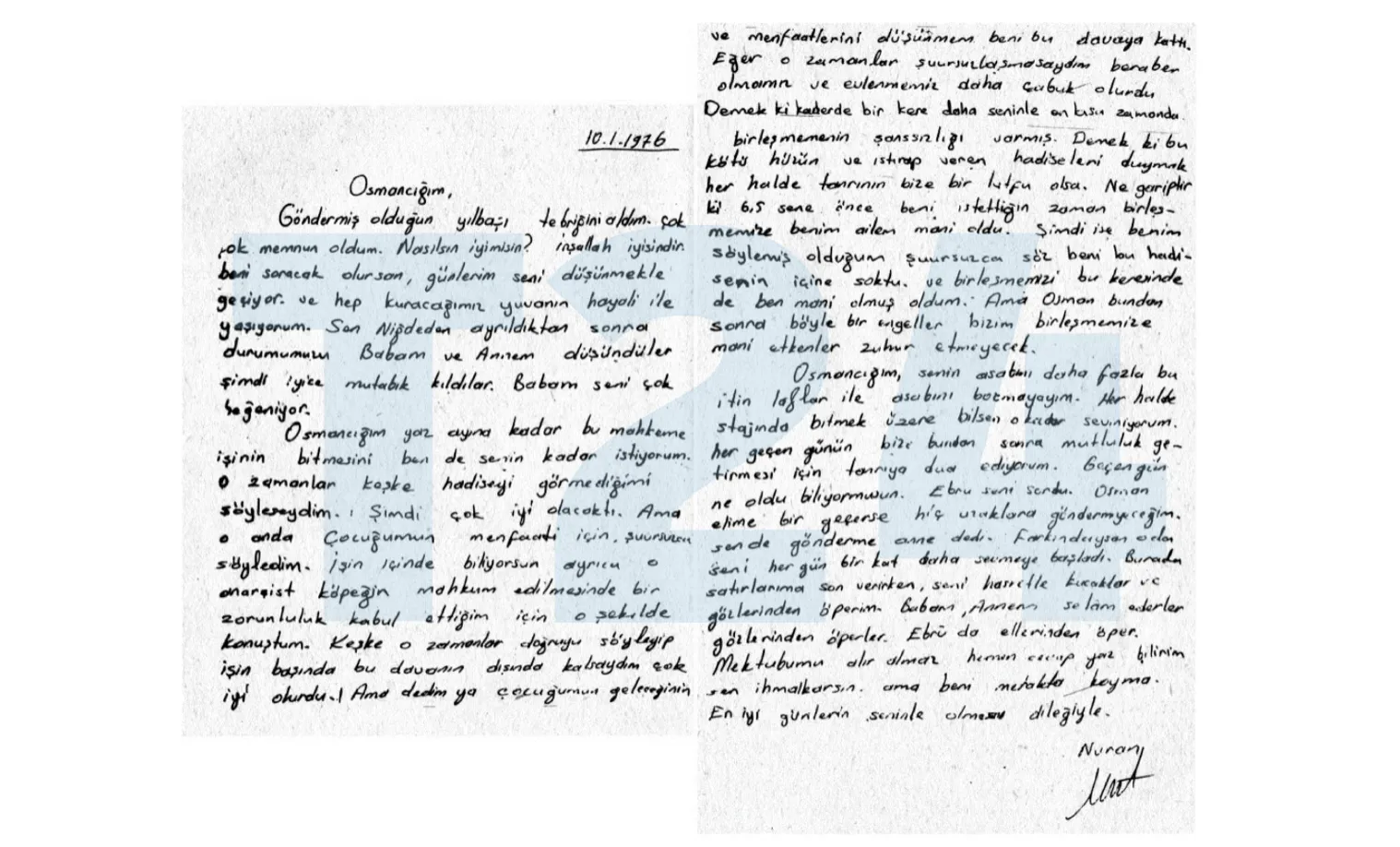
The 1976 letter entered into the case file, which an expert report attributed to Nuran Mutlu, wife of Judge Safa Mutlu
Court: Testifying as if she'd seen it, though she hadn't, was "a mother's lament"
The court's finding stated: "While this could mean Nuran Mutlu took part in the case by testifying as though she had seen the incident when she had not, it could also be seen as the lament of a mother who lost her husband, worried about her child's future, and whose attempt to rebuild her life was delayed by the case dragging on," adding that even if taken as an expression of regret, it did not amount to evidence.
Expert report: Safa Mutlu died of a brain hemorrhage after being shot in the right eye; Güney wounded in the forearm
According to the autopsy report cited in the expert report, Judge Safa Mutlu died of a brain hemorrhage caused by a bullet that entered through his right eye and exited the right front of his skull. During his struggle with Mutlu, defendant Yılmaz Güney was wounded in the left forearm, and director's assistant Şerif Gören was wounded in a finger of his right hand.
In his first statement, Şerif Gören claimed he was wounded by a bullet while he was in the sea. In a later statement, however, he said he had been hurt in the finger while trying to take the pistol from Güney's hand to prevent further trouble, and said he had no complaint against Güney. Gören said he had given his first account out of fear, because of his finger wound.
Court's ruling: He killed as a result of the unjust provocation he faced
Under the Ankara 1st High Criminal Court's 1976 reasoned decision, defendant Yılmaz Güney was convicted of "killing Yumurtalık deputy judge Safa Mutlu while he was performing his duty and because of it" and of "carrying an unlicensed firearm." Co-defendant Abdullah Bütün was convicted of "misdirecting the investigation," while director Şerif Gören — listed in the file as both a victim and a defendant — was acquitted of "giving false testimony."
In the operative section of the 1976 reasoned decision, the court wrote: "It is understood that Judge Safa Mutlu, returning to the casino after defendant Yılmaz Bütün fired the gun, assaulted defendant Yılmaz Pütün, punched him in the chest and cursed at him. It is understood that after Yılmaz Pütün pushed him and kicked him, [Mutlu] then struck him with a chair. Even if aimed at wresting the pistol from defendant Yılmaz Pütün's hand, the deceased Safa Mutlu's successive actions are accepted as grounds for unjust provocation under Article 51/1 of the Penal Code, and it is concluded that defendant Yılmaz Pütün intentionally and willfully killed Safa Mutlu as a result of the unjust provocation to which he was subjected."
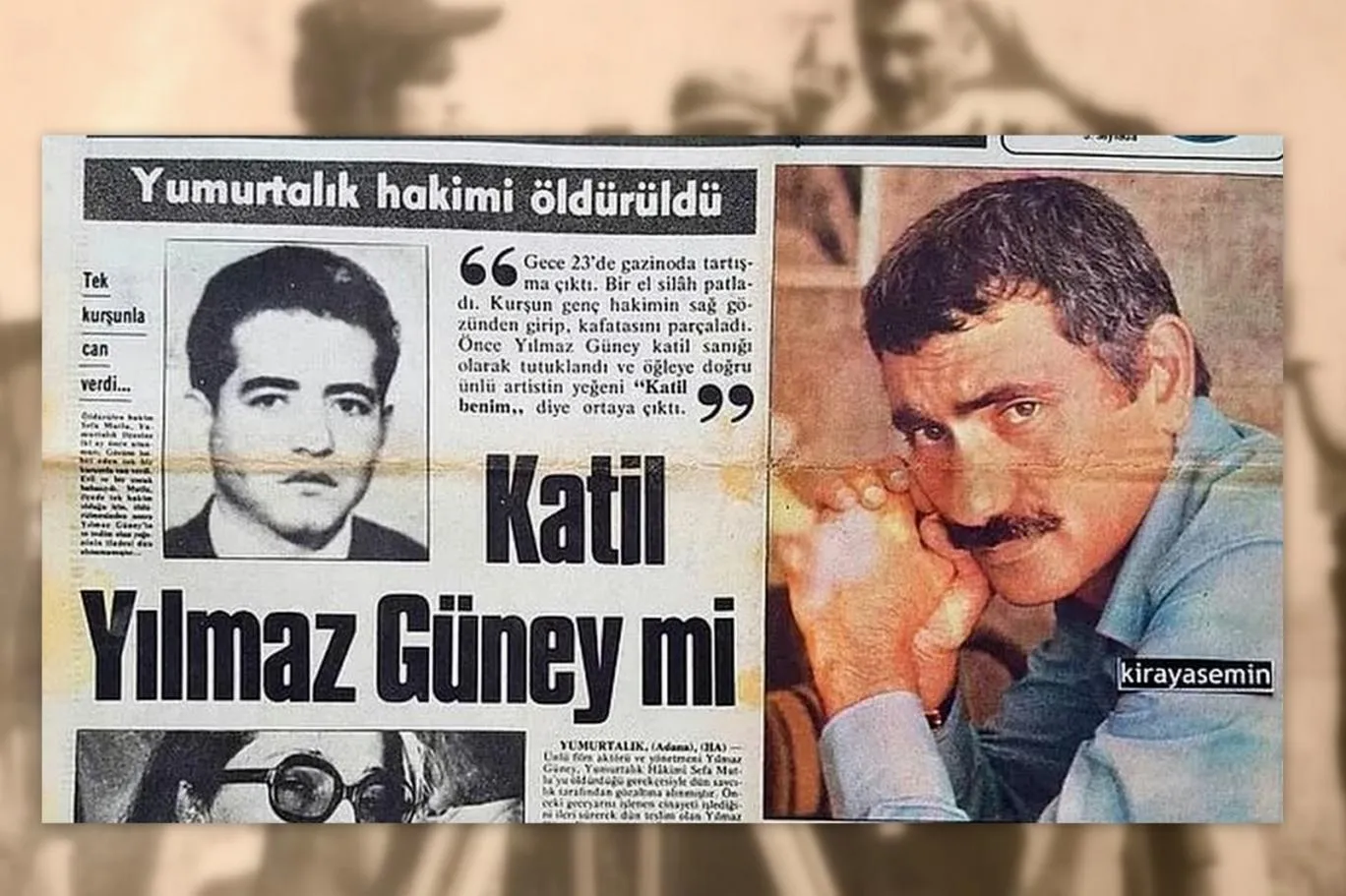
ECtHR application: Portrayed as a "judge-killer," subjected to character assassination
In the application lawyer Bişar Abdi Alınak filed with the ECtHR, it is stated that the information the family obtained had been kept from the public until now, and that Yılmaz Güney had been subjected to character assassination by being branded a "judge-killer." Alınak, who maintains Güney was not a killer, said of the material they had gathered: "It proves that the judges of that era, through a biased trial, issued a ruling so grotesque it will go down in the world's legal history."
Alınak argues that the trial was subject to political interference and was therefore tainted, and said exhuming Safa Mutlu's grave would bring every aspect of the case to light. Alınak, who attached to the file both the period's expert report and a report prepared at the court's request by Ertuğrul Korhan, then a criminalistics instructor at the Police Institute, wrote the following in his petition:
"The autopsy report found the bullet entered from below, at an upward angle"
"From before the incident until the moment it occurred, Yılmaz Güney was physically attacked four times by relatives of Judge Safa Mutlu — who was off duty and heavily under the influence of alcohol — and of Yumurtalık deputy prosecutor Tuncer Aslan. The fatal incident occurred during Mutlu's fourth attack on Güney, this time with a chair. The court at the time explicitly acknowledged this. This is where the crux of the case lies. As stated in both the reasoned decision and the expert reports, Yılmaz Güney, at the moment he was attacked with the chair, was at least 80cm above the deceased, owing to a 20cm height difference and his position on a 60cm step. Yet the autopsy report found that the bullet entered on an upward trajectory, from below."
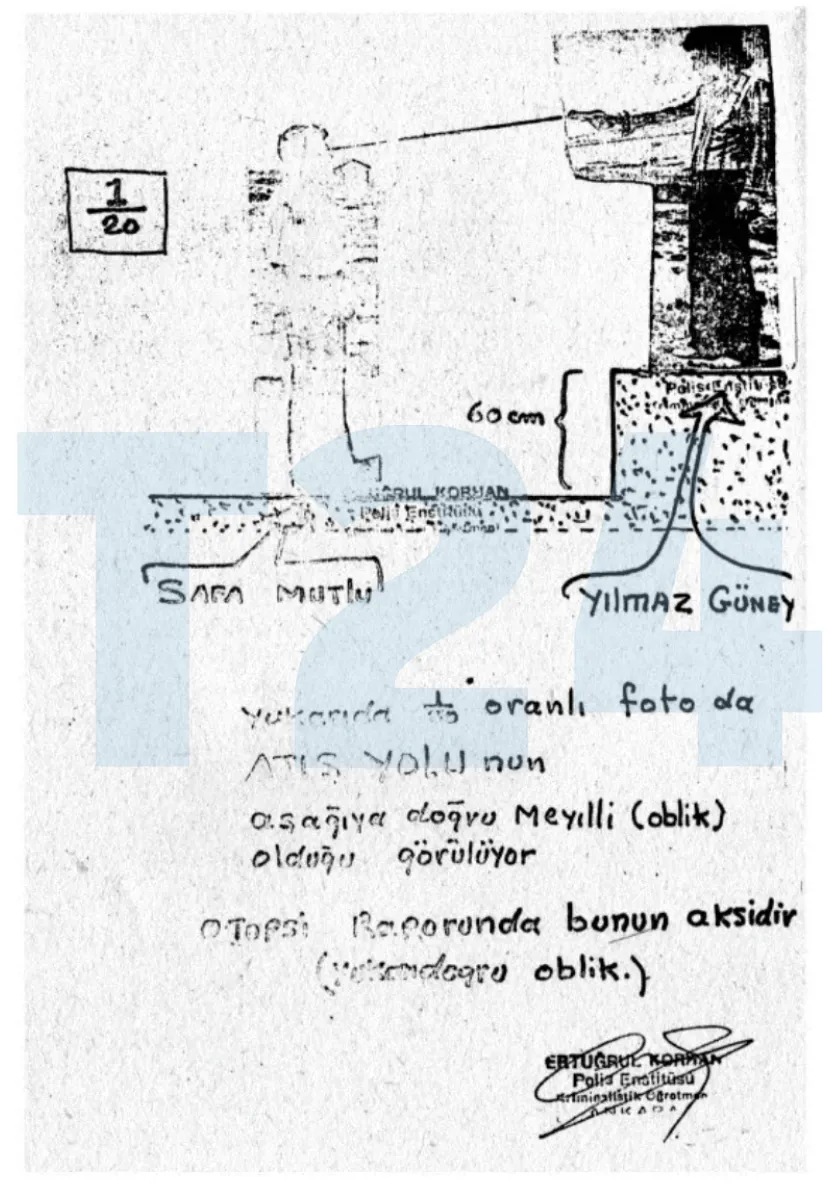
A diagram by Ertuğrul Korhan, then a criminalistics instructor at the Police Institute
Police Institute criminalistics report: Shot fired from below upward and from left to right
"The diagram belongs to the report prepared at the court's request by Ertuğrul Korhan, then a criminalistics instructor at the Police Institute. Korhan stated plainly in his report: 'According to the findings of the initial examination and the autopsy report, the direction of the entry and exit wounds shows the shot was fired on an upward trajectory, from below, and from left to right. Ballistic and geometric examination has established that the shot could not have been fired from above downward, given the difference in height between the deceased and defendant Yılmaz Güney (per the statements and reports in the file).'
It defies the laws of physics for someone fired at deliberately and with aim by a person standing higher up to be hit on an upward trajectory from below. The report itself addresses this contradiction:
'The ballistic and geometric findings show that the shot fired at the deceased, Safa Mutlu, came from below upward, or at most from a level parallel to the ground. (This shot could have come from a third party at the same level as Safa Mutlu.) Determining the geometric shape of the entry wound in the skull — if not altered during the autopsy — could establish the angle and direction of the shot.'
'As for the defendant's position in the moments leading up to the incident, established according to witness statements — in the absence of a ballistic determination in this case, a positive or negative outcome is equally likely.'
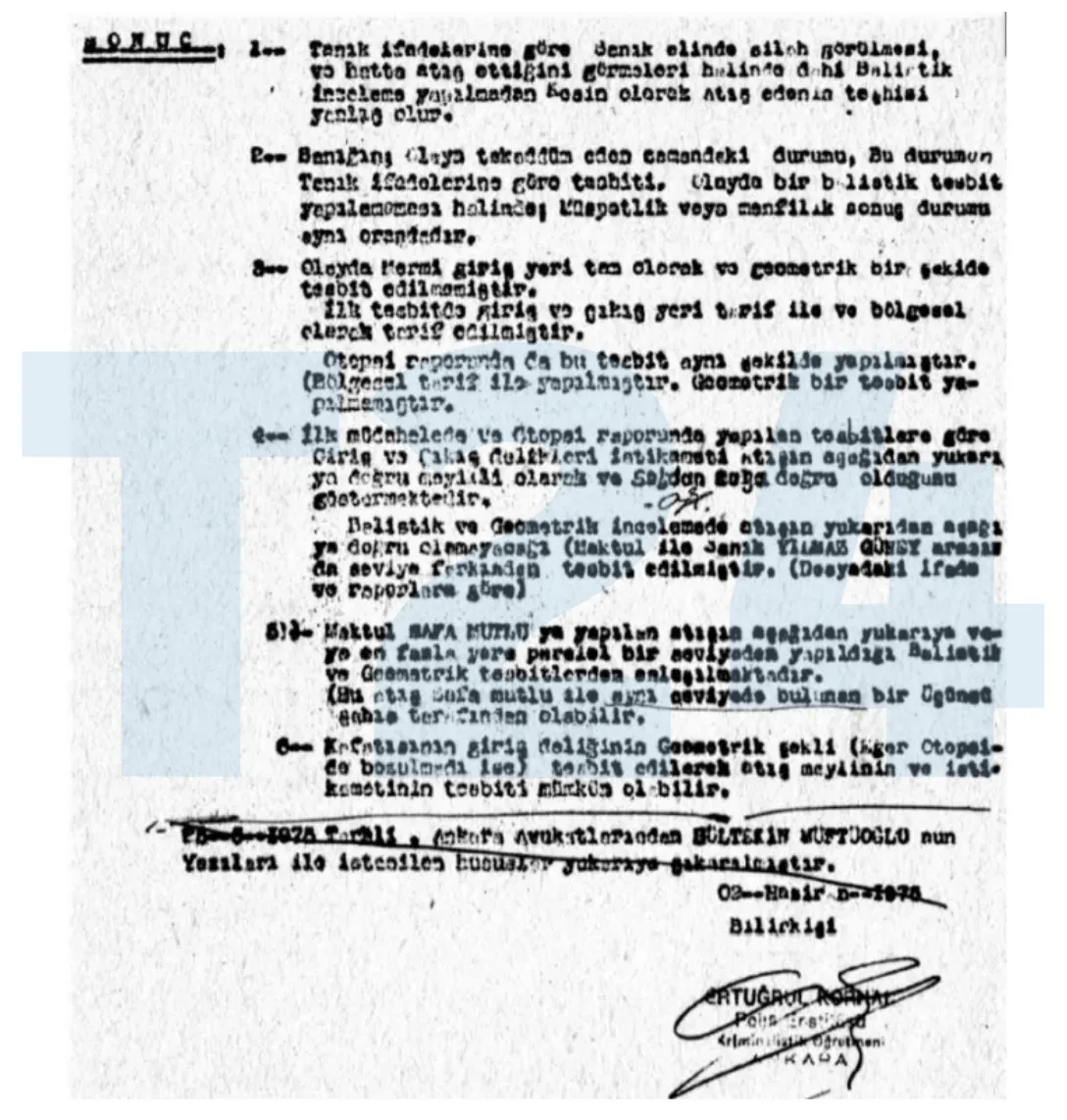
The criminology report
"Forensic Medicine called for examination of Safa Mutlu's skull; the question of where he was buried went unanswered"
"As can be seen, the incident cannot be explained without a geometric and ballistic determination. For reasons parallel to those in that report, the Institute of Forensic Medicine likewise said the deceased's skull needed to be examined, and the court asked where the deceased was buried so that this determination could be made. When the court raised the question, Nuran Mutlu's representatives sought to have the panel disqualified; that request was denied. Yet the single most vital examination that could have changed the course of the case was never carried out by the court of the time — no exhumation was performed, and no reason was given for that failure."
"Not a single witness claims to have seen the moment Safa Mutlu was shot"
"Another matter that shows the incident in fact unfolded against Yılmaz Güney's will while he was trying to defend himself lawfully, and that makes a retrial necessary, is the testimony of Şerif Gören and Nuran Mutlu. Above all, as your panel will see upon examination, the file does not contain a single witness who claims to have seen the moment Safa Mutlu was shot.
"In her letter, his wife wrote that she 'gave false testimony to get the anarchist dog convicted'"
At the initial stage, the only person who claimed to have seen Güney take deliberate aim and fire at the deceased was Nuran Mutlu, Safa Mutlu's wife. However, another tragic fact was uncovered by the lawyers handling Güney's case. In a letter to a third party, Nuran Mutlu admitted to giving false testimony, writing that she "had not in fact seen the incident," that she "gave false testimony to get the anarchist dog convicted," and that she believed she "should have told the truth at the time" and stayed out of the case:
Director Şerif Gören's false testimony: "He thought the case staying open could hold up the film shoot"
"Today, through our intensive efforts, we were able to reach Şerif Gören, one of the most important witnesses, and what he told us plainly shows how a grave ruling stripped an artist who introduced Turkey to the world of his future and his reputation. In fact, Gören tried to physically pull Güney away at the moment Güney fired into the air to protect himself from the first attack by the deceased's relatives, and it was then that the gun in Güney's hand went off, wounding Gören's finger. Yet, as he and several other witnesses have since admitted, in his first statement he feared that 'the case remaining open could hold up the film shoot,' and for that reason said he 'was in the sea at the time, and the bullet wound to his finger came from a shot Güney fired for the film while Gören was swimming some 100 meters away.' Although Gören's later, truthful account during the prosecution matches directly with the statements of Fatoş Güney and many other witnesses, it was accepted at the time that he had been swimming during the incident: 'He had stood up, and a few people there began trying to take the pistol from his hand. I definitely recognized Şerif Gören among them; while they were struggling, a few shots went off in my husband's hand, and that's when I noticed Şerif Gören had been wounded in the finger.'
"Güney's gun went off involuntarily from the blow of the chair — there was no intent"
The fact that Güney's gun discharged involuntarily from the blow of the chair shows that the element of intent is entirely absent, and that he cannot be punished for an act committed amid the fear caused by the assault against him. It is clear how large the group of Mutlu and his companions at the scene was, how that intensified the violence of Mutlu's attacks, and how limited Güney's means of defense were against the violence he faced.
"Not even one witness saw him fire the gun deliberately"
What's more, and most importantly, there is not even one witness who saw Güney fire the gun deliberately — but even if the firing were deliberate, it would remain proportionate given the severity of the attack against him. The tragedy of this trial is that, because of political interference, the possibility that the limits of self-defense had been exceeded was never even considered. Thus Güney — who did everything he could to avoid the fight and who was actually under attack — was convicted of intentional killing in a manner unprecedented in legal history. If the grave is exhumed and the false testimony set aside, even factoring in self-defense alone would dramatically reduce this merciless sentence. Unfortunately, whether the limits of self-defense were exceeded was never even put up for debate."
"We were forced to go to the ECtHR to defend the rights of a great revolutionary and artist"
Speaking to T24 about the Güney case, lawyer Alınak said:
"The judiciary that convicted Yılmaz Güney while appearing to try him — turning his pursuit of justice into a bit player in a political and historical reckoning — has today, instead of confronting facts that will emerge through material and scientific evidence, chosen once again to represent the mindset of decades past. Yet showing the courage to bring this truth to light, rather than hiding behind judicial authority, is owed not only to Yılmaz Güney and those who loved him, but also to the relatives of Judge Sefa Mutlu, who lost his life in a tragic accident. That this ruling — seen by some as a victory over Yılmaz Güney, yet incompatible with material fact — continues to be upheld even today serves not the application of a criminal provision in the name of justice, but the expectations of those who count the conviction of an artist raised by his own people as a triumph.
Today, even as there is talk of a will aimed at building social peace and achieving a historic reckoning on the Kurdish issue, it remains a deep contradiction still to be resolved that a mindset fueling hostility toward Kurds persists in other spheres. The perpetuation, by members of the judiciary from whom justice is expected, of prejudice against ethnic identity — through the case of Yılmaz Güney — shows that this grave mindset of the past has not, in fact, stayed in the past. That the European Court of Human Rights is now the last resort for seeking justice in Turkey is a damning picture for the country's judiciary.
We leave it to the public and to its conscience to judge the judicial approach that left us with no choice but to carry the case of a great revolutionary and artist like Yılmaz Güney to the European Court of Human Rights, those responsible for that approach, and those who dodged the scales of justice in rendering our pursuit of justice in domestic law fruitless."