
A decade after Brexit, UK and EU return to the table with deal on three fronts
Britain and the European Union are preparing to sign a new agreement covering food trade, carbon taxes and youth mobility, ten years after the Brexit vote.
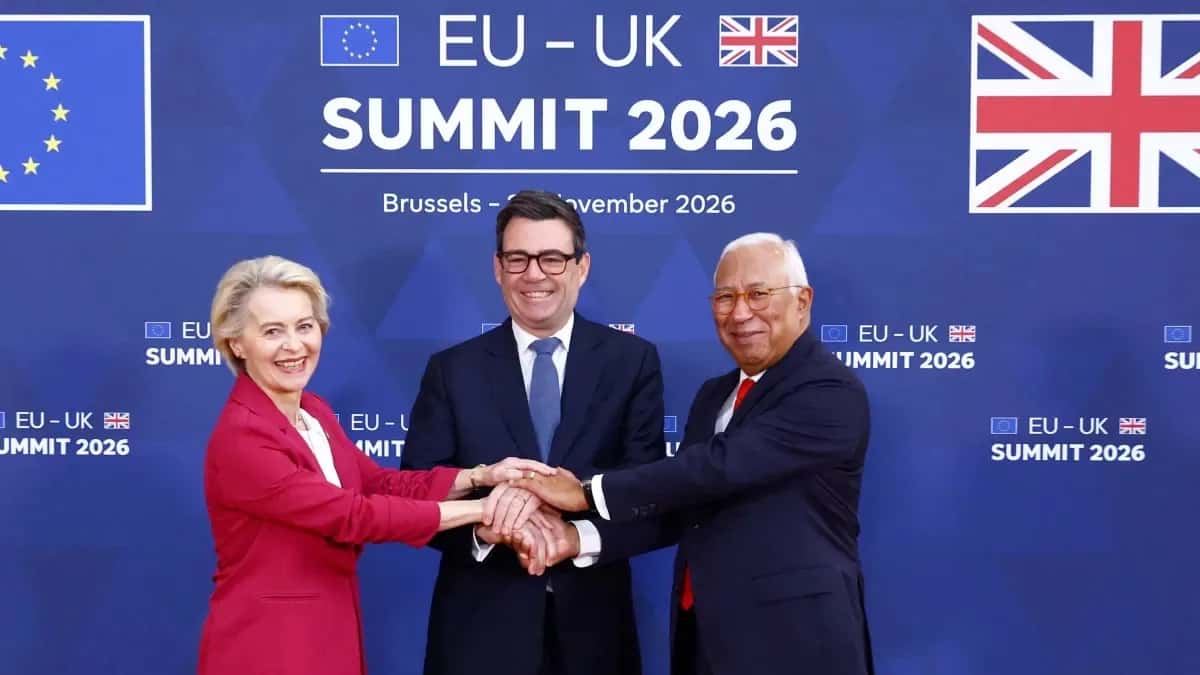
RastinewsBritain and the European Union are expected to sign a wide-ranging agreement at today's summit, easing food trade and youth mobility between the two sides.
The UK and the EU are meeting in Brussels to reshape their relationship a decade after the Brexit decision.
Britain and the European Union are expected to sign a wide-ranging agreement at today's summit, easing food trade and youth mobility between the two sides.
But the summit also lays bare deep divisions over long-term economic integration and regulatory alignment, despite a push for closer ties driven by global upheaval.
Russia's military campaign in Ukraine, US tariffs, China's grip on critical minerals and the war in Iran have shaken the global order, pushing London and Brussels toward a tighter alliance.
The summit, postponed since July, is being held under British Prime Minister Andy Burnham, who took office after former Prime Minister Keir Starmer's resignation.
Speaking on Monday, Burnham said it was plain that Britain had lost more from Brexit than it had gained, and argued that every option for the future — including rejoining the EU — should be on the table.
British Prime Minister Burnham argued that every future option, including rejoining the EU, should be considered.
A NEW CHAPTER FOR FOOD TRADE AND CARBON TAXES
The summit's central achievement scraps existing certification and inspection requirements for cross-border trade in animals, plants and goods such as sausages and seeds.
The British government expects the easier food trade to add up to £5.1 billion ($6.70 billion) a year to the economy.
The two sides also aim to link their emissions trading systems, exempting industrial goods such as steel from reciprocal border carbon taxes.
Talks are proving tougher on a plan to let young people from both sides work or study in each other's countries for up to three years.
Citing concerns over immigration, Britain had initially proposed an annual quota of 50,000, but backed down after the EU pushed for a higher figure.
EU diplomats say the two sides have settled on a quota of 100,000 for the youth mobility scheme.
A dispute over university tuition fees remains unresolved.
EU countries want their students to pay local tuition fees at British universities rather than the international rate, which is roughly three times higher.
Britain has offered only a significantly reduced fee, and the two sides aim to resolve the issue within six months.
London wants special status under the EU's "Made in Europe" rules, particularly for the automotive sector.
SPECIAL STATUS FOR THE AUTO SECTOR
The summit's most sensitive item, watched closely by Brexit supporters, is how far Britain will align with EU rules.
London wants special status under the EU's "Made in Europe" rules, particularly for the automotive sector.
Brussels has signaled it is open to the request, but is making it conditional on the UK aligning with EU policy.
Accepting that condition could mean Britain has to impose tariffs on Chinese-made electric vehicles.
A draft joint statement prepared ahead of the summit shows conflicting language between the two sides on the limits of economic coordination.