
Israeli parliament speakership passes to opposition
Three weeks after Israel's October 27 general election, with government formation still uncertain, the opposition scored a key win as one of its own was elected speaker of the Knesset.
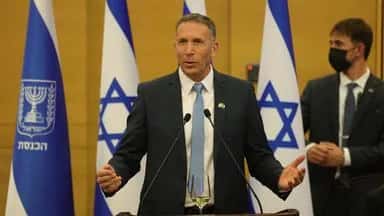
RastinewsMatan Kahana, a member of the centrist Yesh Atid party led by Prime Minister Benjamin Netanyahu's chief political rival Gadi Eisenkot, was elected speaker with 66 votes out of 120 lawmakers.
According to a statement from the Knesset Press Office, Kahana's rival, backed by Arab parties, received 52 votes. Taking over from Likud's Amir Ohana, Kahana said: "The Knesset is home to all of Israel's citizens," adding, "I want to be speaker for everyone."
Netanyahu's right-wing Likud party condemned the vote, arguing Kahana was elected "with the votes of supporters of terrorism."
Who is the new speaker, Kahana?
Kahana began his military career in Sayeret Matkal, an elite unit of the Israeli army, before serving 24 years as a pilot in the Israeli Air Force, rising to the rank of colonel. He also holds a law degree. Kahana advocates strengthening Israel's Jewish identity, while favoring greater compromise on religious matters and reducing the political influence of ultra-Orthodox parties.
The Knesset speaker holds significant powers, including determining which bills come to a vote. Kahana's election could therefore mark a first step away from Netanyahu's policies. The opposition is seeking to roll back key elements of the contested judicial overhaul the Netanyahu government has pursued since early 2023, which critics say threatens judicial independence and the separation of powers.
Coalition talks prove difficult
In the October 27 parliamentary election, neither the right-wing and religious alliance led by Netanyahu nor the opposition bloc led by Gadi Eisenkot secured a majority.
President Isaac Herzog tasked former Chief of Staff Eisenkot with forming a government. Eisenkot initially has until December 6 to do so, with a possible 14-day extension if needed.
Numerous disputes between the parties are complicating coalition talks, and it remains unclear whether Eisenkot can succeed in forming a coalition government. Deep divisions persist both between and within the political blocs.
Among the contested issues is potential cooperation with Arab parties or with hardline religious parties.
Source: DW