
Remezan Bakur: Southern Kurdistan Never Became a National Center for Kurds
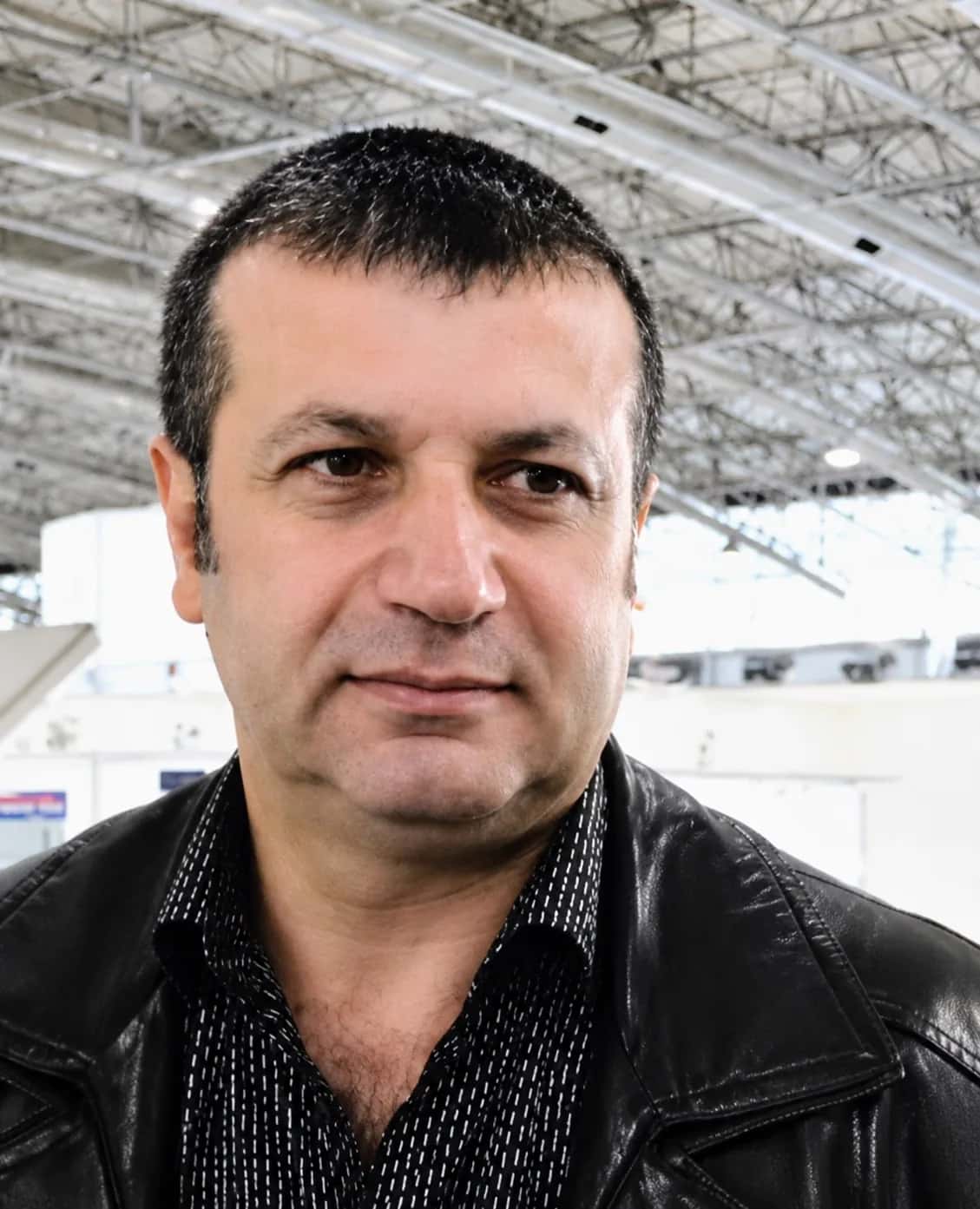
RastinewsUntil now, my writing centered on the Kurdish language. This time, because of recent events in southern Kurdistan, I want to share some of my own experiences to help readers understand today's situation in the South. Unfortunately, politicians and political organizations in southern Kurdistan have lacked, and still lack, state wisdom. My aim is not to blacken anyone, nor to write the recent history of southern Kurdistan. Through a few of my own experiences, I want readers to grasp what kind of consciousness and understanding actually exists there.
Kurds in all four parts of Kurdistan, and Kurds worldwide, held a hope — and still hold it — that southern Kurdistan would become a common national foundation for all four parts of Kurdistan and for Kurds everywhere. But again, unfortunately, southern Kurdistan has shown no consciousness matching that hope. From the start of the southern revolution until today, instead of uniting to work together for the freedom of the Kurdish people and the statehood of Kurdistan, its forces have worked against each other. In the past they have often fought fratricidal wars, and they still oppose one another today. In 1986, I went to southern Kurdistan for the first time. In the Behdinan area, around Mount Metina, I sat with Peshmerga forces in several villages and talked with them. I asked questions and listened. At that time, the region held forces and units of the KDP, a smaller presence of the PUK, PKK units, and units of the Iraqi Communist Party, each with its own bases, known as MEQER. Even the Assyrians of southern Kurdistan had founded a party, the Assyrian Liberation Party, with its own armed fighters. The Iran-Iraq war, meanwhile, was raging at full intensity.
While I sat with the Peshmerga, their commander opened a conversation about the revolution. I asked him: why don't the parties of Kurdistan seize this opportunity for Kurdistan's freedom? The Iran-Iraq war is still going on — you could take up arms. Why not build a national military force? The commander replied that there was no need, since they were already allied with every party fighting the Iraqi state within the revolution. I asked him another question: if Iran and Iraq made peace and ended their war, could you still protect the Kurdish people and liberate Kurdistan? He said that would never happen. "We are allied with the Iranian state. Until we reach our goal and get our rights, the Iranian state will not abandon us. It is governed by sharia law and acts with the justice of the holy Quran — it will not wrong us." I asked him how he could trust the Iranian state, which had occupied part of Kurdistan and denied the Kurdish people their rights. If the Iranian state was as just as he claimed, why didn't it grant the Kurds of Eastern Kurdistan their rights? At that question he grew irritated, gave an answer that had nothing to do with what I'd asked, and said: "You young men from Northern Kurdistan have no faith anyway." I was stunned and asked nothing more. I told myself he was perhaps simply uninformed, unaware of his party's strategic plans. It became a habit of mine: in several other places in the region, I raised the same question with other Peshmerga. I found they all shared the same thinking, the same belief, the same words. I grew deeply troubled, and lost hope in their revolution and their cause.
On my second trip to southern Kurdistan, I witnessed something striking — on its own enough for a long article. At the time, in the village of Besifka in the Behdinan region, there was a tribal chief turned government militiaman (cahş) named Cehferê Bêsifkî. Saddam Hussein had him killed on charges of aiding the Peshmerga. After his death, the militiamen loyal to him switched sides, joined the Peshmerga, and together they attacked a military base called Mangêjik. The Peshmerga and Cehferê Bêsifkî's former militiamen captured the base; Saddam's soldiers surrendered en masse, and the attackers seized the weapons depot. The operation made headlines in the world's news agencies. I was delighted, especially about the weapons depot — I thought a large quantity of arms had fallen into Peshmerga hands and would strengthen their forces. A few days later, though, I heard that the Peshmerga and Cehferê Bêsifkî's militiamen had sold those very weapons to smugglers. I saw it with my own eyes: the smugglers loading the weapons onto mules and hauling them off to northern Kurdistan to sell. I was stunned. I told everyone: when weapons that fall into a force's hands get sold off, that force is not a national force — it's a militia. A force whose own members sell weapons that fall into its hands has no state wisdom, and no country or state can be built on such a force.
I went back to southern Kurdistan many times after that. After the Iran-Iraq war ended and the Anfal campaign began, I returned. By then the Peshmerga forces had scattered — nothing and no one remained under that name. The people of the South were left defenseless against the Anfal attacks. I saw men who called themselves Peshmerga handing their weapons over to Turkish soldiers at the border, eager to cross quickly into the North. I deeply regretted the loss of those weapons, and of that part of Kurdistan. After the 1992 Anfal and the uprising, I went to southern Kurdistan once more. By then the international no-fly zone along the 36th parallel had been declared, banning warplane flights to protect the population. The Turkish state was threatening southern Kurdistan at the time and wanted to occupy it. Peshmerga were digging defensive trenches on top of Mount Bêxêr. I met with KDP officials in the Zakho district and in Duhok city and asked them: will you defend yourselves? They told me they were preparing for defense as part of a broader movement, but that the United States and the international coalition were not protecting them — they could not defend themselves alone, and believed the United States and the international coalition would protect them. I told the official: the Jews built their own state, Israel, within a single year and became a formidable power in the Middle East. You live under the protection of the 36th parallel — why have the parties of southern Kurdistan still not united, and why, like the Jews did then, don't you arm a national force now so you can defend yourselves? The only answer was: "We can't." Nothing more was said.
I was in southern Kurdistan again in 2015, researching my second novel, A Woman and a Life: Leyla Tiyarî. At the time there were disputes between the KDP and the PUK. I visited officials in Zakho, Duhok and Akre and we discussed the region's disagreements. Political officials there, with the same mindset as before, told me: if the PUK comes and agrees to do things our way, we'll serve our people together; if not, they stay in their area and we stay in ours, and they shouldn't interfere in our affairs — this is our Kurdistan, let them go to their own. Beyond the political situation, I also discussed with them education in a common language, unifying the Peshmerga forces under a single command, formal state institutions, and the courts and justice system of southern Kurdistan, among many other subjects. I won't set down all of those conversations and all of my experiences in southern Kurdistan here — it would make this article far too long.
In short: from what I have seen in southern Kurdistan, and heard from its officials, I can say they remain far from state wisdom. I do not believe southern Kurdistan will become a common national foundation for the future of the other parts of Kurdistan and for Kurds around the world. Its parties have never come together and united on their own; it has always been the international coalition and the United States that brought them to the table. I believe the parties of Kurdistan, in all four parts, have drifted far from the duty and goal of Kurdish nationhood and statehood. They have fallen captive to their own interests and to their own organizations. In all four parts of Kurdistan, the Kurdish people — and Kurdistan itself — need a new awakening from their parties and organizations.
When the Kurdistan parliament in the South convened for the first time, the wife of the French president, Danielle Mitterrand, delivered a speech. My advice to every Kurd: listen to the late Danielle Mitterrand's speech.
The views expressed here are the author's own; they may or may not coincide with the editorial line of Rastinews. Rastinews is a free platform open to differing views.