
UN calls for prosecution of attacks on Kurdish families in Tal Abyad
UN Deputy Special Representative for Syria Claudio Cordone told the Security Council that the January 29 Agreement will only hold if Kurds are represented in state institutions and their language and education rights are guaranteed. He called for the prosecution of those who attacked Kurdish families trying to return to Tal Abyad.
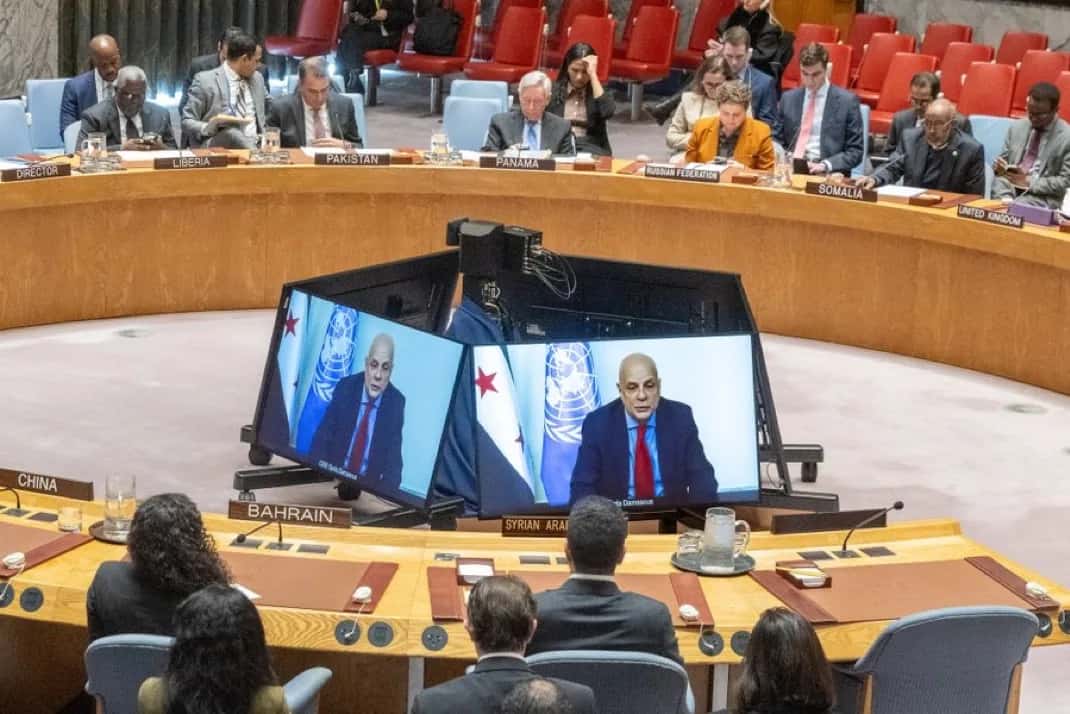
RastinewsClaudio Cordone, the UN Secretary-General's Deputy Special Representative for Syria, briefed the UN Security Council by video link from Damascus yesterday. He said implementation of the January 29 Agreement, which provides for integrating Rojava's institutions into the Syrian state, was still underway.
According to Cordone, the process hinges on a single condition for it to last: Kurds must be represented in state institutions, and their language and education rights must be guaranteed. The UN official stressed that these steps are also a precondition for the success of Syria's broader political transition.
Former SDF commanders now in security posts
Turning to concrete steps already taken, Cordone said former Syrian Democratic Forces (SDF) commanders had been appointed to posts within security institutions. He cautioned that progress should not stop there.
Call for prosecutions over Tal Abyad
The toughest part of the briefing, and the one most directly concerning Kurds, centered on Tal Abyad (Girê Spî). Cordone said more than 100 Kurdish families trying to return to the city had been met with violence, and he called for those responsible to be held accountable and prosecuted.
With the second anniversary of the Baath regime's fall approaching, the UN official described the formation of an interim People's Assembly as an important milestone. He called for work to begin on a permanent constitution and for credible, inclusive elections to be put on the calendar. Full and equal participation of women and civil society in the process was also among his demands.
A different tone from Ankara
Turkey's Permanent Representative to the UN, Ahmet Yıldız, who also spoke at the session, cited the SDF's dissolution as a positive step. But he said integration on the ground had fallen short of expectations. Integration, Yıldız said, needed to go beyond a change of name and uniform.
Kurdish-language education was also on the table last month
Cordone had laid out the problem areas in integration during his October briefing as well. He said former SDF members were gradually joining state institutions and that salary payments had been transferred to Damascus. At that point, the number of personnel integrated and the status of the Women's Protection Units (YPJ) remained unresolved.
In that same briefing, he said Kurdish-language education and the recognition of school diplomas were still under negotiation. He noted that housing, land and property disputes were also standing in the way of displaced Kurds returning home.
Cordone had also addressed the October protests in Hasakah. He said the protests, which called on the government to establish its authority in the region, had drawn different reactions from Arab and Kurdish communities, and he called for integration to move forward through dialogue rather than conflict.