
Five years of oil theft in Jurf al-Sakhar: 20,000 barrels a day, PM gives Kataib Hezbollah a Friday ultimatum
Evidence has emerged that Iraq's main oil pipeline in Jurf al-Sakhar, north of Babil province, has been tapped since 2021 to siphon off roughly 20,000 barrels of oil a day. Prime Minister Ali Falih al-Zaidi has dismissed nine senior officials and given Kataib Hezbollah until Friday to hand over the area.
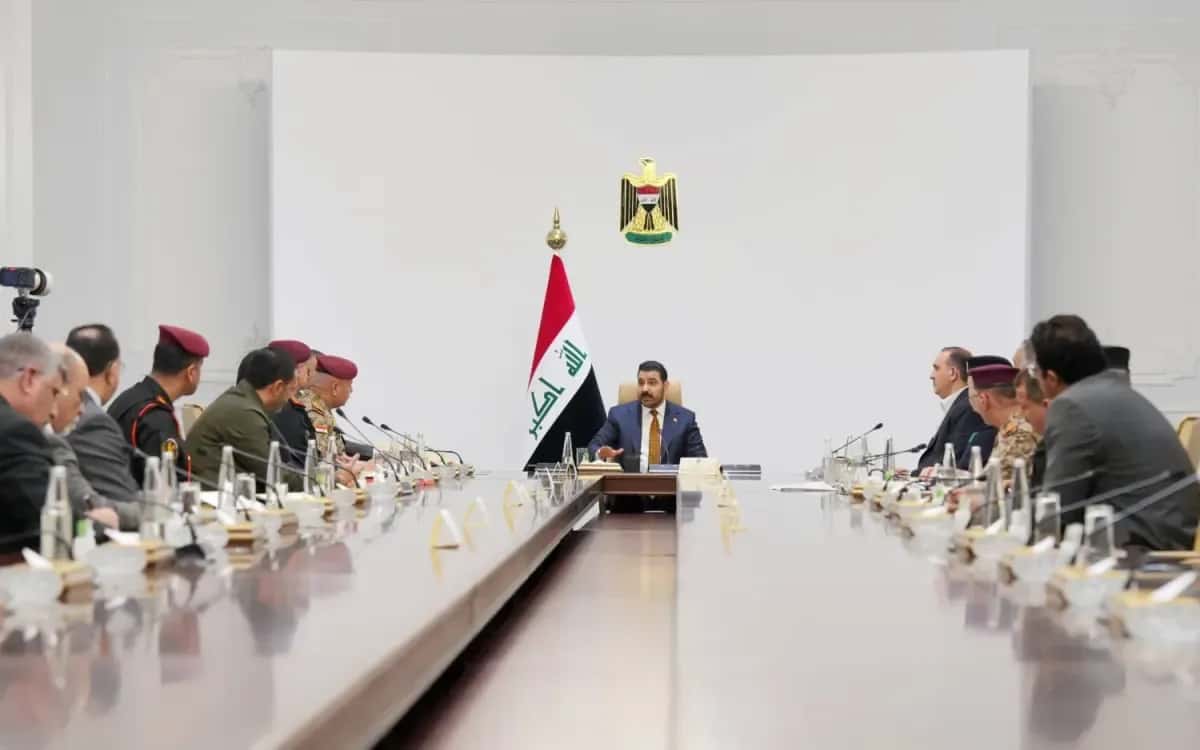
RastinewsEvidence that Iraq's main oil pipeline running through Jurf al-Sakhar, north of Babil province, has been tapped since 2021 to siphon off roughly 20,000 barrels of oil a day has triggered a political and security crisis in Baghdad.
Prime Minister Ali Falih al-Zaidi dismissed nine senior officials and gave Kataib Hezbollah until Friday to hand over the area. The group denies the allegations and accuses the government of bowing to foreign pressure.
Parliamentary sources and intelligence reports say the smuggling has strained relations between the government and armed groups, and opened rifts within the ruling Coordination Framework.
Parliament moves in: final report due Wednesday
Jurf al-Sakhar has no oil field or well of its own. But the main pipeline carrying crude from the south to the Dora and Baiji refineries passes through the area.
Binas Ali Doski, a member of the Iraqi parliament's Oil and Gas Committee, told Rudaw that intelligence reports showed the pipeline had been tapped since 2021. "There is no oil well at all in the Jurf al-Sakhar area. But the pipeline carrying oil from the south to the Dora and Baiji refineries has been breached, and Kataib Hezbollah is present in that area," Doski said.
Parliament Speaker Haybat al-Halbousi set up a temporary committee on Nov. 11, under Decision No. 198, to examine the file. The panel is headed by the chair of the Security and Defense Committee and includes the chairs of seven standing committees.
Harem Kemal Agha, a committee member and head of the Patriotic Union of Kurdistan (PUK) bloc's Oil, Gas and Natural Resources Committee, told Rudaw he met Oil Minister Basim Mohammed Khudair and ministry officials on Sunday.
Agha said intelligence reports on the oil smuggling pointed to two locations: Jurf al-Sakhar and the Kurdistan Region. The final report is due to be completed Wednesday and submitted to the Speaker's office.
Al-Zaidi sets Friday deadline, dismisses nine officials
Al-Zaidi has given Kataib Hezbollah until Friday to hand the area over to Iraqi security forces and allow official units to enter, Rudaw has learned.
Armed Forces Command spokesman Sabah Numan announced on Nov. 14 that al-Zaidi had referred all suspects to the judiciary after a special investigative committee confirmed its findings. The nine dismissed officials are:
Babil Provincial Police Commander
North Babil Police Chief
Director of the Interior Ministry's Babil Intelligence and Counter-Terrorism Department
Babil National Security Director
Director of the Defense Ministry's Babil Provincial Intelligence and Security Department
Director of the Babil Intelligence Agency
Babil Popular Mobilization Forces (PMF) Commander
Commander of the Interior Ministry's 6th Energy Police Brigade
Director of the Oil Ministry's Pipelines Company
Al-Zaidi addressed committee members at a security meeting on Nov. 15. "Through this mission, you have restored Iraq's good name. You uncovered what was being stolen from the livelihood of Iraqis under a certain name," he said, adding that members would receive awards and letters of commendation.
The prime minister said the judiciary backed the government "one hundred percent." "Whoever thinks there is no eye watching them is mistaken — let them reconsider," he warned.
Al-Zaidi said not a single inch of land from Zakho to Basra would be left for smuggling, and addressed doubts over the security forces' capacity. "If our forces were incapable, I would send my people into the streets and tell them, 'Go fight for your rights,'" he said.
Kataib Hezbollah: no interference with pipelines
Iraq's Kataib Hezbollah issued a statement on Nov. 15 sharply rejecting the allegations.
The group said it had taken part in talks on regulating weapons and had signed a "Sovereignty Agreement" with the Coordination Framework and the government. The statement accused Prime Minister al-Zaidi of reneging on his word and claimed his office was spreading fabricated reports through outlets in the UAE, Saudi Arabia and some local channels.
"The Madinat al-Nasr [Jurf al-Sakhar] file and the file of resistance weapons must be kept out of political disputes," the statement said, adding that the group would not yield to pressure from the UAE, Saudi Arabia or the United States.
Kataib Hezbollah also said a technical committee had found no interference whatsoever with the pipelines. According to the group, the facilities shown in the footage are simple fuel depots used for military vehicles and generators, along with a quality-improvement facility, all located more than 5 kilometers from the pipeline.
Coordination Framework unable to meet
The affair has also shaken the Shiite political alliance. Binas Ali Doski said efforts were underway to avert armed confrontation, but that serious disputes had broken out within the Coordination Framework. The alliance tried three times to convene, he said, but disagreements prevented any meeting from taking place.
A source within the Babil provincial police told Rudaw that the force has no authority whatsoever in Jurf al-Sakhar, since it is a closed military zone, and that police do not know what happens inside.
Haydar Mangoush, a Babil provincial council member from Sadiqoun, the political wing of Asaib Ahl al-Haq, said the file had not been formally referred to the provincial council. He said the Popular Mobilization Forces, the army and the federal police are all present in the area and that, while the situation appears stable, there is "concern and fear of clashes."
Mangoush also questioned why the Oil Ministry had stayed silent for years before raising the issue now. He said any withdrawal by Kataib Hezbollah would have to be a federal decision.
Al-Abidi: no Iranian interference
Government spokesman Haydar al-Abidi said on a television program on the night of Nov. 15 that the government would not back down.
Dismissing rumors of Iranian involvement behind the scenes, al-Abidi said: "No Iranian interference has been recorded, whether through contact or mediation. This is entirely Iraqi territory, and those present there are Iraqis who settled there under certain conditions."
Al-Abidi said the investigation report held a single armed group in control of the area responsible for the smuggling, not multiple groups. The Oil Ministry and the Commission of Integrity have launched an audit to determine the financial losses of the past five years.
Al-Abidi also said an inspection committee, headed by a respected figure from the Popular Mobilization Forces, had encountered a form of provocation in the area.
He said a date — close but undisclosed — had been set for official forces to enter the area, and that displaced Jurf al-Sakhar residents would return to their homes. Asked whether such a return would threaten the security of Baghdad, Karbala and Babil, he said: "Compared to 2014, the situation has changed completely. ISIS has no foothold left."
19-page satellite report
A 19-page intelligence report obtained by Rudaw uses satellite imagery to show how the smuggling network operated continuously from 2021 to mid-2026.
According to the report, smugglers tapped the pipeline near the Behbehani intersection, 1 to 4 kilometers from the main Baghdad-Babil highway, loading the oil onto 36,000-liter tankers. Satellite images identified two loading points. Tanker traffic at a large underground pit 962 meters from the pipeline peaked in October 2022, when 21 tankers were photographed at once.
The oil was then moved to a storage site 7 kilometers from the tapping point and to two small clandestine refineries. The first refinery went into operation in October 2022. Fourteen large tankers were photographed beside the second refinery in January 2025 and again in July 2026.
The report said the network used three methods to avoid detection by satellite. Instead of above-ground tanks, it dug deep underground pits. The pits, the loading area and the surrounding palm trees were covered with white sheet-metal roofing. Most loading took place at night. The report noted that the tankers visible in satellite photos reflect only daytime activity — nighttime theft is several times greater.
Intelligence maps show the stolen oil reached Baghdad by three routes. The first runs along the Baghdad-Babil road via the Musayyib bridge into the capital. The second runs from Amiriyat al-Fallujah, merging with official fuel convoys through the Intisar checkpoint into Baghdad. The third runs via Habbaniyah and Fallujah along the international highway, or the old Abu Ghraib road, into the capital.
Jurf al-Sakhar's history
Jurf al-Sakhar sits on the west bank of the Euphrates River, about 60 kilometers southwest of Baghdad, at a strategic crossroads linking Babil, Anbar, Karbala and Baghdad provinces.
Known as Jurf al-Sakhar for its rocky banks, the area was renamed Jurf al-Nasr after being retaken from ISIS in October 2014. More recently it has been referred to as Madinat al-Nasr.
Before 2014, the area was home mainly to Sunni Arabs from the Janabi tribe. The local population displaced by the war has still not been allowed to return.
Since then, the area has remained a closed military zone under the control of armed factions affiliated with the Popular Mobilization Forces. Even the government's own administrative and security officials cannot enter without the groups' permission.
Source: Rudaw