
Sudan's church council holds peace prayer in Khartoum as war damages over 150 churches
Church leaders gathered in Khartoum, a city still scarred by more than three years of war, to pray for Sudan. Christian and Muslim clerics called for an end to the fighting, while human rights advocates pressed for documentation of attacks on churches.
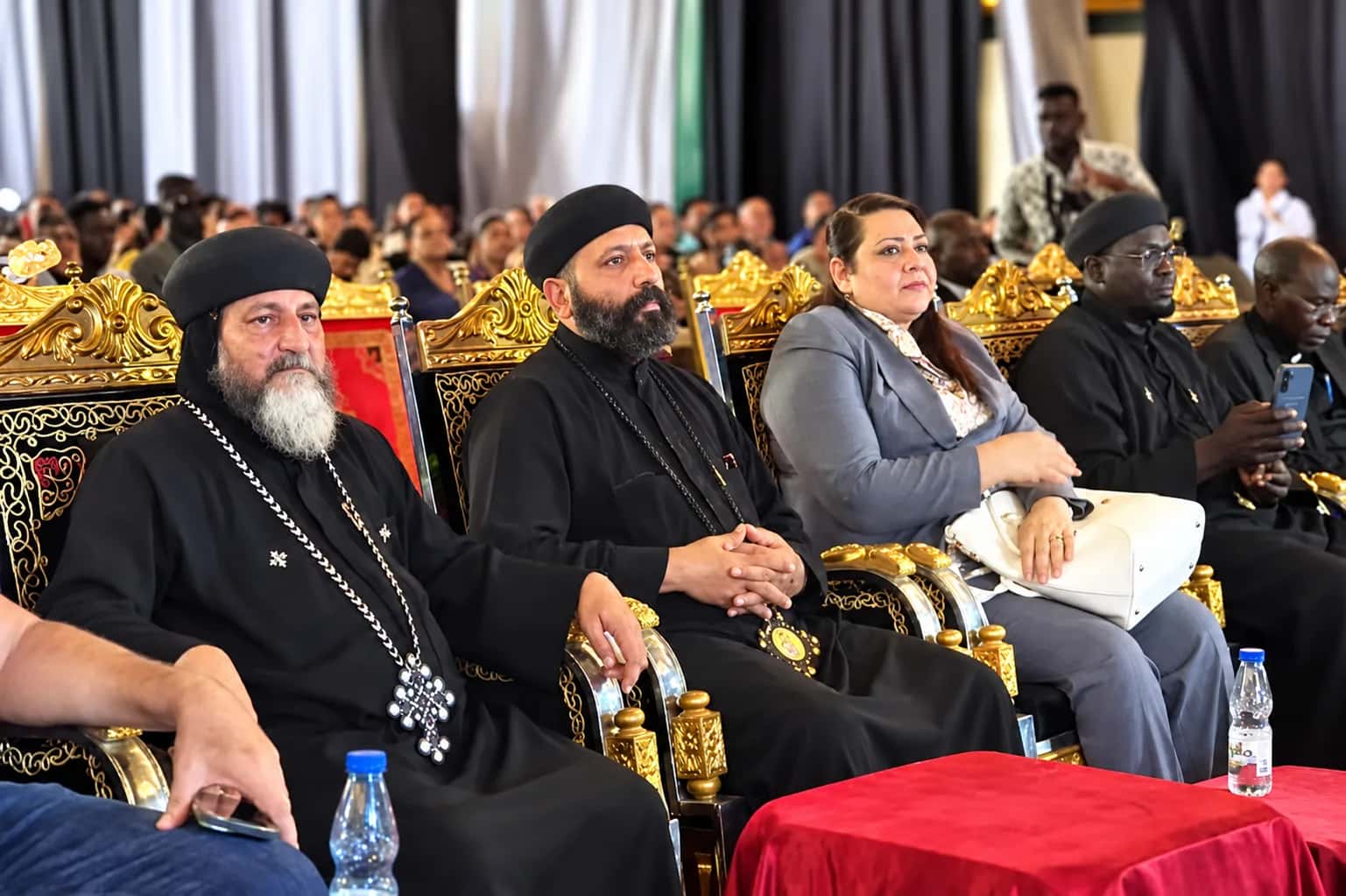
RastinewsSudan's Council of Churches held a prayer service on Saturday at the Khartoum International Fair under the slogan "Let us be one heart, let us pray together for Sudan."
Sovereignty Council chief Gen. Abdel Fattah al-Burhan and his deputy Malik Agar attended, alongside clerics and representatives from various churches.
The call for peace was not confined to the capital. Christian and Muslim clerics from the Nuba Mountains issued a joint statement last Tuesday in Yida, in the country's south, calling for an end to the fighting and the start of dialogue.
The statement said the war had caused deaths, displacement, looting and psychological trauma, and called on all sides to stop the attacks and the hate speech.
"The first attack on a church came on the second day of the war"
Human rights lawyer Ahmed Nureddin said that under former President Omar al-Bashir, churches faced restrictions on construction and registration, and were shut down, demolished or had their property seized.
He said reforms following Bashir's overthrow in 2019 had improved the legal framework for religious freedom, but the war has eroded those gains.
According to Nureddin, the Rapid Support Forces (RSF) carried out the first attack on a church just two days after the war broke out, striking the Anglican Cathedral in central Khartoum. More than 150 churches have been damaged, looted or destroyed during the war, he said, while other estimates put the number of closed churches at over 165. These figures have not been independently verified.
Nureddin called for an international mission to investigate the violations and for its funding gap to be closed. Justice, he said, cannot wait until after the war — it is a precondition for a state built on equal citizenship.
"The persecution narrative is exaggerated"
Rafat Samir, head of Sudan's Evangelical Denominations Council, said Christians face the same risks as all Sudanese — displacement, hunger and insecurity.
Samir said attacks have spread from rural areas into the cities, but added that some groups exaggerate the "persecution" narrative to make it easier to seek asylum in Europe.
Tirza Nikola, who returned to Khartoum after the war, said her homecoming still feels incomplete. "We also miss our Muslim brothers, with whom we lived in the same neighborhood for decades," she said.
According to a report by Asharq Al-Awsat cited by Independent Arabia, Christianity's roots in Sudan trace back to the Nubian kingdoms in the early centuries AD.
The war between the army and the RSF broke out in April 2023, displacing millions of people. South Sudan had declared independence in 2011.