
Fuel price hikes deepen Syria's cost-of-living crisis: wages cover a quarter of family expenses
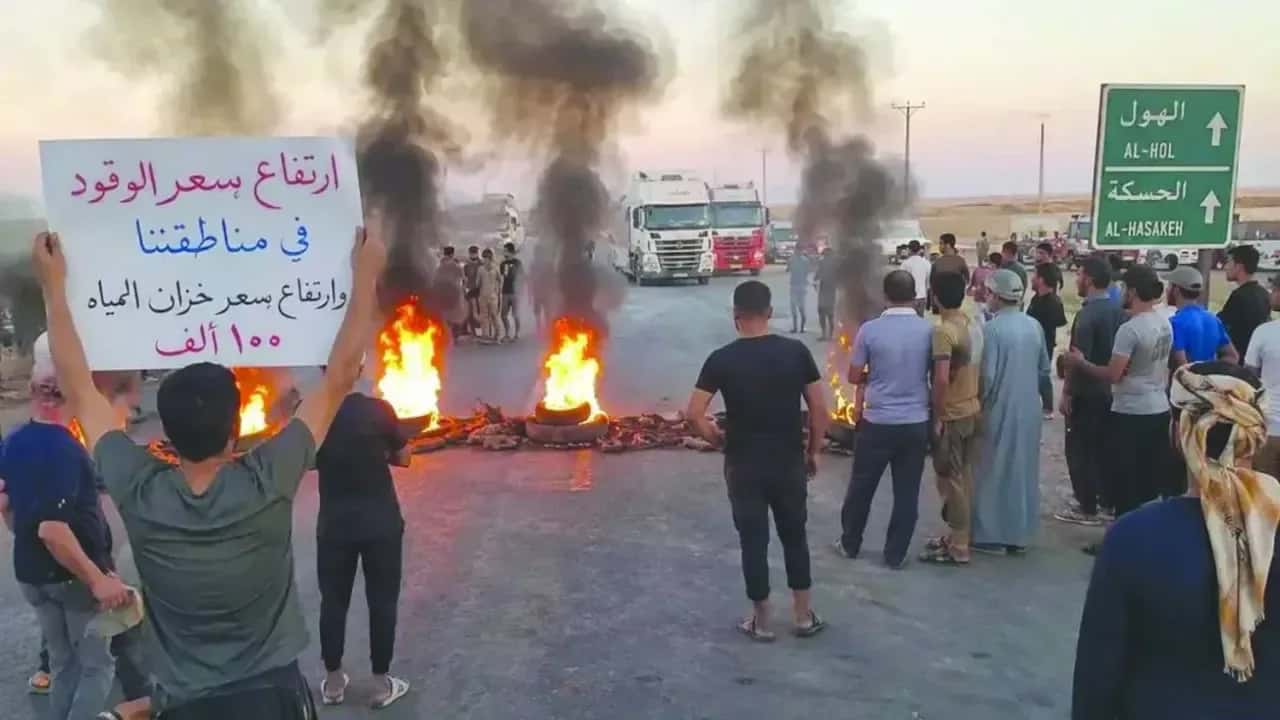
Food, transport and water prices have surged in Syria following increases in fuel and gas cylinder prices. In Rojava's Tel Temir, protesters blocked tankers arriving from the Rimelan oil fields.
RastinewsMore than 90 percent of Syria's population lives below the poverty line. A decision by the Damascus government to raise fuel and gas cylinder prices has widened the gap between wages and the cost of basic goods.
The Standing Committee for Pricing Petroleum Products and Minerals issued a new, temporary price schedule on September 13, raising fuel prices by 9 to 40 percent. Food, produce, transport and freight costs rose in its wake.
Road blocked in Tel Temir
The decision triggered protests across the country. In Rojava, demonstrators gathered at the entrance to Tel Temir on September 16 and blocked the road to stop tankers carrying fuel from the Rimelan oil fields.
Facing the backlash, Syria's Energy Minister Mohammed al-Bashir announced on September 17 that subsidized diesel would be sold to sectors covered by state support, chiefly heating and agriculture. Prices of basic food and household goods, however, have not fallen from their September 13 levels.
"Families have run out of resilience"
According to economists' estimates, a family of three needs at least 80,000 Syrian pounds a month to cover basic needs — four times the roughly 20,000 pounds most first-tier civil servants earn.
Teacher Rima al-Ahmed said security has improved since the previous regime's fall, but living conditions keep worsening. Prices go unchecked by the government, she said. "Families have run out of resilience," Ahmed said.
Water shortages in Damascus
A separate problem is compounding the crisis: drinking water. Weak pressure in the mains has forced many families to buy water from tankers at high prices. Abu Hamza, who lives in the Daf al-Shawk neighborhood south of Damascus, said water reached his home only two or three times over the summer.
Economist Ziad Arbash said the crisis has deepened through a combination of balance-of-payments strain, public budget shortfalls and eroding purchasing power. Arbash said adjusting fuel prices or subsidy policy alone will not resolve it. Urgent steps are needed, he said, including a subsidized food basket, cash assistance and temporary employment programs.
Arbash said a comprehensive economic plan could bring improvement within two to three years; without one, the crisis could last five to ten years. "Prices should not be raised without offering an alternative," Arbash said.
According to Asharq al-Awsat, the Syrian government had previously issued several decrees raising wages. But the price increases that followed the latest fuel hike have largely wiped out their effect.
Damascus also raised electricity tariffs in late October 2025. Compared with the old rate of roughly 10 pounds per kilowatt-hour, tariffs increased 60- to 70-fold.