
Barzani: Baghdad Is Blocking Kurdistan's Air Defenses, Says US Withdrawal Repeats 2011 Mistake
Kurdistan Region Prime Minister Mesrur Barzani said a US troop withdrawal from Iraq could plunge the region back into the security vacuum that preceded the rise of ISIS. Barzani said the Kurdistan Region, targeted by at least 1,000 Iranian missiles and drones, is being "deliberately weakened" by Baghdad.
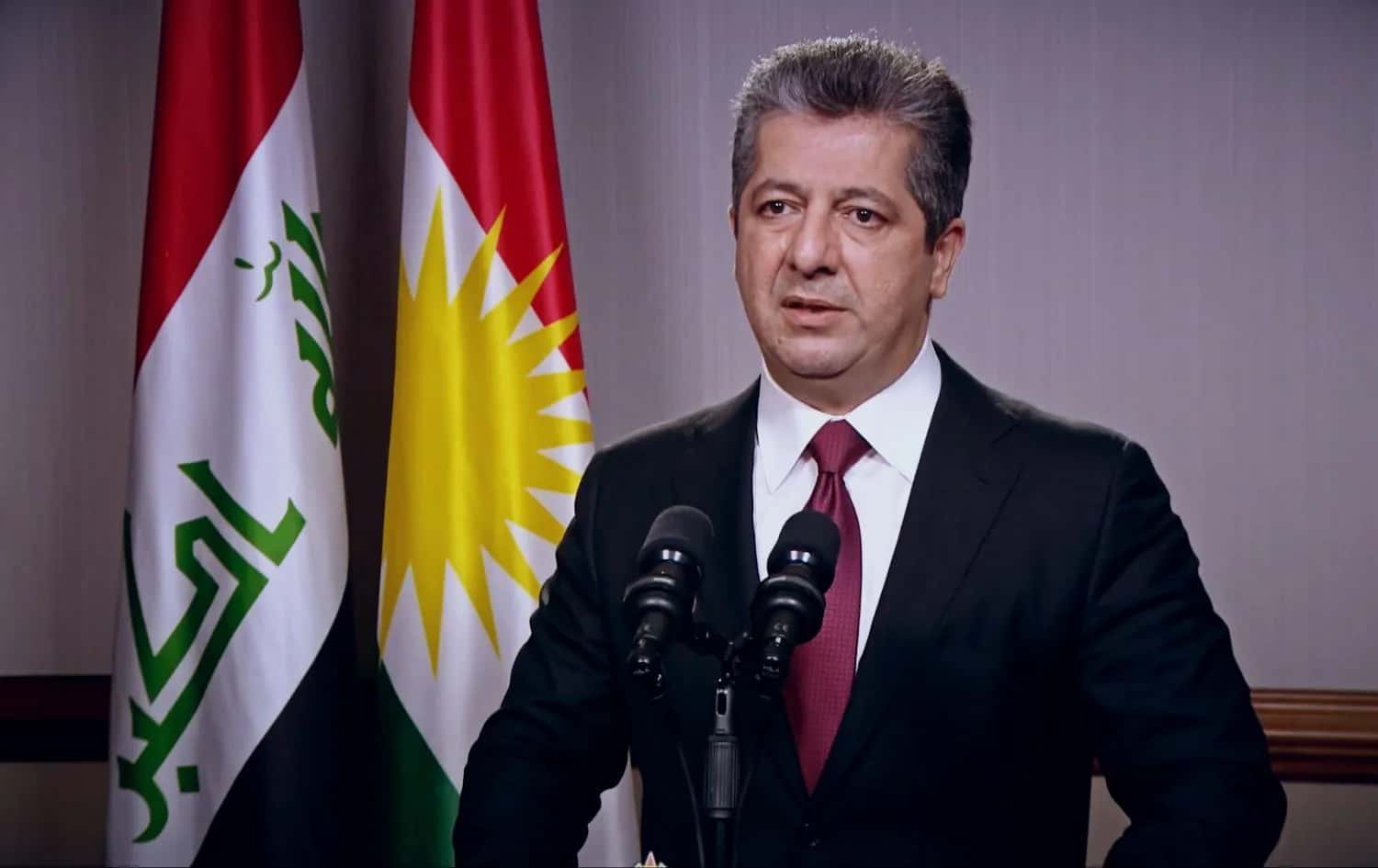
RastinewsKurdistan Region Prime Minister Mesrur Barzani told the Financial Times that Washington's decision to withdraw from Iraq repeats a mistake the Obama administration made in 2011.
The complete withdrawal of US forces that year created a security vacuum, Barzani said, one that paved the way for the rise of ISIS.
"We are being deliberately weakened"
Barzani said the Kurdistan Region cannot buy air defense systems to counter missile and drone attacks because such purchases require approval from the federal government in Baghdad.
"When we are not permitted to acquire the weapons needed against advanced missile and drone attacks, we are being deliberately weakened and left exposed to a major threat," Barzani said.
Barzani said the region will remain under threat as long as tensions between Washington and Tehran continue, adding that Kurdistan has become a target because of its alliance with the United States.
Prime minister's office also hit
According to the Financial Times, at least 1,000 Iranian drones and missiles have struck the Kurdistan Region since Washington's war against Iran began in February.
Most of the strikes hit camps belonging to Kurdish opposition groups from Rojhilat and US military facilities. Barzani said his own office in Hewlêr was struck in mid-August.
The US State Department has described the withdrawal as a "new phase," citing growing capacity among Iraqi forces and the Peshmerga. Washington has nonetheless pulled some non-essential staff from its new consulate in Hewlêr because of militia attacks.
"Militia weapons threaten the federal system"
Barzani warned that Shia militias' refusal to disarm could endanger Iraq's federal system and the autonomy Kurds won after a long struggle.
He called Iran's justification for its strikes -- the presence of Rojhilat opposition groups and US and Israeli activity -- "exaggerated," saying the region has repeatedly told Tehran that Kurdistan poses no threat to Iran.
Toby Dodge, an Iraq expert at the London School of Economics, said a reduced US military role could narrow Barzani's options and push Hewlêr toward accommodation with Tehran.
Budget share falls below 13 percent
The Financial Times noted that the Kurdistan Region's share of the federal budget has fallen below 13 percent, while a rift between the two main Kurdish parties has stalled the formation of a government.
Barzani said that if security deteriorates after the withdrawal, the region may have to ask its allies to return.
"The international community can act now to preserve stability. It should not wait for the situation to worsen and then be forced to come back later, as happened during the ISIS era," Barzani said.
Autonomy rooted in 1991
The foundations of the Kurdistan Region's current status date back to the US-led no-fly zone declared in 1991.
The US withdrew its last troops from Iraq in December 2011. ISIS seized Mosul in the summer of 2014 and advanced to the borders of the Kurdistan Region.
After the September 2017 independence referendum, Iraqi forces took control of Kirkuk, and Hewlêr lost the city's oil revenues in the process.