
Musa Anter File: A 72-Year Life, 11.5 Years in Prison, a Murder Unsolved for 34 Years
Musa Anter, tried on capital charges in 1959 over a poem he wrote in Kurdish, was shot dead in Amed (Diyarbakır) in 1992. Despite the Susurluk Report, confessions and a European Court of Human Rights ruling, the case was dropped under the statute of limitations in 2022.
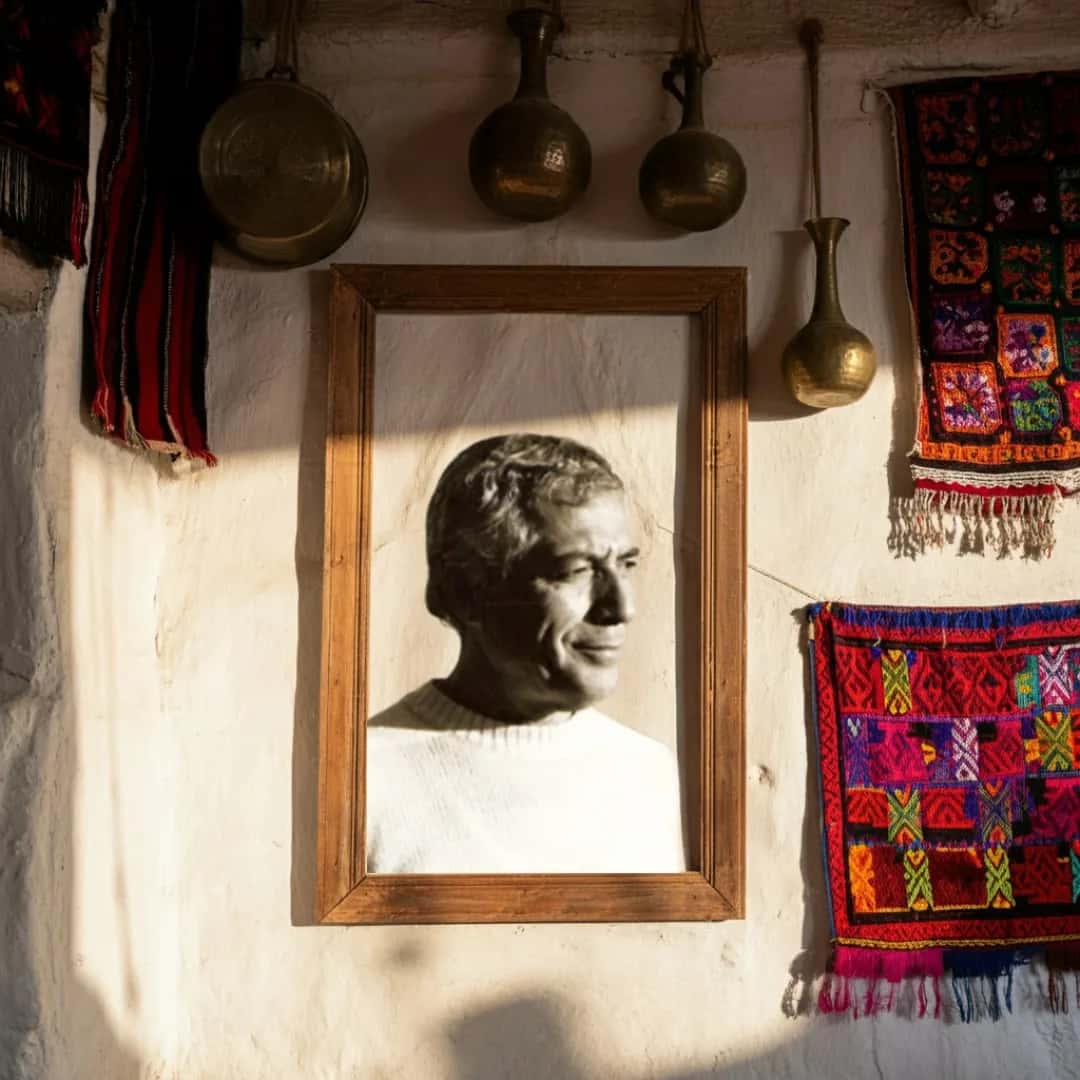
RastinewsKurdish writer and journalist Musa Anter (Apê Musa) was 72 when he was shot dead in the Seyrantepe district of Amed (Diyarbakır) on September 20, 1992. He had spent 11.5 years of his life behind bars. He had faced capital charges over a poem written in Kurdish, had been arrested after two military coups, and had compiled a Kurdish-Turkish dictionary at a time when Kurdish was banned from public life.
This file traces Anter's life, the legal order of his era, and the 34-year judicial process that followed his murder. The aim is to show, beyond a single killing, how a language and a press tradition were punished.
From Zivingê to Istanbul
Anter was born in 1920 in the village of Zivingê (Eskimağara), in Mardin's Nusaybin district. He lost his father at a young age. His mother, Fesla Hanım, served as the village headwoman.
He attended primary school in Mardin and boarding school for middle and high school in Adana. He then enrolled at Istanbul University's law faculty but left before finishing. In Istanbul, he built ties with Kurdish students and intellectuals.
His first detention, during his student years, coincided with the 1937-1938 Dersim period. According to some sources, he spent 45 days in custody on allegations of insulting the mother of Mustafa Kemal Atatürk. He founded the Dicle, Fırat and Kız student dormitories for poor Kurdish students who came to Istanbul, and began writing for Şark Postası and Dicle Kaynağı.
1959: A poem, a demand for execution
Anter, together with Canip Yıldırım and Yusuf Azizoğlu, published the newspaper İleri Yurt in Diyarbakır. A Kurdish-language poem the paper ran in 1959, "Qimil" (Sunn Pest), caused a major stir. The poem used the sunn pest, an insect that destroys crops in the southeast, as a satirical metaphor for villagers left to their fate.
On December 17, 1959, 50 Kurdish intellectuals and students were detained. The prosecutor sought the death penalty, and the defendants were held in cells at Harbiye. One of the detainees, Mehmet Emin Batu, died of tuberculosis in his cell. The case went down in history as the "Case of the 49."
Anter was released under an amnesty issued after the May 27, 1960 coup.
The 1960s: Organizing, elections, a dictionary
After his release, Anter wrote for the magazines Deng, Barış Dünyası and Yön. In 1963 he was tried in the "Case of the 23" and returned to prison. According to Rûdaw, he also co-founded a Kurdish society with Mustafa Remzi Bucak, Yusuf Azizoğlu, Ziya Şerefhanoğlu and Faik Bucak.
In the 1965 elections he ran as a Workers' Party of Turkey (TİP) candidate for Mardin. A last-minute change of candidate forced him to run as an independent instead. In 1967 his Ferhenga Kurdî-Tirkî (Kurdish-Turkish Dictionary) was published. He is reported to have been sent into internal exile that same year.
Anter was among the founders of the Revolutionary Eastern Cultural Hearths (DDKO). In 1970 he stood trial in the DDKO case.
Two coups, two spells in prison
He was arrested again after the March 12, 1971 coup and spent three years in Seyrantepe Military Prison. Following the September 12, 1980 coup, he was arrested on charges of "Kurdist propaganda" and sent to Nusaybin Prison. He was released a year later.
Over his lifetime, Anter was held in the Mamak, Sultanahmet, Balmumcu, Seyrantepe and Nusaybin prisons. His total time behind bars is put at 11.5 years. He was investigated repeatedly over his writings and views.
Writing a dictionary in a banned language
During Anter's lifetime, Kurdish was not merely a cultural issue but a legal prohibition. On October 19, 1983, the September 12 military administration passed Law No. 2932 on Publications in Languages Other Than Turkish. The law banned expressing or publishing ideas in any language other than a state's first official language. Under this definition, Kurdish effectively became a forbidden language.
According to the Human Rights Association (İHD), the law banned Kurdish even in private life. It was repealed in April 1991. İHD says Turkish remains the sole official language under the constitution, and that many restrictions still apply to the use of other languages in education, media and political life.
Anter compiled his Kurdish dictionary under the shadow of these bans.
1990-1992: HEP, MKM and Özgür Gündem
Anter was one of the 81 founding members of the People's Labor Party (HEP), established in 1990. He led the founding of the Mesopotamia Culture Center (1991) and the Istanbul Kurdish Institute (1992). His books Hatıralarım (My Memoirs, 1991) and Vakayiname (Chronicle, 1992) were published.
In the period before his death, he wrote for Özgür Gündem and Yeni Ülke. Özgür Gündem had begun publishing on May 30, 1992, and was shut down on April 14, 1994. The paper covered village evacuations, extrajudicial killings and allegations of torture in custody.
1992: A season of death
The year Anter was killed, death had become routine in the Kurdish provinces. According to a list compiled by the Turkish Journalists' Association, 13 of the 14 journalists killed in 1992 died in the country's eastern and southeastern provinces.
According to İHD reports, the number of dissidents killed in unsolved murders in the Kurdish provinces stood at 362 in 1992, 467 in 1993 and 423 in 1994. A large share of the victims were politicians, journalists and intellectuals associated with the Kurdish political movement.
The column he wrote after Hüseyin Deniz's death
His nephew Hüseyin Deniz, a reporter and columnist for Özgür Gündem, was killed in an armed attack on August 9, 1992. On August 13, 1992, Anter addressed him in his column. He wrote that he could not bring himself to say Deniz had "died," because saying so would feel as if he himself had killed him.
Writing "Ez xale te me" ("I am your uncle"), he said he would keep writing in his nephew's place for as long as he remained alive, adding that if he too were killed, he would be reunited with him.
Anter was killed 38 days after that column appeared.
September 20, 1992: Seyrantepe
Anter was in Amed on September 20, 1992, for a culture and arts festival. During the day he attended the festival and signed copies of his books. That evening, on Cumhuriyet Neighborhood's 442nd Street in Seyrantepe, he came under armed attack together with his nephew Orhan Miroğlu. Anter was killed; Miroğlu was wounded.
Anter's son, Dicle Anter, and the family's lawyer, Selim Okçuoğlu, say no meaningful steps were taken in the investigation for a long time after the murder.
The investigation: from "unsolved" to Susurluk
The investigation opened by the Diyarbakır State Security Court remained officially unsolved for years. The Susurluk Report, prepared by Kutlu Savaş, head of the Prime Ministry's Inspection Board, at the request of then-Prime Minister Mesut Yılmaz, stated that the murder was planned and carried out by Mahmut Yıldırım, known by the code name "Yeşil."
After no effective investigation was carried out, the Anter family applied to the European Court of Human Rights (ECtHR) on February 22, 2000. The ECtHR ruled that the right to life had been violated in both its substantive and procedural aspects. The ruling found serious evidence that the murder had been carried out with the knowledge of state officials, and that authorities had failed to make use of evidence such as the Susurluk Report. Turkey was ordered to pay compensation.
Aygan's confessions and the 2009 reopening
In 2004, the confessions of Abdülkadir Aygan (Aziz Turan), a former state informant living in Sweden, were published in Ülkede Özgür Gündem under the headline "Here Is the Team That Killed Apê Musa." Aygan said he had been part of the JİTEM team that carried out the killing, and that the murder had been planned by Mahmut Yıldırım. The newspaper's owner and managing editor were put on trial for publishing the confessions.
In 2009, the Diyarbakır Chief Public Prosecutor's Office with special powers treated Aygan's confessions as a formal tip-off and reopened the file 17 years after the murder. Arrest warrants were issued for Cemil Işık, Ali Ozansoy, Aygan, Hamit Yıldırım and Mahmut Yıldırım. Hamit Yıldırım was arrested in Şırnak on June 29, 2012.
A trial opened two months before the statute of limitations
The trial opened in 2013, just two months before the deadline. The indictment was accepted by Diyarbakır's 7th High Criminal Court on July 5, 2013. Prosecutors sought aggravated life sentences and 20 years in prison for Mahmut Yıldırım, Aygan, retired Colonel Savaş Gevrekçi and Hamit Yıldırım, on charges of "premeditated murder" and "inciting the public to armed rebellion."
In 2015 the case was transferred to Ankara on "security" grounds and merged with the main JİTEM trial, which had 11 defendants. The number of defendants grew, fugitive suspects were never caught, and Aygan's testimony could not be taken from Sweden. Selim Okçuoğlu, the Anter family's lawyer, asked for the file, close to the statute of limitations, to be separated from the main case. Ankara's 6th High Criminal Court rejected the request.
At a hearing held three months before the statute of limitations expired, the presiding judge said the Justice Ministry had still not responded to a letter of request sent abroad regarding Aygan. He noted that arrest-warrant requests for Aygan, Mahmut Yıldırım, Muhsin Gül and Mehmet Zahit Karadeniz had likewise gone unanswered. The hearing was adjourned to June 20.
September 21, 2022: Statute of limitations
On September 21, 2022, one day after the anniversary of Anter's death, Ankara's 6th High Criminal Court dropped the case under the statute of limitations. The court held that the killings of Anter and Ayten Öztürk had taken place in 1992 and that the 30-year limitation period under the old Turkish Penal Code, Law No. 765, had expired. The JİTEM case continued under a separate file number.
The Anter family and legal experts had argued the murder should be classified as a "crime against humanity" and therefore not subject to any statute of limitations. The court ruled in line with the prosecutor's opinion.
The file was reported to have moved to the appeals stage after the ruling. Rastî could not confirm the current status of that process.
Hafıza Merkezi: Ten cases, one outcome
Esra Kılıç, a lawyer with Hafıza Merkezi's Legal Studies Program, said in a 2024 statement that ten trials opened over crimes committed in the 1990s had ended in either the statute of limitations or acquittal. She said two more cases were at risk of the same fate. Human rights advocate Öztürk Türkdoğan said the Anter murder should be treated as a "crime against humanity."
August 2026: A petition to reopen the case
In August 2026, Anter's daughter Rahşan Yorozlu, through her lawyer Bişar Abdi Alinak, filed a petition to reopen the case that had been dropped under the statute of limitations in 2022. The petition asked that investigative steps left incomplete during the inquiry and prosecution be completed, and that physical evidence in the file be re-examined using current forensic science and criminal investigation methods.
34th anniversary: "Unsolved killings must be brought to light for peace"
A commemoration led by the Dicle Fırat Journalists' Association (DFG) was held today on the street where Anter was shot. His family, journalists, and representatives of political parties and civil society organizations attended. A second commemoration is to be held at 4 p.m. at his grave in the Akarsu (Sitîlîlê) neighborhood of Nusaybin.
DFG member Fahrettin Kılıç said the structures behind the murder had still not been exposed. He said that at a time when peace is being discussed, unsolved killings need to be brought to light.
Selçuk Mızraklı, former co-mayor of the Diyarbakır Metropolitan Municipality, said justice remained incomplete as long as those who killed Anter were still free. He added that peace could not be built without justice. Anter's son, Dicle Anter, said the family would continue to hold the commemoration every year.
DEM Party also called for confronting the past as part of the "Peace and Democratic Society Process." The party said those responsible for killings with known perpetrators, starting with the murder of Anter, must be held accountable.
Anter's cause and today's "red lines"
The cause to which Anter devoted his life was the Kurdish language. In a piece for AA Analiz today, Mehmet Uçum, chief advisor to the Turkish president, listed Turkish as the official language and the mandatory language of instruction among the "red lines" for a new constitution. Kurdish did not appear on that list.
Article 42 of the 1982 Constitution likewise bars any language other than Turkish from being taught to Turkish citizens as a mother tongue in educational institutions.
In Rojava, Kurdish is recognized only as a three-hour elective course, and students there have taken to the streets demanding education in their Kurdish mother tongue.