
34 years since the Mykonos assassination
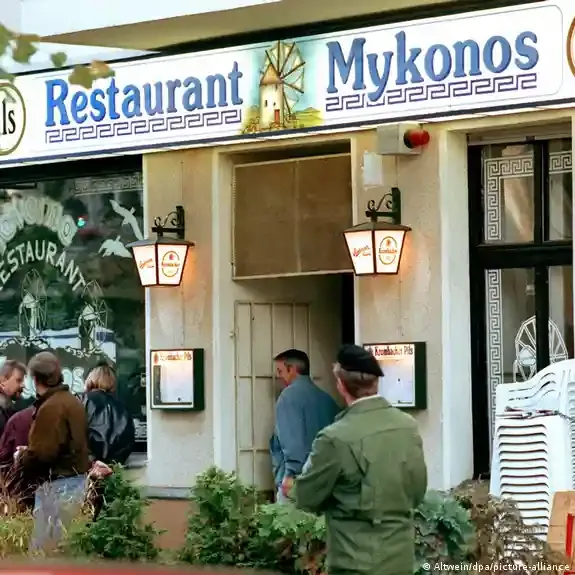
A German court ruling on the killing of Kurdistan Democratic Party of Iran leaders at Berlin's Mykonos restaurant on 17 September 1992 found that the assassination order came from Iran's most senior officials.
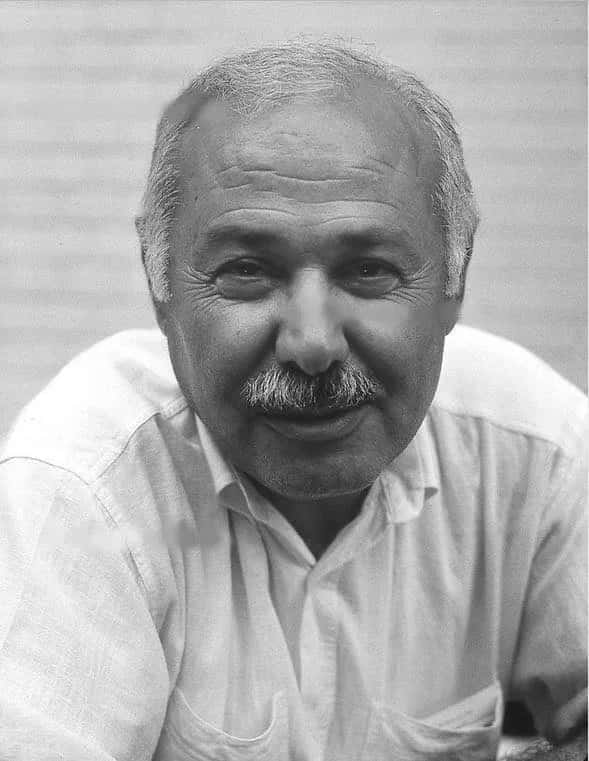
RastinewsOn the evening of 17 September 1992, agents of the Iranian regime opened fire inside the Mykonos restaurant in Berlin, killing three leaders of the Kurdistan Democratic Party of Iran (KDPI) and an independent political activist. The attack killed KDPI Secretary-General Dr. Sadegh Sharafkandi, Central Committee member and the party's European representative Fattah Abdoli, the party's Germany representative Homayoun Ardalan, and independent politician Nouri Dehkordi.
The shooting took place during the Socialist International's World Congress in Berlin, in the middle of a political, informal meeting.
"The order came from the top"
A year after the attack, Iranian national Kazem Darabi — linked to Iran's Revolutionary Guards and Ministry of Intelligence — and four Lebanese nationals were arrested on charges of involvement in the killings. The trial opened in November 1993 and ran for five years, spanning 247 hearings and 170 witnesses, at a cost of 9 million francs. It stands as one of the longest and most significant political trials held in Europe since the Second World War.
On 10 April 1997, the court handed down its final verdict: Kazem Darabi and Abbas Rhayel were sentenced to life in prison, Youssef Amin to 11 years, and Mohamad Atris to 5 years. A fifth defendant, Atallah Ayad, was acquitted.
Court: order came from Iran's highest level
Evidence presented at trial showed that the assassination order had been issued by a body at the top of the Iranian state known as the "Committee for Special Affairs." The court stated explicitly that the committee comprised Iran's most senior officials at the time: Supreme Leader Ali Khamenei, then-President Akbar Hashemi Rafsanjani, then-Foreign Minister Ali Akbar Velayati, and then-Intelligence Minister Ali Fallahian.
Presiding judge Frithjof Kubsch and prosecutor Bruno Jost, citing witness testimony and intelligence documents, said the attack formed part of the Iranian regime's official policy of eliminating political opponents abroad.
Following the verdict, European Union member states withdrew their ambassadors from Tehran, plunging Iran's diplomatic relations with Europe into crisis and partial suspension. The ruling marked the first time a European court had formally, and with documented evidence, identified senior officials of a foreign government as the perpetrators of an assassination carried out on European soil.
No accountability as those responsible stayed in office
Iran's government accepted no responsibility after the verdict; state institutions dismissed the case as a "political show trial," while state media called it a "Zionist-Western conspiracy." None of the officials named in the ruling as decision-makers on the Committee for Special Affairs were questioned, prosecuted, or forced to resign. Ali Khamenei remained in his position as leader; Akbar Hashemi Rafsanjani continued to hold senior decision-making roles until the end of his life; Ali Akbar Velayati and Ali Fallahian likewise remained in, or were promoted to, key posts.
To date, Iran's government has issued no apology, paid no compensation, and taken no formal step to account for the killings.