
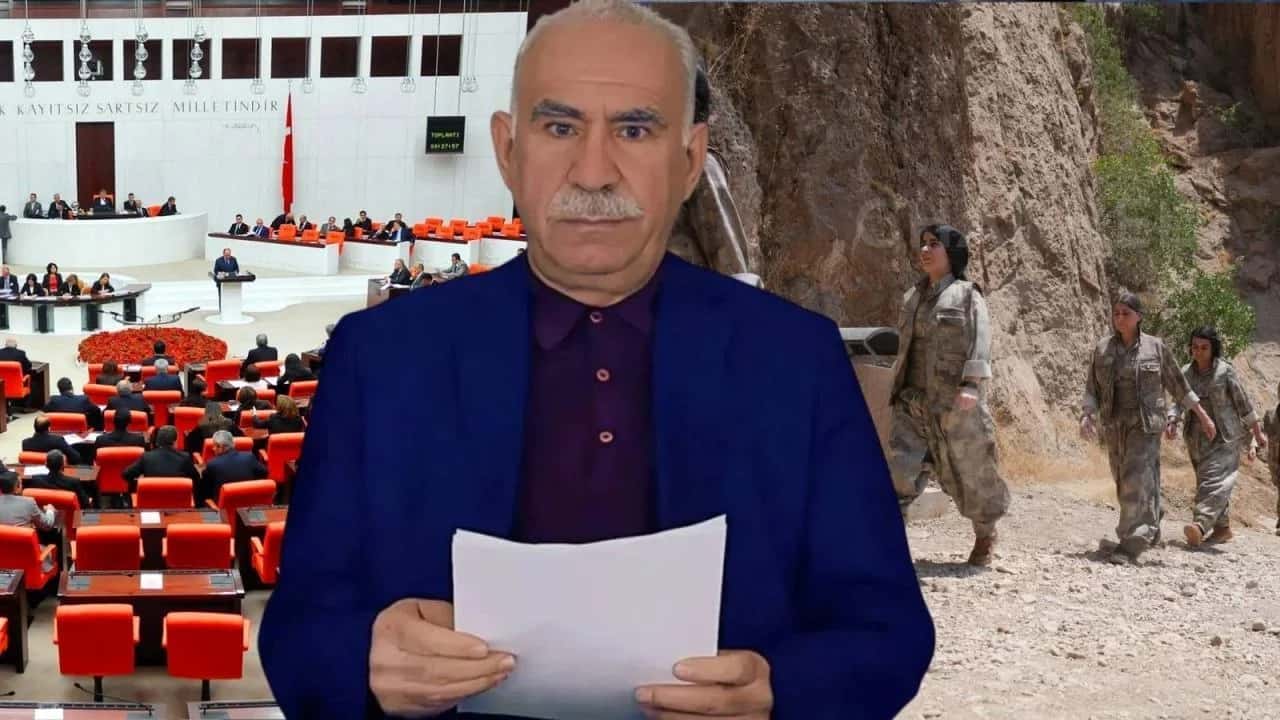
BAHÇELİ SIGNED FIRST: WHAT DOES THE 12-ARTICLE TEXT COVER
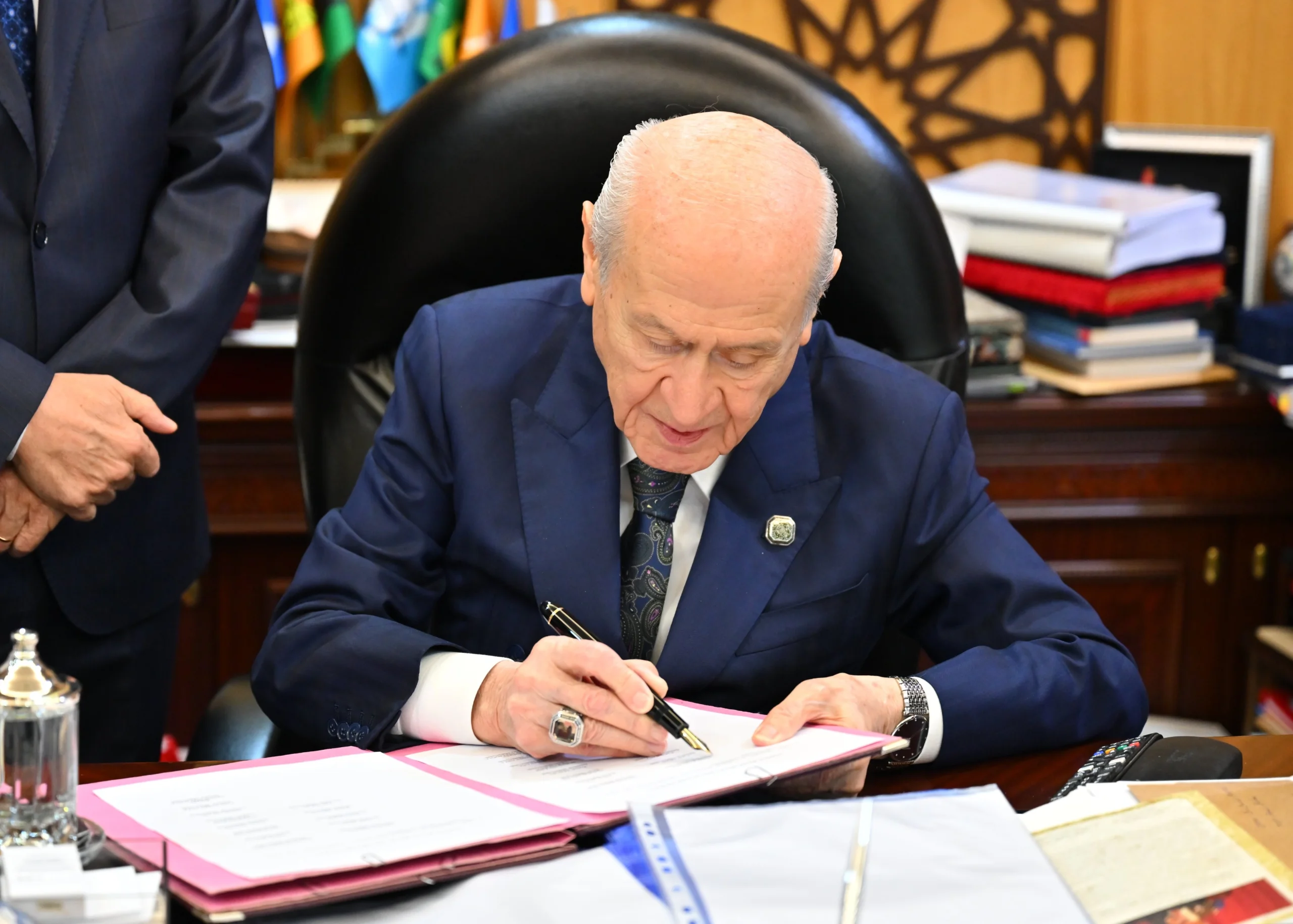
The framework law drafted for the "Terror-Free Turkey" process has been opened for signature in parliament. The draft law, first signed by MHP leader Devlet Bahçeli, consists of 12 articles. What does the text cover? What is its purpose and scope? Here is the full text of the 12-article framework law.
THE "LAW ON STRENGTHENING NATIONAL SOLIDARITY AND SOCIAL INTEGRATION"
The bill also known as the framework law — the "Law on Strengthening National Solidarity and Social Integration" — consists of 12 articles. The full text of the framework law follows below.
FULL TEXT OF THE FRAMEWORK LAW: WHAT DO THE 12 ARTICLES SAY?
Full text of the framework law drafted as part of the "Terror-Free Turkey" process:
PURPOSE AND SCOPE
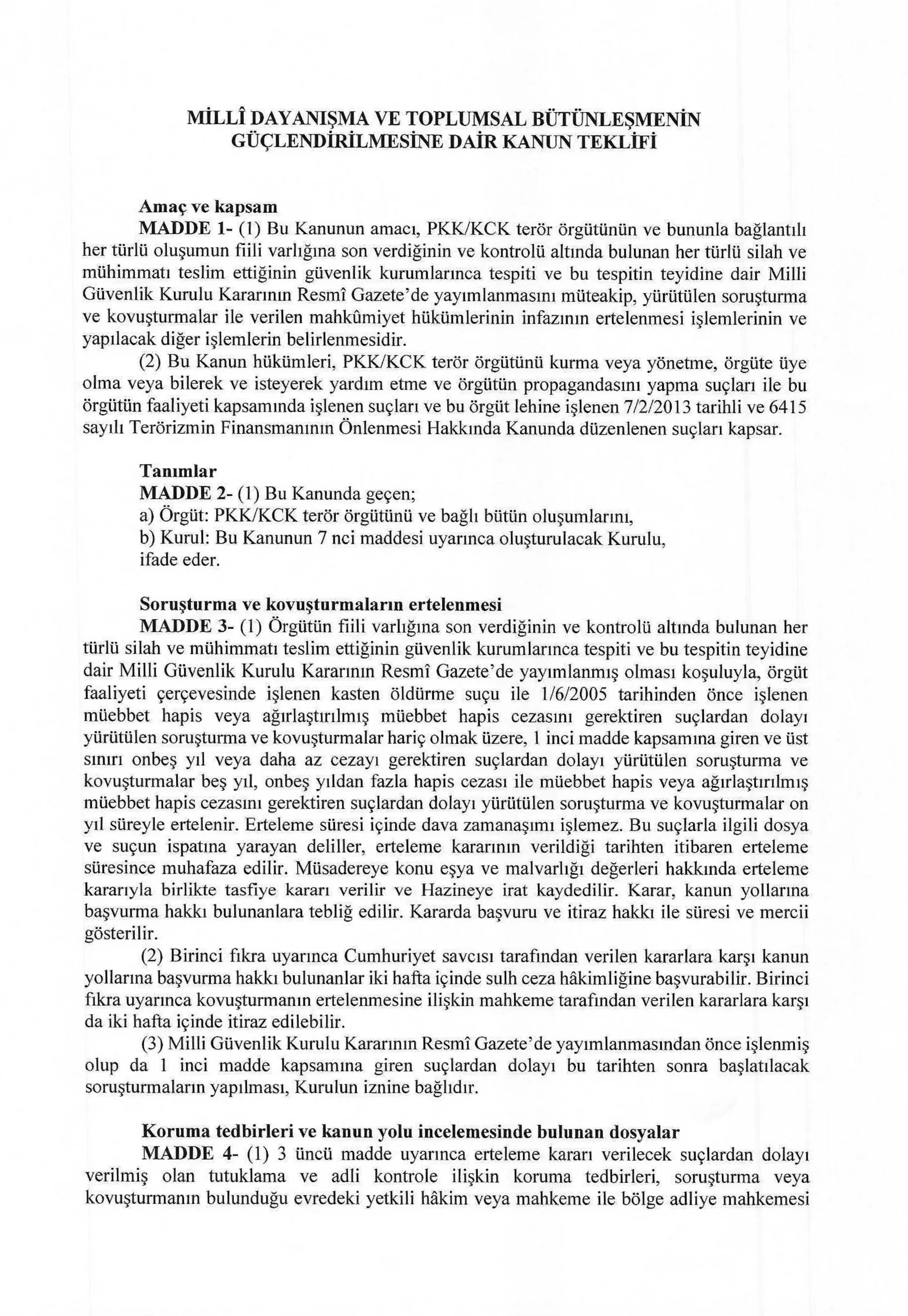
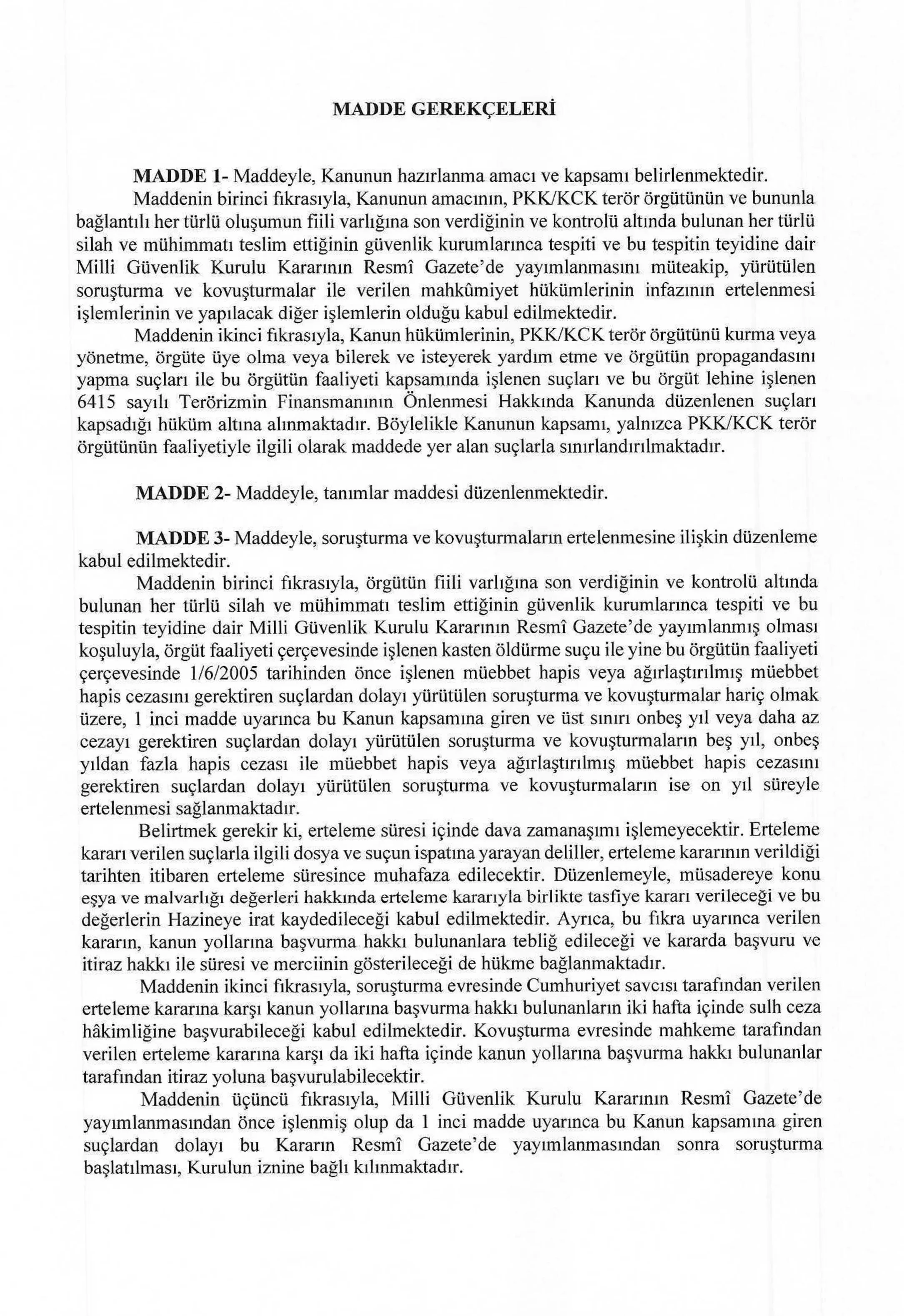
ARTICLE 1- (1) The purpose of this Law is to determine the procedures for deferring the execution of ongoing investigations and prosecutions, as well as final conviction sentences, and other measures to be taken, following the security agencies' determination that the PKK/KCK terrorist organization and any affiliated formations have ended their physical existence and surrendered all weapons and ammunition under their control, and following the publication in the Official Gazette of a National Security Council decision confirming that determination.
(2) The provisions of this Law cover the offenses of founding or leading the PKK/KCK terrorist organization, membership in the organization, knowingly and willingly aiding it, and making propaganda for it, as well as offenses committed within the scope of the organization's activities and offenses committed in its favor as regulated under Law No. 6415 on the Prevention of the Financing of Terrorism, dated February 7, 2013.
DEFINITIONS
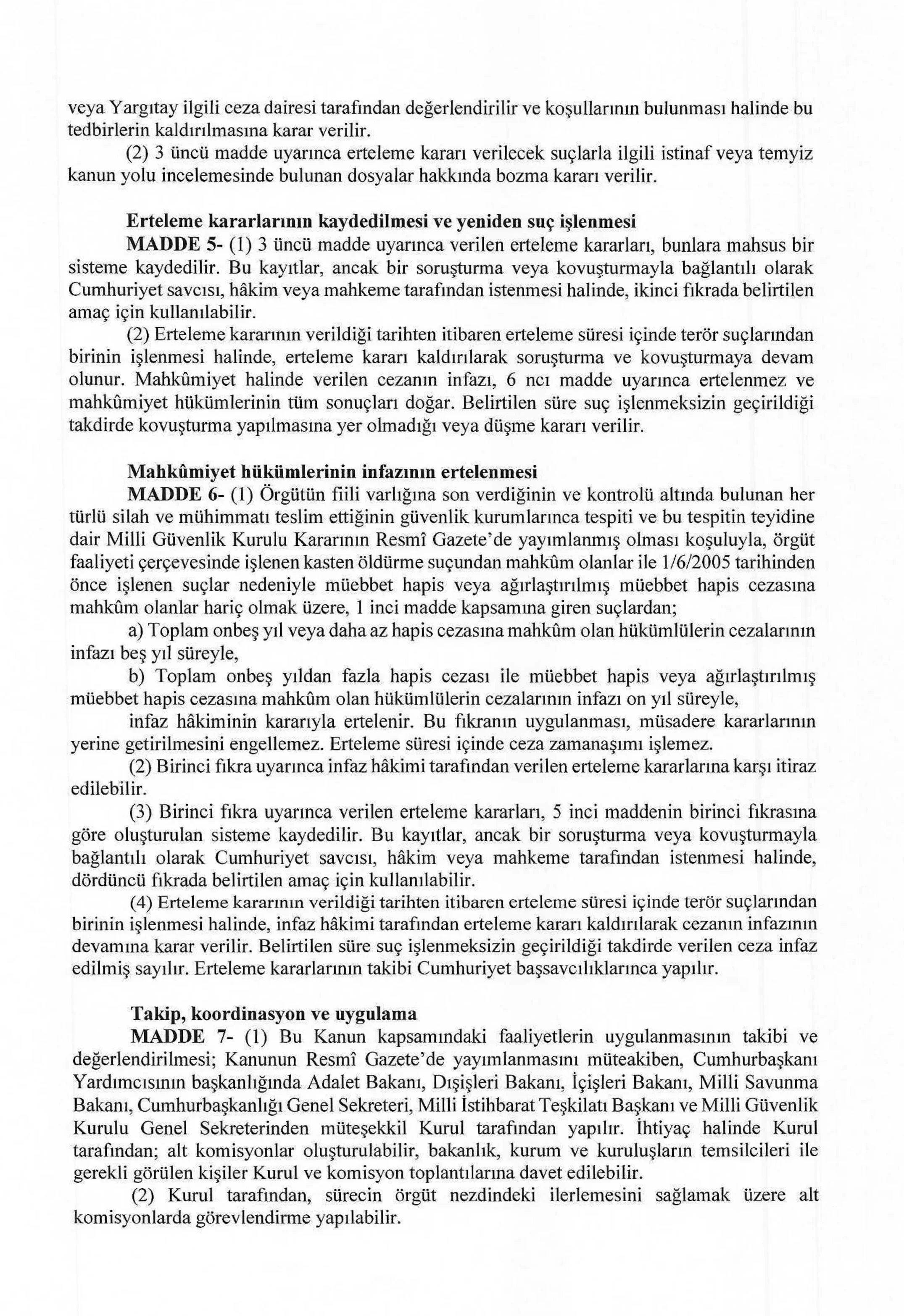
ARTICLE 2- The scope of the Law is limited solely to the PKK/KCK terrorist organization and formations affiliated with it. Accordingly, only offenses committed within the scope of, or in favor of, that organization's activities can be deferred under the Law.
The following cases fall outside the scope of the Law:
a) The offense of intentional killing committed within the framework of the organization's activities,
b) Offenses requiring a life sentence or aggravated life sentence committed before June 1, 2005, as well as life or aggravated life sentences handed down for offenses committed before that date,
c) Personal offenses committed by members of the organization,
ç) The activities of other terrorist organizations and ordinary criminal offenses.
Deferral of investigations and prosecutions
ARTICLE 3- With regard to offenses committed within the scope of, or in favor of, the organization's activities;
a) Investigations and prosecutions concerning offenses carrying a maximum sentence of 15 years' imprisonment or less shall be deferred for five years,
b) and investigations and prosecutions concerning offenses carrying a maximum sentence of more than 15 years, or a life or aggravated life sentence, shall be deferred for ten years.
The deferral decision is issued by the public prosecutor during the investigation phase, and by the trial court during the prosecution phase.
The statute of limitations does not run during the deferral period. Deferral decisions issued by the public prosecutor during the investigation phase, or by the court during the prosecution phase, may be appealed.
If any terrorism offense is committed during the deferral period, the deferral decision is revoked and the investigation or prosecution continues. The execution of any conviction resulting from proceedings conducted under these circumstances cannot be deferred under the provisions of this Law.
If the deferral period is completed without any terrorism offense being committed, a decision of non-prosecution or dismissal is issued.
For offenses falling within the scope of this Law that were committed before the National Security Council decision was published in the Official Gazette, the opening of an investigation after that publication will be subject to the permission of a board to be formed under the chairmanship of the Vice President.
PROTECTIVE MEASURES AND FILES UNDER APPEAL REVIEW
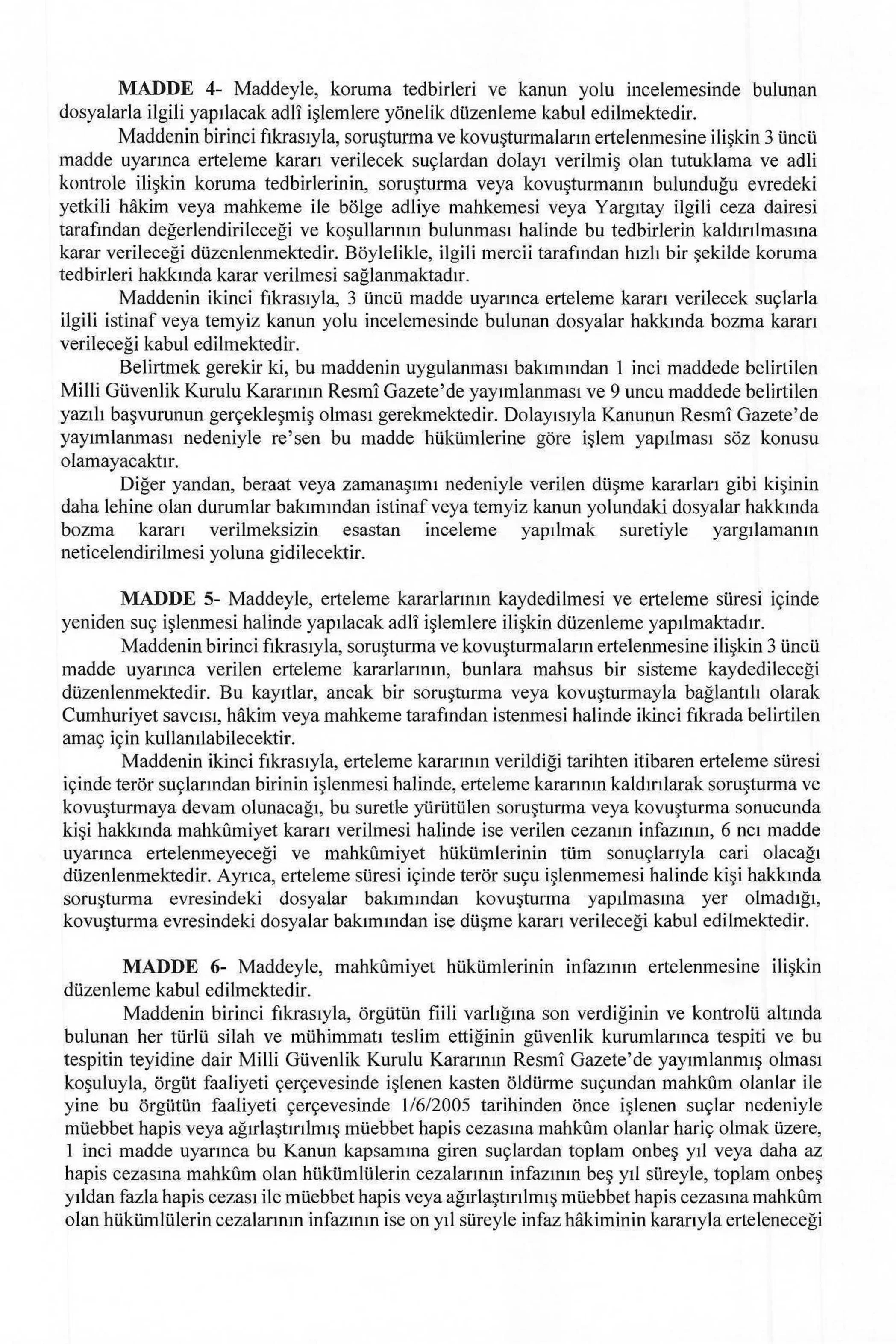
ARTICLE 4- (1) Protective measures such as pre-trial detention and judicial control imposed for offenses that will be subject to a deferral decision under Article 3 shall be reviewed by the competent judge or court at the relevant stage of the investigation or prosecution, or by the regional court of appeal or the relevant criminal chamber of the Court of Cassation, and shall be lifted where the conditions for doing so are met.
(2) Files under appeal or cassation review concerning offenses that will be subject to a deferral decision under Article 3 shall be reversed.
RECORDING OF DEFERRAL DECISIONS AND REPEAT OFFENSES
ARTICLE 5- (1) Deferral decisions issued under Article 3 shall be recorded in a dedicated system. These records may only be used for the purpose specified in paragraph 2, and only when requested by a public prosecutor, judge, or court in connection with an investigation or prosecution.
(2) If any terrorism offense is committed during the deferral period, starting from the date the deferral decision was issued, the deferral decision is revoked and the investigation or prosecution continues. If a conviction results, the execution of the sentence is not deferred under Article 6, and all consequences of the conviction take effect. If the specified period elapses without any offense being committed, a decision of non-prosecution or dismissal is issued.
DEFERRAL OF THE EXECUTION OF CONVICTION SENTENCES
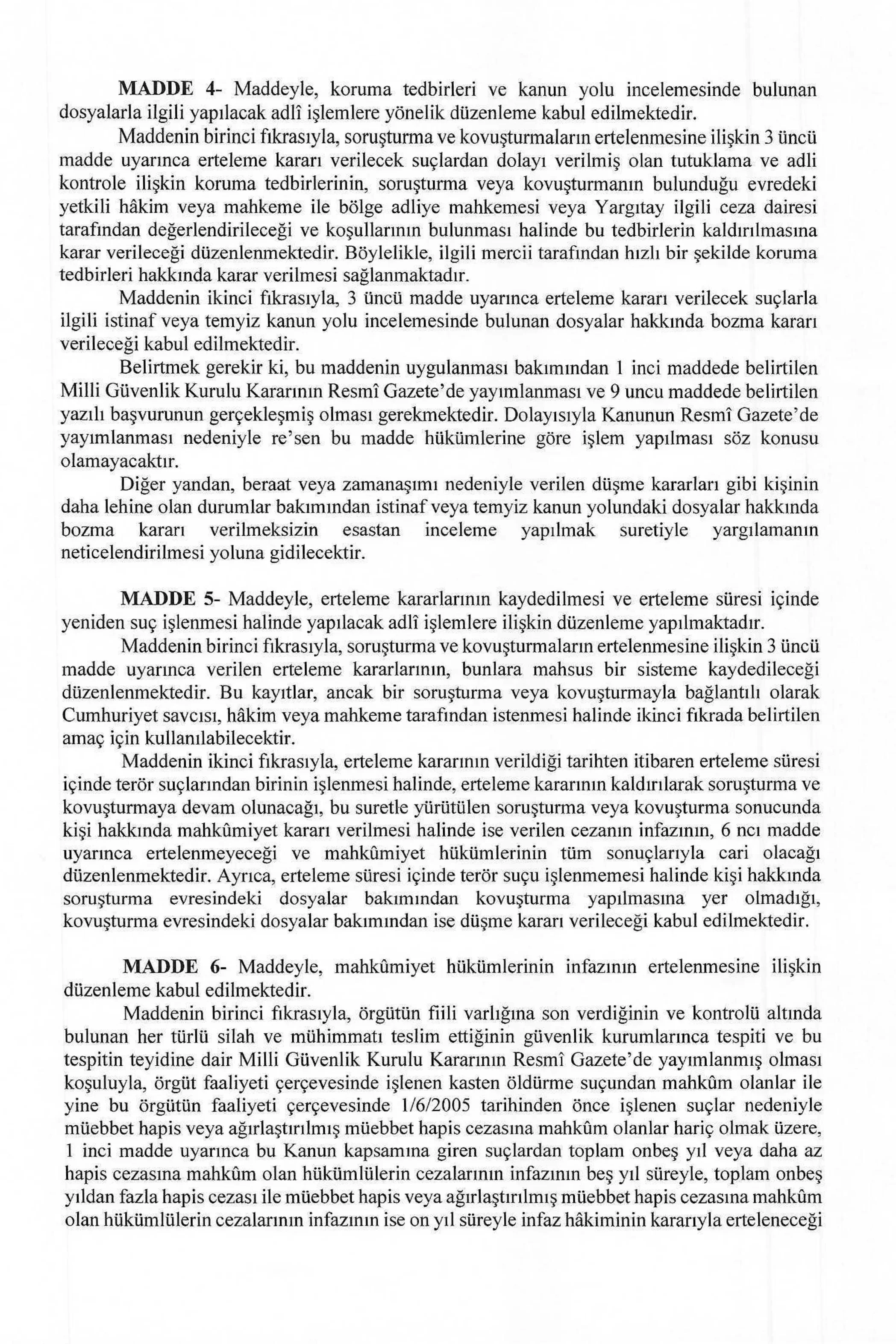
ARTICLE 6- (1) Provided that the security agencies have determined that the organization has ended its physical existence and surrendered all weapons and ammunition under its control, and that a National Security Council decision confirming this determination has been published in the Official Gazette, then — with the exception of those convicted of intentional killing committed within the framework of the organization's activities, and those sentenced to life or aggravated life imprisonment for offenses committed before June 1, 2005 — for offenses falling within the scope of Article 1:
a) The execution of sentences for convicts sentenced to a total of 15 years' imprisonment or less shall be deferred for five years,
b) and the execution of sentences for convicts sentenced to more than 15 years' imprisonment, or to life or aggravated life imprisonment, shall be deferred for ten years, by decision of the execution judge. The application of this paragraph does not prevent the enforcement of confiscation orders. The statute of limitations on the sentence does not run during the deferral period.
2) An objection may be filed against postponement decisions issued by the execution judge under the first paragraph.
(3) Postponement decisions issued under the first paragraph shall be recorded in the system established under the first paragraph of Article 5. These records may only be used for the purpose specified in the fourth paragraph if requested by a public prosecutor, judge or court in connection with an investigation or prosecution.
(4) If any terror-related offense is committed during the postponement period starting from the date the postponement decision was issued, the execution judge shall revoke the postponement decision and order the sentence's execution to continue. If the specified period passes without any offense being committed, the sentence shall be deemed executed. Postponement decisions shall be monitored by the chief public prosecutor's offices.
MONITORING, COORDINATION AND IMPLEMENTATION
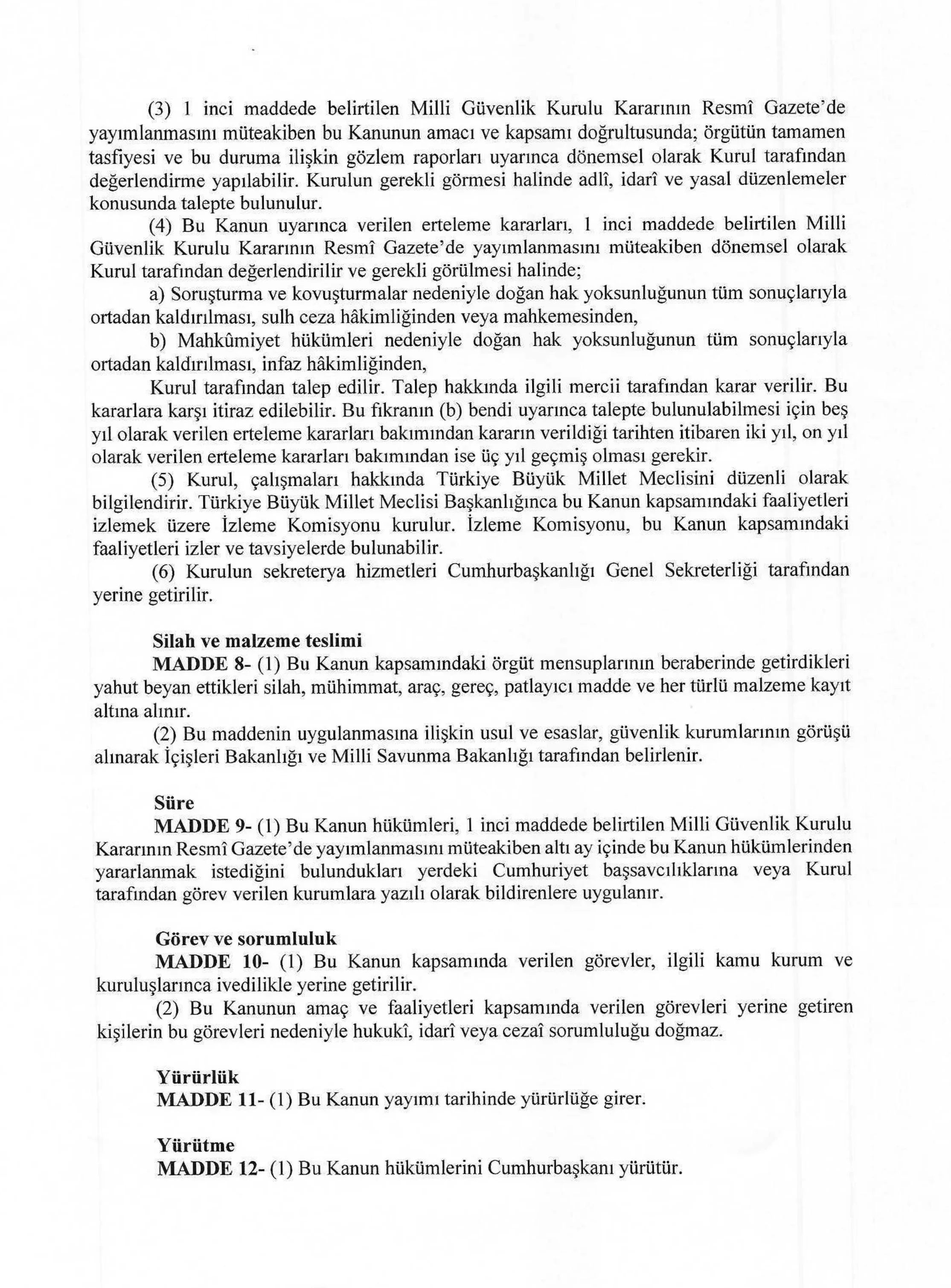
ARTICLE 7- (1) The monitoring and evaluation of the implementation of activities under this Law shall be carried out, following the publication of the Law in the Official Gazette, by a Board consisting of the Vice President as chair, the Minister of Justice, the Minister of Foreign Affairs, the Minister of Interior, the Minister of National Defense, the Secretary General of the Presidency, the Head of the National Intelligence Organization (MİT), and the Secretary General of the National Security Council. If needed, the Board may form sub-commissions and invite representatives of ministries, institutions and organizations, as well as other persons deemed necessary, to Board and commission meetings.
(2) The Board may make assignments to sub-commissions to ensure the process advances within the organization.
(3) Following the publication in the Official Gazette of the National Security Council Decision referred to in Article 1, in line with the purpose and scope of this Law, the Board may periodically conduct evaluations regarding the organization's complete dissolution and the observation reports on this matter. If the Board deems it necessary, it shall request judicial, administrative and legal arrangements.
(4) Postponement decisions issued under this Law shall be periodically evaluated by the Board following the publication in the Official Gazette of the National Security Council Decision referred to in Article 1, and where deemed necessary;
a) the complete removal, with all its consequences, of the loss of rights arising from investigations and prosecutions, from the criminal court of peace or the relevant court,
b) the complete removal, with all its consequences, of the loss of rights arising from conviction rulings, from the execution judge,
shall be requested by the Board. The relevant authority shall decide on the request. An objection may be filed against these decisions. For a request to be made under subparagraph (b) of this paragraph, 2 years must have passed since the date of the decision for postponement decisions issued for 5 years, and 3 years must have passed for postponement decisions issued for 10 years.
(5) The Board shall regularly inform the Grand National Assembly of Turkey about its work. A Monitoring Commission shall be established by the Speaker's Office of the Grand National Assembly of Turkey to monitor the activities under this Law. The Monitoring Commission shall monitor the activities under this Law and may make recommendations.
(6) The Board's secretariat services shall be carried out by the General Secretariat of the Presidency.
HANDOVER OF WEAPONS AND EQUIPMENT
ARTICLE 8- (1) Weapons, ammunition, vehicles, equipment, explosives and all other materials that members of the organization covered by this Law bring with them or declare shall be recorded.
(2) The procedures and principles for implementing this article shall be determined by the Ministry of Interior and the Ministry of National Defense, taking the opinion of security institutions.
Duration
ARTICLE 9- (1) The provisions of this Law shall apply to those who, within 6 months following the publication in the Official Gazette of the National Security Council Decision referred to in Article 1, notify in writing the chief public prosecutor's office in their location or the institutions assigned by the Board that they wish to benefit from the provisions of this Law.
DUTY AND RESPONSIBILITY
ARTICLE 10- (1) Duties assigned under this Law shall be carried out promptly by the relevant public institutions and organizations.
(2) Persons who carry out duties assigned under the purpose and activities of this Law shall not incur legal, administrative or criminal liability as a result of these duties.
Entry into force
ARTICLE 11- (1) This Law shall enter into force on the date of its publication.
Execution
ARTICLE 12- (1) The provisions of this Law shall be executed by the President.