
Foreign Policy publishes revealing interview with Sipan Hemo
Speaking to Foreign Policy's Hanna Davis, Syria's deputy defense minister Sipan Hemo confirmed that only four SDF brigades have joined the Syrian army, leaving the status of more than 50,000 fighters unresolved.
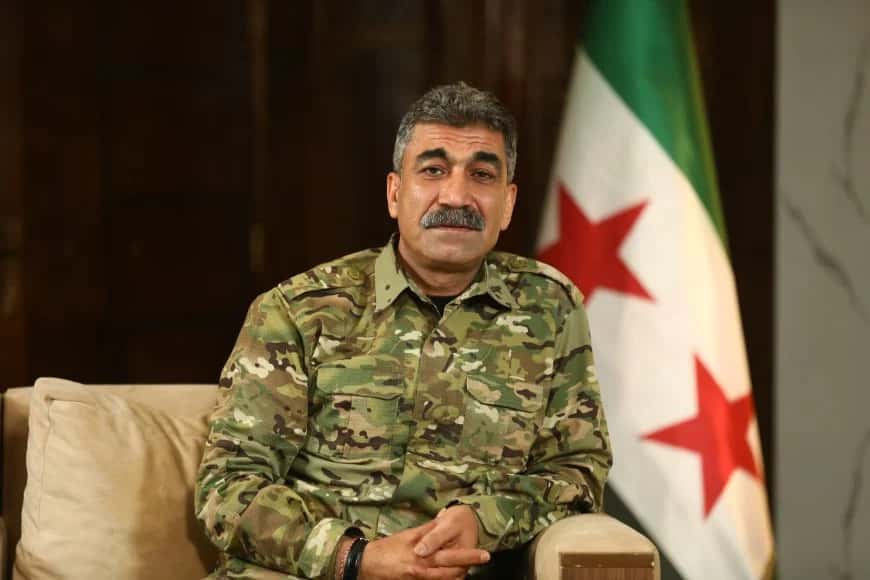
RastinewsSipan Hemo, Syria's deputy defense minister, told the prestigious American magazine Foreign Policy's Hanna Davis that only four SDF brigades have joined the Syrian army, while the status of more than 50,000 fighters remains undetermined.
"Four of the former SDF brigades have joined the Syrian army," Hemo confirmed. "The Hasakah, Qamishli and Derik brigades now operate under the Syrian army's 60th Division in Aleppo, while the Kobani (Ayn al-Arab) brigade falls under the 72nd Division. Each brigade has 1,300 troops, with 500 to 750 personnel operating equipment such as drones and air-defense systems." Hemo said salaries have been paid regularly for about three months.
Yet those integrated make up only a small fraction of SDF forces; tens of thousands of fighters remain outside the arrangement. Of the SDF's roughly 60,000 troops, more than 50,000 have an uncertain status and no clarity on future pay. One of the thorniest issues in the negotiations is the fate of the all-female YPJ.
Hemo said the government will not accept women into the army, calling this incompatible with its principles and beliefs.
The YPJ was an integral component of the SDF, but the government is offering only to fold its fighters into local security forces. Hemo said this move would significantly weaken their military capability.
At a small YPJ base in the Hasakah desert, about 150 fighters were seen training, living and studying Öcalan's teachings. The base, named "Martyr Koçerin" after a former commander killed in the January clashes, is commanded by 26-year-old battalion commander Revan Kobani. She fled her home in Raqqa after ISIS seized the city in 2014 and joined the YPJ in Kobani at age 14. She said she was wounded in the elbow during a 2019 Turkish drone strike on Sere Kaniye (Ras al-Ain) near the Turkish border.
"Sharaa offered to integrate us into the police force, but that means giving up our identity," Kobani said. "Imagine building a beautiful house and someone comes and tears it down. By creating a women's police force, they're destroying the YPJ project." She noted that women have already been part of the region's police force for more than a decade, adding: "As the YPJ, we will not give up our identity. Whatever we're called, we want to be recognized as an army under the Syrian constitution."
At a former U.S. military base outside Syria's Hasakah, we met in early July with Samir Asso, known by the nom de guerre Sipan Hemo. Until January, Hemo commanded the Syrian Democratic Forces (SDF), the Kurdish-led military structure that partnered with Washington to defeat ISIS. He now serves in Syrian President Ahmed al-Sharaa's government as deputy prime minister for the eastern region and deputy defense minister — the first Kurdish commander to reach a senior military post in the Damascus government. In the room where we met, signs bearing the Syrian regime's green eagle emblem hung behind a large desk where he sat, somewhat informally.
Hemo's new role reflects the latest stage in the friction between Damascus and the Kurdish-led autonomous administration that has governed northeast Syria for the past decade. Clashes broke out in January after 10 months of stalled negotiations in which Washington shifted its backing from the Kurds to the Syrian government. Syrian forces routed the SDF within 24 hours, seizing 80 percent of Kurdish-held territory. A comprehensive agreement reached at the end of January set out a phased plan to integrate the region's security, military and administrative institutions into the Syrian state. But as the past six months have shown, merging the Kurds' autonomous, left-leaning vision of governance under the authority of a regime with a largely Arab and Islamist character remains a difficult and uneven process.
Speaking in a deep voice beneath a thick mustache, Hemo said: "If America hadn't shifted its political stance, we wouldn't have lost a single inch of territory." He acknowledged it was "no secret" that the SDF accepted integration into the Syrian state only under pressure, adding: "It was the only way to secure peace."
At the checkpoint at the entrance to Ayn al-Arab, Syria's three-starred flag flapped in the wind blowing off the flat desert road toward the Turkish border, its bright colors contrasting with a weathered Syrian Democratic Forces sign. Along the road into the city center runs a cemetery. Rows of well-kept graves stretch toward the horizon, each headstone bearing a photograph of a fallen fighter. Behind them, hundreds of freshly dug graves lined with cinder blocks hold SDF fighters killed in the January clashes. Nearby, a bulldozer was digging a large pit to rebury fighters whose headstones had been destroyed in the government-controlled city of Manbij.
Near the cemetery, the yellow-and-blue flag of the Autonomous Administration of North and East Syria (AANES) still flew atop a government building whose facade was pocked with bullet marks. On the second floor, Ferhan Haji Isa, 66, co-chair of the Kobani executive council, said he would remain in his post until "integration is complete." His office now displays the flag of the new Syrian government, though the AANES emblem still appears on the paperwork on his desk.
"We're open to negotiations right now. We don't want war — we want our rights protected," Isa said. "Syria is made up of many colors: Alawite, Druze, Sunni, Kurd. Without recognition of these colors, there can be no real peace. That's why we're pressing the government to acknowledge these realities."
From Autonomy to Integration
The autonomous region born of this struggle, widely known as Rojava, was built on principles of democratic self-governance embracing ethnic diversity and gender equality, organized down to communes led by co-chairs — one man, one woman. But in practice, Rojava's administration never fully lived up to these principles; arbitrary arrests, detentions, corruption and other rights violations were frequently reported, particularly in Arab-majority areas such as Raqqa. In those areas, the arrival of state forces in January was welcomed as a liberation.
Following the January integration agreement, Kobani remained under siege for more than a month. The internet was cut, and government forces restricted the movement of people and fuel. Though the death toll here did not reach the scale of the massacres on the Syrian coast or in Sweida, both sides committed abuses during the operation, including desecration of Kurdish bodies by government soldiers, a massacre of Arab civilians by an SDF fighter, and looting and attacks in Kurdish villages.
While the situation has largely stabilized and freedom of movement has been restored, negotiations continue over the practical and symbolic character of day-to-day governance. Kobani now falls under Aleppo province, reporting to Aleppo, which in turn reports to Damascus. Isa said the administration is fighting to preserve some degree of autonomy within this centralized system.
In January, Sharaa issued a decree recognizing Kurdish as a national language, restoring citizenship rights to Syrian Kurds, and legally guaranteeing their identity and holidays — a significant reversal of the Assad-era ban on Kurdish and the statelessness it imposed on hundreds of thousands. But the decree has not yet been written into the constitution and remains subject to repeal. In Kurdish-majority areas, including Hasakah and Kobani, most official signage now appears in both Arabic and Kurdish.
The New Order and Those Left on the Margins
At the center of the struggle over what integration actually means is 37-year-old Almaz Rumi, Kobani's new mayor. Appointed in April, Rumi was chosen by the governor of Aleppo from a list of six candidates submitted by the Kurdish administration. The January agreement called for Kurdish officials to be appointed to state posts, and this has largely been implemented.
Rumi called for Kurdish rights to be enshrined in the Syrian constitution. "We want our rights — our Kurdish language, identity and culture — guaranteed in the constitution," she said. "We want a free and democratic Syria where everyone has rights, whether Kurdish or Arab."
About 320 kilometres east of Kobani lies Hasakah, another city that was once under Kurdish administration. At the roundabout marking the city's entrance, flags of both Rojava and the new Syrian government fly side by side. In January, Syrian army units backed by Arab tribal forces reached the city's outskirts but did not initially push inside.
According to the International Crisis Group, the January agreement bars both sides from deploying military forces into city centres. In the city centre, the sign for the "Hasakah Palace of Justice" is posted only in Arabic. Directly in front of it stands a giant Syrian flag, alongside a large poster of Abdullah Öcalan, founder of the Kurdistan Workers' Party (PKK). Buildings nearby are marked with graffiti reading "PKK," "Rojava" and "Rojava will not fall." The Arabic-only sign has drawn protests from residents demanding that Kurdish remain an official administrative language.
The Limits of Armed Integration and the Status of the YPJ
Speaking to us at a former American base, Sipan Hamo said that, like many of his SDF comrades, he trained with PKK guerrillas in the mountains of Iraqi Kurdistan. Despite the losses they suffered fighting ISIS, he said, the West had withheld from them the same support it extended to Ankara and Damascus, effectively "playing games with the Kurds."
After Sharaa's forces toppled the regime in December 2024, Washington quickly aligned itself with the new government, a move Kurds saw as abandonment. Hamo said that nearly a year after the regime's fall, in December 2025, the United States cut off all funding to the SDF. On January 20, 2026, U.S. Special Representative for Syria Tom Barrack announced on X that the SDF's mission as the main force against ISIS had largely been completed and that Damascus would take over the role. In April, the U.S. vacated its last base in the northeast.
Hamo also acknowledged Turkey's pressure on Syria and its role in pushing for Rojava's integration into the new government. "[Ankara] sees us, the Kurdish people, as a threat to its national security," Hamo said, adding that Turkish strikes in the region had stopped since the integration agreement in January.
Hamo confirmed that four former SDF brigades have joined the Syrian army. The Hasakah, Qamishli and Derik brigades operate under the Syrian army's 60th Division in Aleppo, while the Kobani (Ayn al-Arab) brigade falls under the 72nd Division. Each brigade numbers 1,300 troops, he said, with 500 to 750 personnel operating equipment such as drones and defence systems; salaries have been paid regularly for about three months.
Even so, those integrated make up only a small fraction of SDF forces; tens of thousands of fighters remain outside the process. Of the SDF's roughly 60,000 troops, more than 50,000 still have no clarity on their status or future pay. One of the thorniest issues in the negotiations has been the fate of the all-female YPJ. Hamo said the government would not accept women into the army, calling it incompatible with its principles and beliefs.
The YPJ was an integral component of the SDF, but the government has offered only to fold them into local security forces. According to Hamo, that move would significantly weaken their military capability.
At a small YPJ base in the deserts of Hasakah, we found around 150 fighters training, living and studying the teachings of Öcalan. The base, named "Martyr Koçerin" after a former commander killed in clashes in January, is commanded by 26-year-old battalion commander Revan Kobani. She fled her home in Raqqa when ISIS seized the city in 2014 and joined the YPJ in Kobani at age 14; she said she was wounded in the elbow in a 2019 Turkish drone strike on Sere Kaniye (Ras al-Ain), near the Turkish border.
"Sharaa offered to integrate us into the police force, but that would mean giving up our identity," Kobani said. "Imagine building a beautiful house and then someone comes and tears it down. By creating a women's police force, they are erasing the YPJ project." She noted that women had already been part of the region's police force for more than a decade. "We will not give up our identity as the YPJ," she said. "Whatever we're called, we want to be recognised as an army under the Syrian constitution."
The Political Wing's Demands
Speaking in Qamishli, the former capital of Kurdish administration, Pervin Yusuf, co-chair of the Democratic Union Party (PYD), said she too had taken part in the integration negotiations. Yusuf, 40, co-chairs the PYD, the dominant Kurdish political group in the Rojava administration. She said one of the party's top demands was changing the country's name from the "Syrian Arab Republic" to the "Syrian Republic." The party boycotted the country's last parliamentary elections, calling the allocation of just 11 of 210 seats to Kurds, who make up 20 percent of the population, inadequate. "We don't have to accept everything imposed on us during the integration process," Yusuf said. "That is the PYD's job."
Yusuf said she remained hopeful her party could keep playing a role despite the obstacles. Unlike under Assad, when Kurdish parties were banned, she said the party can now operate in Damascus for the first time and present itself to the Syrian public. "Now we can at least get a licence to operate properly," she said.
Yusuf concluded: "We've met with many political circles [in Damascus]. They didn't know the Kurds before. We see an opportunity in this integration process to show that we are Syrian citizens. Our struggle, our work, matters even more now."