
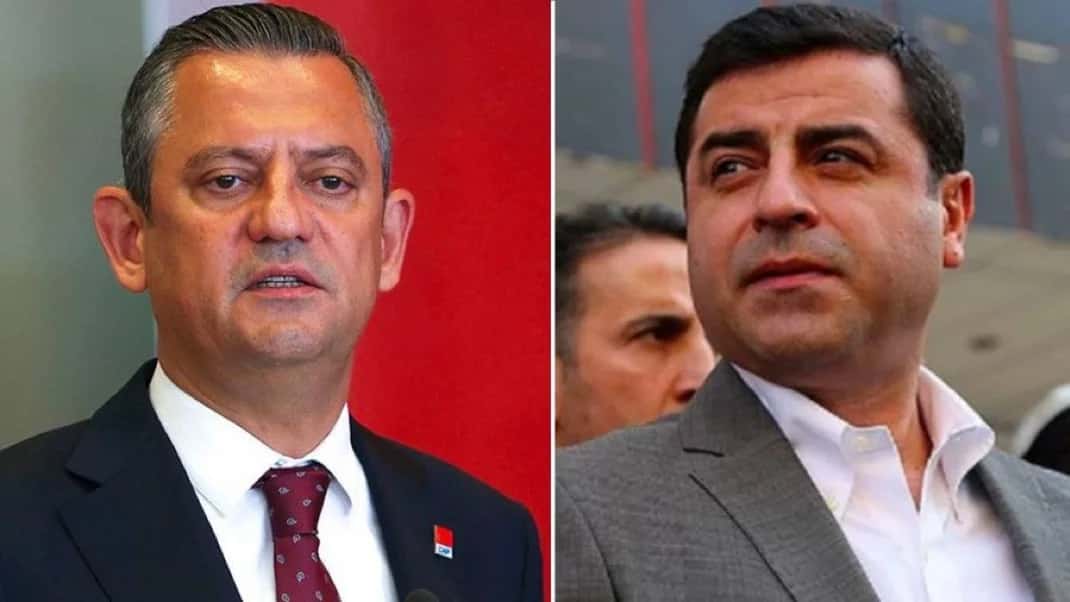
RastinewsÖzel said, "While there is an opportunity for peace, for the guns to fall silent, for terrorism to end, and for Turks and Kurds to walk arm in arm into a great peace and development process in Turkey, we shouldn't be drawing red lines this early."
Turning to the framework law expected before Parliament, Özel said his party's report emphasized the need to comply with rulings from the Constitutional Court and the European Court of Human Rights.
Criticizing the fact that Demirtaş is following the process from prison, Özel said: "A friend asked me the other day whether I'd visit Demirtaş. I said, 'I'd rather do it at his home now.' We wrote a huge report. Sections six and seven of that report matter most now — compliance with the Constitutional Court's rulings, with the European Court of Human Rights' rulings. That directly concerns the freedom of Demirtaş, of the Gezi detainees, of a great many politicians. Now the framework law is coming to us, and Demirtaş is watching it on television in Edirne. That's simply not right. A friend asked me the other day whether I'd consider visiting Demirtaş during this process. I said I'd consider it at his home. Why would I go visit him in prison? There's no issue between us there anyway — his statements are our statements. I'd go gladly, and he said he'd gladly receive me, but why should we settle for that? Didn't we say so at the very start of this process? Didn't every party put its signature to it? Setting aside the İYİ Party's position, the rest of us all signed. I respect the İYİ Party's reservations, since they didn't sign. The rest of us bound ourselves with our signatures. A six-hundred-member Parliament set up a fifty-five-member commission. Every party signed on, except the one that didn't join the commission. And on top of that, this is still a process without Demirtaş. I don't find that sincere — I find it problematic."