
12 Years On, the Yazidi Genocide's Wounds Remain Open
Rastî - Twelve years have passed since ISIS launched its massacre against Yazidi Kurds in Shengal. On August 3, 2014, the radical group unleashed disproportionate force and a machine of slaughter.
RastinewsTwelve years have passed since ISIS launched its massacre against Yazidi Kurds in Shengal. On August 3, 2014, the radical group unleashed disproportionate force and a machine of slaughter, targeting not just a people but one of Mesopotamia's oldest, most deeply rooted faiths. Despite the years that have passed, the wound has not healed, and the search for justice still moves forward under the shadow of uncertainty and political deadlock.
A Chain of Neglect, From Mosul to Shengal
On June 9, 2014, Iraqi army units withdrew from the region without offering any resistance, handing the country's second-largest city, Mosul, over to ISIS control. That breaking point left Christians, Kakai Kurds and Yazidis living in the "disputed territories" under Article 140 of the Iraqi Constitution directly exposed.
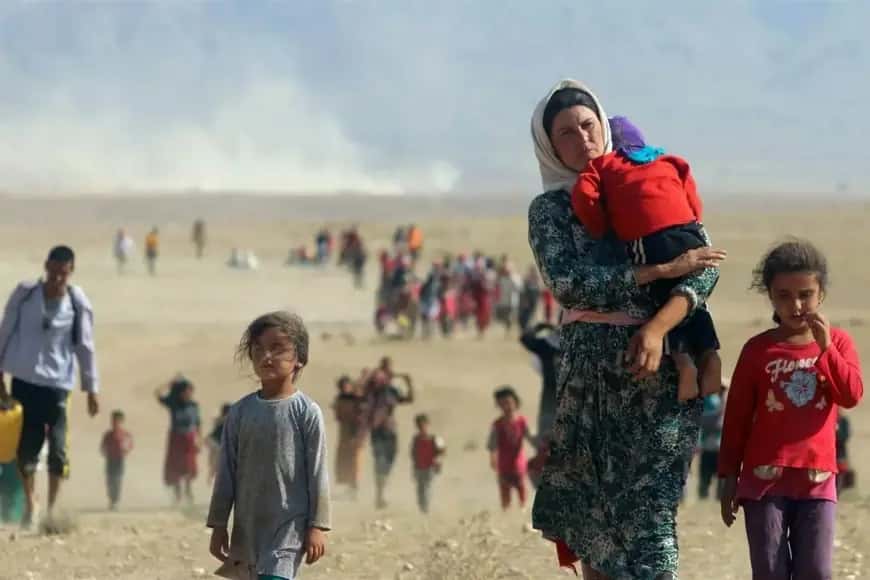
Attacks on minorities in and around Mosul quickly spread to Shengal. On August 3, ISIS militants entered villages and towns at the foot of the mountain and carried out a systematic genocide. More than 5,000 Yazidi Kurds were killed on their devastated lands and buried in mass graves. Thousands were abducted; women and children were bought and sold in slave markets. Some 2,745 children were left without parents, and tens of thousands of people were forced to flee their homes.
A Fight for Survival on the Mountaintop
Hundreds of thousands who fled the massacre and took refuge on Mount Shengal battled hunger, thirst and disease for days under the August heat. The wave of migration that scattered people from the region to the Kurdistan Region and across the world reshaped Yazidi demographics profoundly.
Coordinated by the Kurdistan Regional Government, those trapped on the mountain were evacuated to camps around Duhok, while air support from international coalition forces and the determined resistance of Peshmerga forces halted the ISIS advance. Under operations personally led by President Masoud Barzani in his capacity as Commander-in-Chief, Shengal was cleared of ISIS a year after the occupation began.
Wounds Still Open: Obstacles to Return
In Shengal, a strategically located area of 400,000 people where Yazidi Kurds make up 70 percent of the population, life has yet to return to normal. An authority vacuum created by illegal armed groups and militia forces that have moved into the region from outside, along with ongoing security crises, remains the biggest obstacle to the return of tens of thousands of displaced Yazidis to their land. To date, 85 mass graves have been uncovered, keeping the pain of the past fresh, while the fate of thousands of people remains unknown.
The International Push to Recognize Genocide
On the legal and diplomatic front, progress continues, albeit slowly. After the Brussels-based European Parliament recognized the ISIS attacks as genocide in February 2016, the United Nations Human Rights Council published a similar report that June.
Switzerland, Luxembourg, Belgium, the Netherlands, Armenia and Germany have all formally recognized what happened in Shengal as genocide, and Britain has since followed suit. But the international justice mechanisms the Yazidi community has been waiting for, and efforts to determine the fate of the missing, still lag far behind expectations.