
Ankara's Kurdish gamble: from talks with Öcalan to parliament
Al-Monitor columnist Amberin Zaman writes that Ankara has broken sharply with years of security-focused policy, sending parliament's Justice Commission a draft framework law shaped by direct negotiations with PKK leader Abdullah Öcalan.
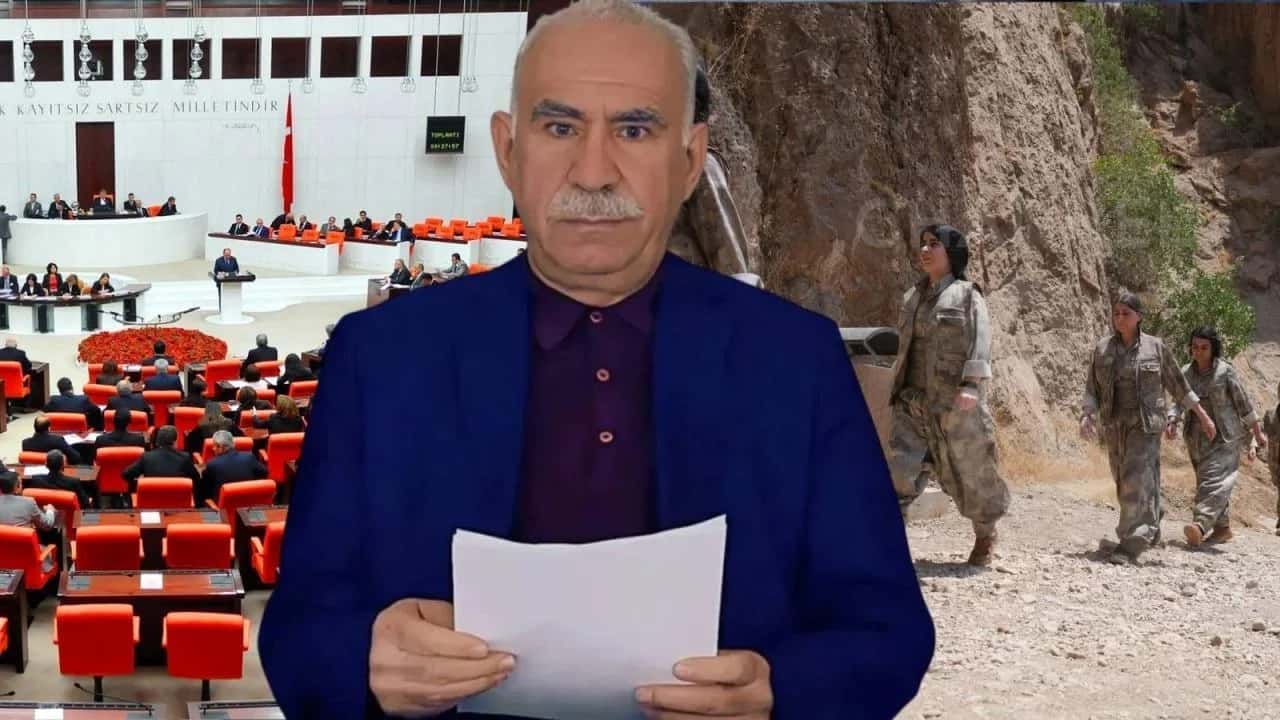
RastinewsAl-Monitor columnist Amberin Zaman examined Ankara's decision to send parliament's Justice Commission a draft framework law shaped by direct negotiations with PKK leader Abdullah Öcalan, a sharp break from years of security-focused policy. Zaman writes the move is read by some as a historic threshold and by others as a concession by the Kurdish political movement — and that it is bound up directly with President Recep Tayyip Erdoğan's strategy to secure the political space and votes he needs for a third term in power.
Rastî -For years, the Turkish state managed the Kurdish issue through military operations and security reflexes. It has now reached a rare turning point, taking formal steps forward. Al-Monitor's senior correspondent Amberin Zaman writes that secret, direct talks between Ankara and İmralı prison, underway for more than two years, have entered a new phase with the bill now before parliament.
The bill, submitted to the parliamentary Justice Commission under the title "Strengthening National Solidarity and Social Integration," marks the first time in the republic's history that direct contacts between the state and Öcalan have been placed on a legal footing.
The legal framework, which claims to end an armed conflict that has killed tens of thousands over more than 40 years, is shaking up the balance on the ground and reshaping Ankara's domestic political calculus. According to Zaman's analysis, on one side sits the political and social shock of negotiating through parliament with a figure branded for decades a "terrorist" or "baby killer"; on the other sits the fact that the move is designed as critical leverage to extend Erdoğan's time in power.
While the bill's scope is debated within the Kurdish political movement's base and in opposition circles, Ankara's calculation is clear: zero out the cost of its security policies and use this legal integration to lock in the mass support it may need for possible constitutional or political transitions ahead.
The full translation of the piece follows:
A framework bill drafted after more than two years of negotiations between the Turkish state and jailed PKK leader Abdullah Öcalan was submitted to parliament's Justice Commission on Wednesday. Some are calling it a historic turning point; others see it as a humiliating capitulation for the Kurdish movement.
Either way, it is the first time the Turkish state has sent a bill to parliament following direct talks with Öcalan, a man Ankara branded for years a "baby killer" and "terrorist." Öcalan was captured by Turkish special forces in Nairobi in 1999, tried in Turkey and sentenced to death. It is also the first time any Turkish government has pursued a political rather than military solution to end the conflict between the Turkish armed forces and the PKK, which has killed more than 40,000 people, most of them Kurds.
The bill, titled the "Law on Strengthening National Solidarity and Social Integration," is expected to come to a vote in the General Assembly as early as Friday.
The 12-article bill sets up a phased legal mechanism offering full or partial amnesty to PKK members and some people linked to the group. It covers offenses including membership in the organization, leadership roles, propaganda and fundraising on its behalf.
A board made up of representatives from the foreign ministry, the security bureaucracy, intelligence, the interior ministry and the justice ministry, operating under presidential oversight, will coordinate and monitor the PKK's disarmament and dissolution. A 17-member monitoring committee will also track the process and bring any needed legislation to parliament.
At the time of publication, at least 360 of the 600 members of the Turkish parliament had signed onto the bill.
The law matters not only for the Kurds' decades-long struggle for political equality but also for President Recep Tayyip Erdoğan's political future.
Under the current constitution, Erdoğan cannot run again after his term ends in May 2028. But amending the constitution requires a referendum backed by at least 360 members of parliament. Wednesday's show of support suggests Erdoğan can muster the majority needed to put that referendum to voters. Friday's vote, if the bill draws 400 votes, could make a referendum unnecessary altogether.
That makes the position of Abdullah Öcalan and the pro-Kurdish DEM Party, which holds 56 seats in parliament, decisive. The ruling AKP and its ally the MHP hold 323 seats combined — 37 short of the 360 votes needed either for a constitutional referendum or for an early election that could clear the way for Erdoğan to run again.
In a statement Monday, the DEM Party said Öcalan had sent a message of support for the government. While noting the bill has many shortcomings, the 78-year-old PKK leader said it was "the key to the door" that would open the way for further reforms, including constitutionally guaranteed language rights.
"This law alone won't solve the Kurdish issue, but it's a start," Diyarbakır lawmaker Ceylan Akça Cupolo told Al-Monitor.
Cupolo called it "a good starting point that will lay the groundwork for the dialogue and legal changes needed to resolve the century-old Kurdish issue."
Another key player is Özgür Özel, who split from the CHP to found the New Party (Yeni Parti). The New Party, which holds 91 seats, is expected to keep growing. Özel is expected to back the bill to win Kurdish votes and preserve his ties with the DEM Party.
The bill does not cover Öcalan himself or senior PKK commanders based in Kandil and the surrounding area near the Iraq-Turkey border. It also remains unclear whether Selahattin Demirtaş, the former co-chair of the DEM Party's predecessor, the HDP, who has been jailed since 2016 on contested terrorism charges, will benefit from the measure under rulings from the European Court of Human Rights.
According to information first reported by Al-Monitor, secret talks between Öcalan and the Turkish government began in April 2024. They had two main goals: getting Öcalan to use his influence to end the armed struggle and integrate the Syrian Democratic Forces (SDF) into the government in Damascus, and securing the DEM Party's support for Erdoğan's plans to stay in power.
The talks became public in October of that year, when MHP leader Devlet Bahçeli invited Öcalan to call on the PKK from the floor of parliament to lay down its arms, saying he could benefit from a possible amnesty.
In February 2025, Öcalan issued a call from İmralı prison for the PKK to disarm and for Kurds to "integrate" with the Turkish state.
On May 12, 2025, the PKK announced it was ending its armed struggle in Turkey and dissolving the organization, heeding Öcalan's call.
On July 11, 2025, near Sulaymaniyah in Iraq's Kurdistan Region, a group of PKK members held a symbolic weapons-burning ceremony in a mountainous area controlled by the Patriotic Union of Kurdistan (PUK).
Once the law passes, some members of that group are expected to return to Turkey along with exiled Kurdish politicians and other people linked to the PKK. PKK sources told Al-Monitor that how the government treats the first group of returnees will be one of the most important tests of its sincerity and will shape the future of the process.
"Öcalan continues to fight for equal rights for Kurds within a democratic Turkey. That's the only basis on which 'integration' with the state can be understood," one source said.
Other sources said this was a major political gamble, with the outcome largely dependent on Erdoğan's own conduct.
Previous AKP-led peace efforts with the PKK, in 2008 and 2012, collapsed amid mutual distrust, and fighting resumed with even greater intensity.
In 2014, the Pentagon formed an alliance with the PKK's Syrian affiliate to fight the Islamic State, later joined by Arab fighters — a partnership that deepened Ankara's fears that the West was planning to help create an independent Kurdish state.
Still, the geopolitical shockwaves that swept the Middle East after Hamas's 2023 attack on Israel accelerated Turkey's renewed contact with the PKK. Ankara believed its advanced drone capabilities had given it the upper hand on the battlefield.
Iran's large-scale withdrawal from Syria, Ahmed al-Sharaa's rise to power in Damascus and US backing for him have made Turkey more confident about reaching a deal with the PKK largely on its own terms.
Fresh tensions with Iran could still upset Turkey's calculations. US President Donald Trump is believed to have decided not to support Iran's armed Kurdish opposition at Erdoğan's request. But Trump, known for his unpredictability, could just as easily reverse that decision.
Meanwhile the Kurdistan Free Life Party (PJAK), the PKK's Iranian branch, argues that Abdullah Öcalan's call for disarmament and dissolution does not apply to it.