
12 Years On, Yazidis Demand Accountability for Shengal Genocide
Yazidis and Kurdish organizations gathered in the German town of Kalkar to mark the 12th anniversary of the August 3, 2014 Shengal genocide, calling on the international community to hold perpetrators accountable.
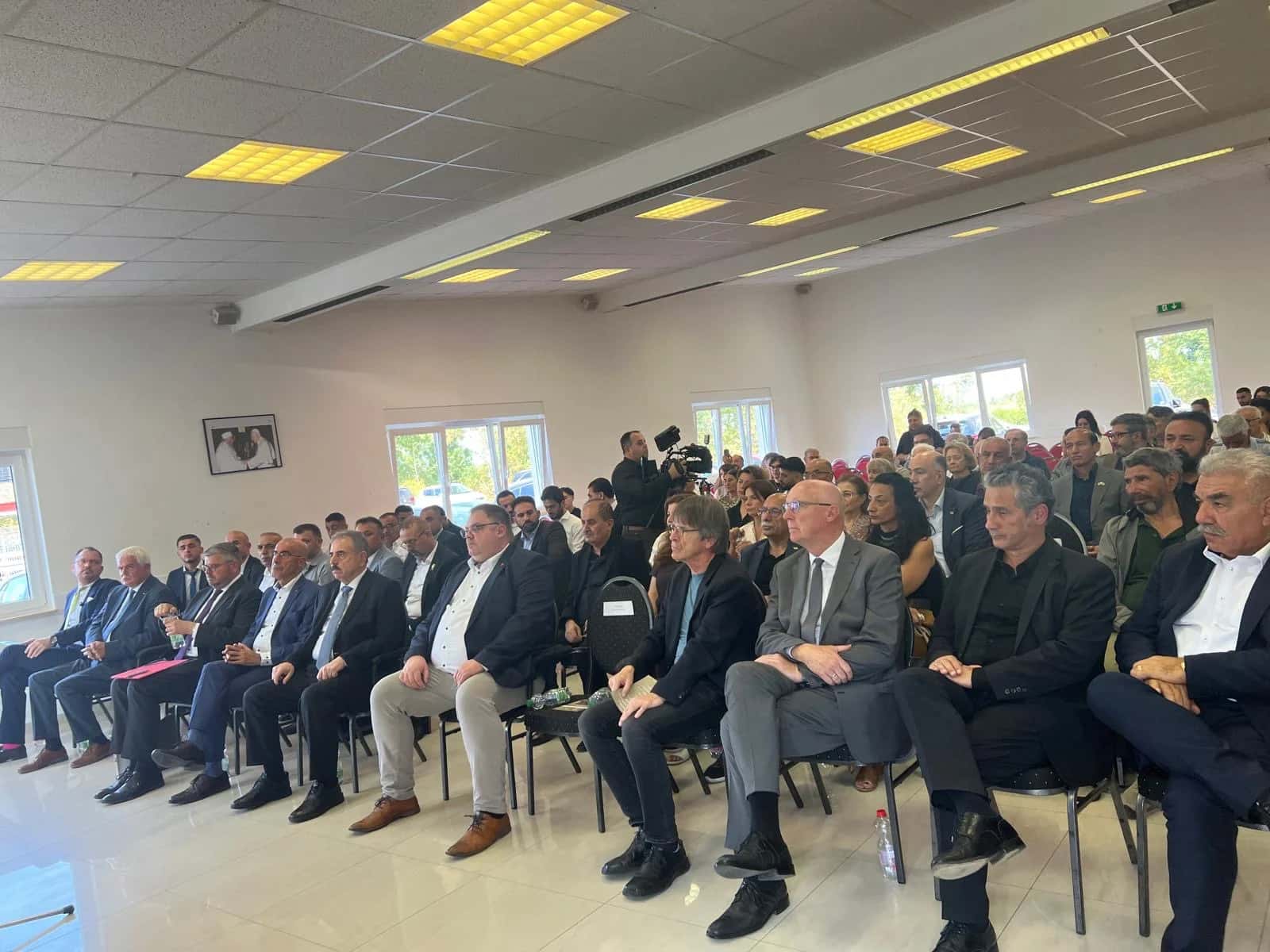
RastinewsYazidi and Kurdish organizations gathered in the German town of Kalkar to mark the 12th anniversary of the August 3, 2014 Shengal (Sinjar) genocide, calling on the international community to hold perpetrators accountable. The commemoration, led by Mala Ezdiyan (Yazidi House) and the Kurdish Community in Germany, stressed that the massacre was not merely a matter of historical reckoning — that the same pattern of persecution, from Afrin to Shengal, continues today.
The Kurdish Community in Germany and Mala Ezdiyan held a comprehensive commemoration at the Kalkar Yazidi House to mark the 12th anniversary of the massacre carried out by ISIS in Shengal on August 3, 2014. Regional politicians, German parliamentarians and numerous guests attended the ceremony, which opened with a piece dedicated to the victims by artist Bedil Brahim.
According to a report by journalist Ruken Hatun Turhallı from Germany, opening remarks were delivered by Pîr Brahîm Şaro, head of Mala Ezdiyan Kalkar, and Cahit Başar, Secretary-General of the Kurdish Community in Germany. Both speakers stressed that the genocide must not be forgotten, that solidarity with survivors remains essential, and that protecting the Yazidi community is a shared responsibility.
Başar said in his remarks that the Shengal genocide was a continuation of centuries of persecution and attempts at extermination targeting the Yazidi faith community. Praising the courageous resistance shown by Kurdish and Yazidi self-defense forces against ISIS, he said remembrance alone was not enough. Recognition of the genocide, he added, also carries political responsibility — protecting Yazidis, rebuilding Shengal, and waging a determined fight against Islamist extremism. He also thanked Germany for taking in large numbers of genocide survivors and for its support in the fight against ISIS.
Other politicians and speakers at the event recalled the crimes against humanity committed in Shengal twelve years ago, saying the genocide and the suffering of its victims must never be forgotten. Kalkar District Administrator Christoph Gerwers, Wibke Brems, head of the Green Party group in the North Rhine-Westphalia state parliament, Dr. Günther Bergmann, member of the CDU's North Rhine-Westphalia state executive board, Peter Blumenrath, the CDU state parliamentary group's spokesperson on integration policy, and journalist Tobias Huch all pointed in their speeches to Germany's and the international community's responsibility to protect Yazidis.
Speakers also called for permanent residency rights for genocide survivors living in Germany, support for rebuilding Shengal, and continued international backing to secure a safe future for people living in the region. They further stressed the need for a determined fight against radical Islamist terrorism and religious extremism in all its forms.
Kalkar Mayor Dr. Alexandra Schacky was unable to attend in person and was represented by a member of the Kalkar municipal council. The commemoration closed with a short documentary depicting the atrocities ISIS committed against Yazidis twelve years ago and the experiences of victims and survivors, underscoring the need for international solidarity and for the genocide never to be forgotten.
Speaking on behalf of Mala Ezdiyan (Yazidi House), Pir İbrahim Şaro said the 74th Yazidi Ferman carried out against Yazidi Kurds in Shengal on August 3, 2014 was not the last one directed at Kurds and Yazidis, noting that the genocide against Kurds and Yazidis in Afrin has continued in full view of the world to this day. He said the commemoration was meant to put the issue on the international community's agenda, and to secure the support of German friends and political circles for addressing the genocide while raising awareness of it.
Wibke Brems, head of the NRW Green Party group, said of the Shengal Yazidi genocide: "I believe recognition of this genocide is extremely important. At the same time, we must accurately assess the current situation. What is that situation? In my view, it is far from healthy. That is why I believe a serious protective framework is still needed, and it must come from here. The right-wing parties that exist in our country, too, are campaigning to deport people who need this protection. We categorically reject that stance."
Mehmet Tanrıverdi, deputy chairman of the Kurdish Community in Germany, said: "We organized this commemoration jointly with the Kurdish Community in Germany and the Kalkar Yazidi House over the Shengal Yazidi genocide, so that our Yazidi people know that keeping this massacre on the agenda and demanding accountability is not a burden that falls on their shoulders alone — it is a responsibility for all of us. Commemorations for this massacre are being held across Kurdistan and in the Kurdish diaspora. I hope that our Yazidi people, who were forced to leave Shengal during this genocide, will have their security guaranteed and be able to return to their sacred homeland to rebuild their lives on their own soil. I also hope that the armed militia forces in Shengal — the Hashd al-Shaabi militias and forces affiliated with the PKK — are withdrawn from the region, so that Shengal's wounds can be healed and the area rebuilt under the administration and with the economic support of the Kurdistan Region."
German journalist Tobias Huch said in his remarks: "During this genocide, I came to know Yazidi Kurds and Kurds more broadly. As a journalist, I worked to make this massacre visible. I was also involved in the process of building the Kalkar Yazidi House after the massacre. The threat that radical Islamist terrorism poses to the lives of Yazidis needs to be made visible. Shengal's people must be able to return safely from refugee camps and be supported through economic and social projects — with particular support for the education of young Yazidis."
Cemal İsmail Xelil, a survivor from Shengal's Khanasor, described a meeting he and Baba Sheikh held with then-President Masoud Barzani to secure the rescue of Yazidis during the massacre: "When the Shengal massacre happened, Baba Sheikh and I went to ask President Masoud Barzani for help. President Barzani was deeply moved. Baba Sheikh embraced him in tears and told him, 'Yazidism is finished.' President Barzani replied: 'As long as Kurdistan exists, Yazidism will exist. Even if I have to sell the clothes off my back, I will do everything in my power to rescue our Yazidi girls from ISIS's hands. If I had a plane right now, I would fly to Shengal myself and intervene immediately. Rest assured, I will not return home until Shengal is free, and I will stand on the front lines of this fight together with our Peshmerga forces.' President Barzani kept his word. He paid ransoms to free 3,000 of our girls held by ISIS. Despite all its resources, the Iraqi state did not pay a single cent toward rescuing our girls. Germany, too, took the file on the Yazidi genocide seriously and engaged with it, and for that we thank the German state. Together with Germany, 23 states have now officially recognized the genocide against Yazidis. The Kurdistan Region was the first to officially recognize what happened as genocide. Iraq still has not. That is a bitter reality. When the very state whose citizenship you hold still refuses to officially acknowledge a genocide of this scale committed against you, you can no longer expect anything from it."
Xunaf Heco, head of the Ronahi Association in Bochum, Germany, said of the Yazidi genocide: "We have gathered today on the 12th anniversary of the Shengal Yazidi genocide. First of all, I want to say this: we Kurds have not moved past genocide — genocide continues in every part of our homeland. From the very first day until today, we have reached out to political circles across Germany and other European countries, raising awareness and securing their support. We Kurds have carried out this work shoulder to shoulder with our Yazidi community. To those who have subjected Kurds to these genocides, we say: end this dirty policy of genocide against the Kurds. A hundred years on, we have not abandoned the Kurdish cause, and we never will. We may be far today from an independent, greater Kurdistan, but we are close to self-administration in every part of our homeland. We are not a people seeking war or amnesty — we are a people who want to live in peace, on our own land, on the basis of our own rights."
Finally, Kurdistan Parliament's Advisor on Yazidi Affairs Sheikh Zedo Baadi said in a statement: 'I served as a Peshmerga in the four-year war against ISIS. We did everything we could to protect our faith and Shengal. I was later nominated and appointed as Advisor on Kurdistan Region Parliament's Germany office. On the day of the Ferman, terrorists in black clothing with black flags launched extremely brutal attacks on Yazidis. They took thousands of our elderly, young, children, women and men captive and forced them at swordpoint to convert to Islam. Those who refused had their heads cut off and were subjected to inhuman torture. In my view, those who did this to the Yazidis were friends of Saddam and those who followed in his path. Unfortunately, they carried out all these inhuman acts in the name of Islam. Their aim was to break the unity of the Kurdistan Region and sow discord between the Yazidis and the Kurdish people. They failed to achieve this aim. Because the entire Kurdish people in Duhok, Erbil, Sulaymaniyah, Kirkuk, Barzan, Germiyan and Zakho — that is, Kurds in every city — opened their homes to us and stood by us. This solidarity gave us strength, and with that strength we rose up in resistance.'