
AGENDA3 MIN READ
Women's movement, DBP hold masculinity workshop for men in Urfa
A report by the Mesopotamia Agency said the Free Women's Movement (TJA) and the Democratic Regions Party (DBP) held a workshop on masculinity in Urfa.
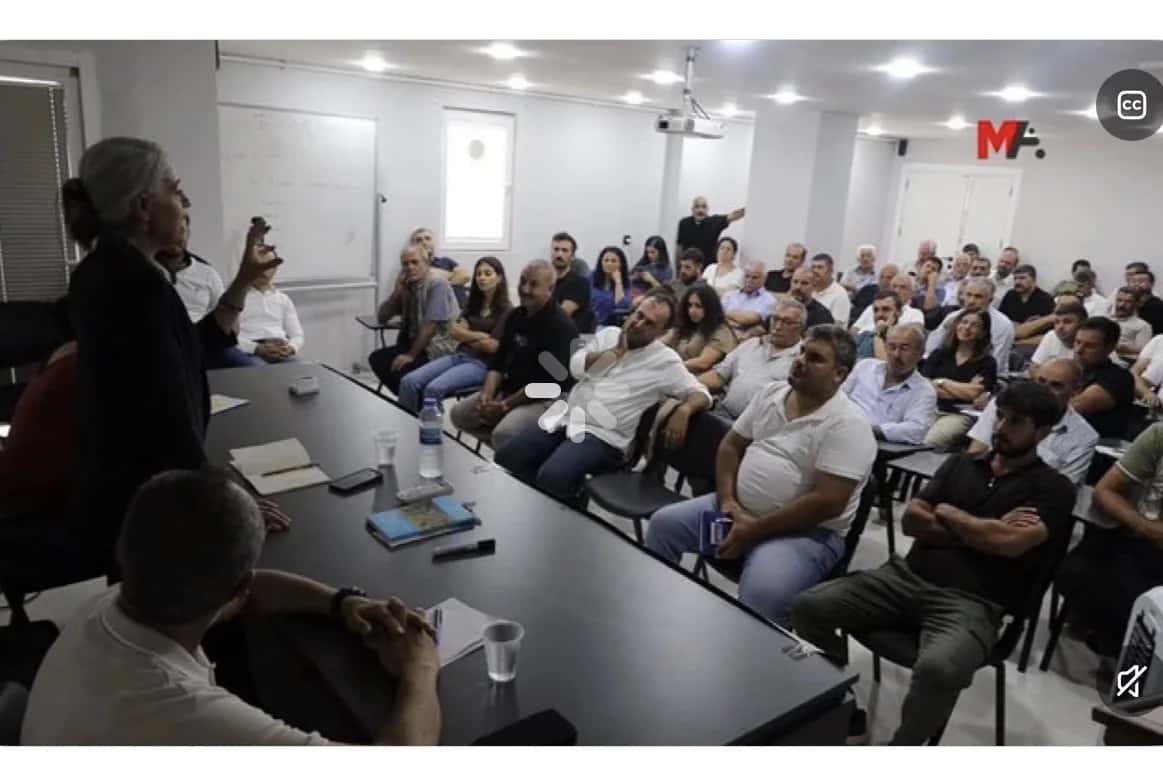
RastinewsA report by the Mesopotamia Agency said a workshop on masculinity was held in Urfa.
According to the report, men from Urfa who took part said neither society nor the state wants to see men's power taken from them, but that change and transformation are essential — and that this transformation must begin with men.
The report's details were as follows:
To make gender inequality visible, the Free Women's Movement (TJA) and the Democratic Regions Party (DBP) jointly organized a workshop aimed at transforming men in Urfa. The workshop critically examined gender roles, dominant patterns of masculinity and the cycle of violence. A large number of men took part, sharing their own experiences as part of the awareness-raising effort.
'THE WORK MUST SPREAD'
Enes Milli, who took part in the workshop, said: "Masculinity workshops expose the mindset of masculinity inside us and reduce it to a minimum. We have internal debates, and the problems that surface in them lead to solutions. In fact, the problems we discuss are the same everywhere. We can overcome them through study and organizing. Here, work is being done in every area of life to support a free, equal partnership. I hope this spreads further."
'FREEDOM IS POSSIBLE WITH WOMEN'
Participant Yeşil Tepe said: "We need to internalize a democratic, women's-freedom-oriented view of women and apply it to our lives. We have to start by applying it within ourselves and our families first. As the Leadership's paradigm states, if women are freed, society is freed. That way we too would live in a more comfortable society."
'THE SOCIAL ROLES WE ARE TAUGHT MUST BE DISMANTLED'
Mehmet Şahin said the issues discussed in the workshop were not new to him, pointing to the social roles men are taught. "One of the things we discuss here is the social roles we've been taught," Şahin said. "For example, the more my wife submits to me at home, the more of a man I supposedly am. If that's not the case, I'm labeled henpecked in society. We need to dismantle and defeat this mindset. Living up to the kind of personality the Leadership describes is very difficult for us, but we must put in the labor, effort and strength needed to get there. The more workshops like this take place, the faster this mindset of domination will be broken."
'PHILOSOPHICAL AND IDEOLOGICAL GROUNDING IS NEEDED'
Fethi Tapaç, one of the Arab citizens present, said the masculinity workshop was important for achieving social change and transformation, and noted that a patriarchal mindset runs through every area of life. "We will keep living with this for some time yet," Tapaç said. "For it to change and transform, we need a culture, an accumulation of knowledge and awareness-raising. We need to build the philosophical and ideological groundwork for this. That requires patience, because people won't easily give up the power they hold. But I believe we can overcome this through education."
Tapaç also spoke about how the patriarchal mindset manifests among Arab communities. "We experience this very intensely, especially as Arabs living in Riha," he said. "In the Arab community I live in, for example, a woman might tell her husband, 'go marry a second wife so I can be rid of you.' This has also become a culture and a tradition. Women themselves have internalized it. Women share some of the responsibility for this — through polygamy, through the authority they grant men, through accepting men as an absolute, hundred-percent value. That's why women, too, need to change and transform along with us men."
'THE ARAB COMMUNITY IS WATCHING THE KURDISH MOVEMENT CLOSELY'
Tapaç said the patriarchal mindset in society is fed by the state. "Society and the state alike don't want the power in men's hands to be taken away," he said. "Because once men's dominance goes, the state's dominance goes with it. That's why change and transformation are essential, and that transformation must start with men first."
Pointing to the change brought about through the Kurdish Freedom Movement's struggle, Tapaç said: "Through struggle, people reclaim their own history, selfhood and identity. This is also leading the change and transformation of the peoples of Kurdistan. That's why, as Arabs, we follow the Kurdish Freedom Movement closely. We are also, in our own small way, taking what belongs to us."