
Jury Convicts Man Who Blinded Salman Rushdie in Onstage Stabbing on Terrorism Charges
A federal jury in Buffalo, New York, convicted Hadi Matar on all charges, including participating in an act of international terrorism, for the 2022 knife attack that blinded author Salman Rushdie in one eye.
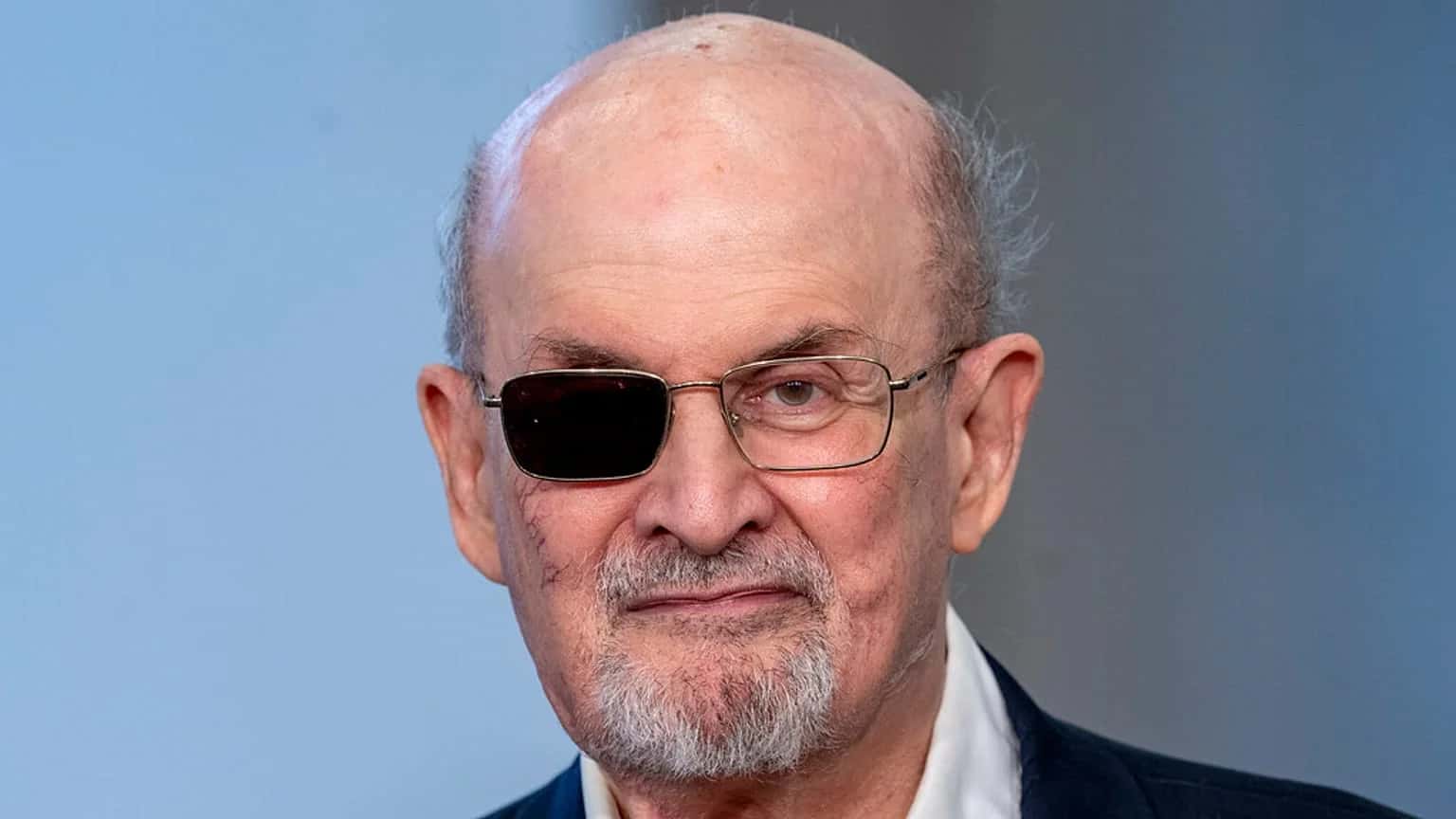
RastinewsA U.S. court has found the man who stabbed British-American author Salman Rushdie in 2022 guilty on every charge he faced, including participating in an act of international terrorism. Rushdie, born in India, drew the wrath of the Islamic world for his novel "The Satanic Verses."
Hadi Matar was convicted of federal terrorism charges for stabbing Rushdie at a public event in 2022, an attack that cost the author the sight in one eye. Prosecutors said the assault stemmed from death threats Rushdie had faced for years over his novel.
Matar, a U.S. citizen of Lebanese descent, stood trial in New York.
A jury at the federal courthouse in Buffalo deliberated for roughly two hours before convicting the 28-year-old Matar on all three counts. He was found guilty of attempting to provide material support to Hezbollah, the Iran-backed Lebanese group the United States designates as a terrorist organization, of participating in an act of terrorism transcending national borders, and of providing material support to terrorists.
Matar had already been convicted of attempted murder over the same attack in a New York state court and sentenced to 25 years in prison. He now faces a possible life sentence on the federal charges. His sentencing is set for November 3.
The federal trial ran more than a week. Rushdie, 79, testified for the prosecution. The defense called no witnesses, including Matar himself.
A Death Fatwa Over "The Satanic Verses"
Rushdie had lived under threat since the 1988 publication of his fourth novel, "The Satanic Verses." Iran's then-supreme leader, Ayatollah Ruhollah Khomeini, denounced the book as blasphemous and issued a fatwa in 1989 calling for the deaths of Rushdie and those involved in publishing it.
The fatwa carried a bounty worth millions of dollars for Rushdie's killing. The book's Japanese translator, Hitoshi Igarashi, was murdered in 1991.
Iran's government distanced itself from the fatwa in 1998. But according to U.S. prosecutors, Hezbollah's secretary-general endorsed it again in 2006, and Khomeini's successor, Ali Khamenei, reaffirmed it in 2017.
Evidence presented by prosecutors showed Matar had researched the fatwa for more than a year before the attack. On August 12, 2022, he stabbed Rushdie as the author took the stage to speak at the Chautauqua Institution in Mayville, New York.
Rushdie was stabbed more than ten times in the head, neck, torso and left hand. He lost sight in his right eye and suffered internal organ damage. One other person was injured in the attack. Audience members subdued Matar at the scene.
Matar, who was born in the United States and also holds Lebanese citizenship, was convicted of attempted murder in state court in February 2025 and sentenced three months later to 25 years in prison.
After the fatwa, Rushdie spent nearly a decade living in hiding under British police protection before later settling in New York. In 2024 he published a memoir, "Knife: Meditations After an Attempted Murder," recounting the attack, his recovery and its psychological toll.