
What Is Cruelty? Part 4
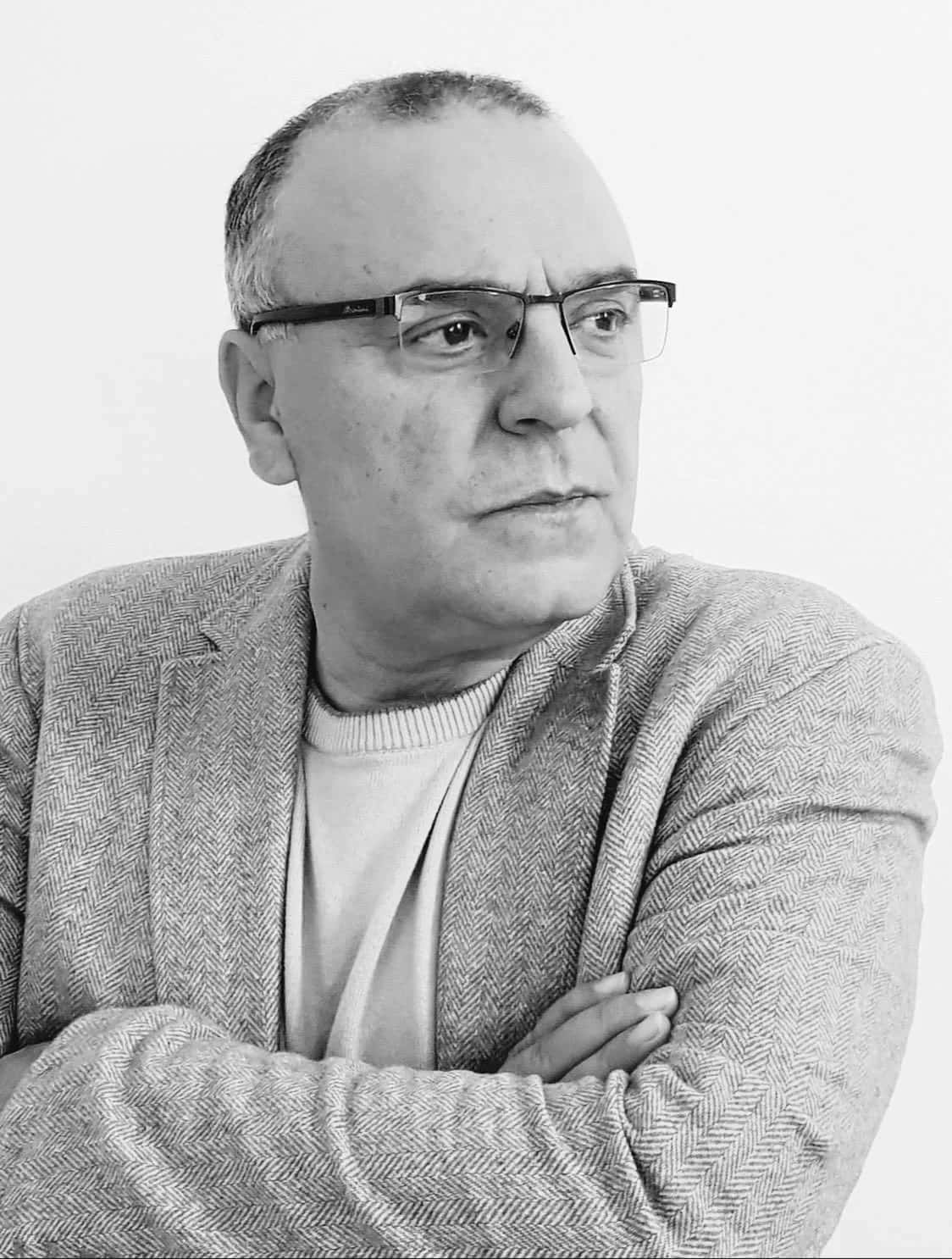
RastinewsPrisons are, above all, where the innocent live…
In societies gripped by cruelty — genocides, pogroms, mass violence — the third party often plays dead. It sees but acts as if it does not see. It knows but stays silent as if it does not know. This withdrawal of the witness is not merely a moral collapse; it is a mechanism that multiplies deaths. Cruelty persists not only through the perpetrator's act but through the bystander's silence.
There is another dimension here: the inability to forget. Depression is, in a way, a state of not being able to forget. It carries within it a loss, and the void that loss opens. A person falls into that void again and again and struggles to climb out. Failing to end what is over, failing to leave behind what has already happened, is a failure to process loss psychically.
Where the capacity to cope weakens, the past does not simply stay in the past; it seeps into the present and occupies life from within. Yet the fact that historical cruelties are not forgotten is not always the result of an individual depressive structure. More often, the issue lies in interference with mourning itself. The perpetrator does not merely kill; he also distorts meaning. He reverses the crime, declares the victim the culprit, denies, belittles, even threatens again. In this way trauma does not remain simply something that happened; it persists as a constantly renewed threat. Mourning then cannot take place. Closure cannot occur. Trauma clings to the present like a frozen fragment of time. Yet for trauma to be processed, it must be remembered. But what is meant here is not simple recollection. Remembering means recalling with feeling — being able to touch the pain, put it into words, make sense of it. In this sense, remembering is the precondition for being able to forget. Genuine remembering includes recognition of the victim's experience: that what happened to them is not denied, not reversed, not instrumentalized. Only this way does trauma stop being a blind repetition and become a historical event instead. Because pain that is never reflected on, never spoken, never placed within history keeps circulating in the psyche. Pain that is remembered — recognized, spoken, made sense of — gradually loses its grip on the present. That is why some cruelties are never forgotten. Because they were never allowed to be forgotten.
And that is why remembering is the most effective form of forgetting. Because what is truly remembered eventually belongs to history — and what belongs to history can no longer hold the present captive with the same force.
We may say "historical events are in the past." But cruelty and its narrative find ways to keep themselves alive. The past does not stay as far behind as we think. People remember events not as they happened but as they wish to remember them. This is not merely an individual distortion; it is often a socially organized form of remembering. Studies conducted in prisons show it: most inmates describe themselves as "innocent" — often as "very innocent." These are not political prisoners; these are ordinary crimes. The crime does not disappear, but the narrative changes. Today too, some of those who look most "innocent" are perpetrators reconstructed within a narrative. Because narrative displaces responsibility.
This mechanism is plainly visible in femicides. In so-called "honor" and "custom" killings — once the subject of films, still carried out in various forms today — the blame is usually loaded onto concepts: onto custom, onto honor. The man withdraws; he ceases to be the perpetrator and becomes someone who "had no choice." Sometimes his hand slipped. Sometimes he was provoked. Sometimes he could not control his anger. In this way the crime is written onto the person who was killed. The woman is killed — yet she is the one declared guilty. At this point the killing is no longer merely a physical act; it becomes a reversal of meaning. Here the perpetrator steals from the victim not only her life but also her innocence and her status as victim. Perhaps this is the final and deepest massacre.
Because when a society, a state or a legal order begins to reproduce this narrative — justifying the perpetrator, granting him reduced sentences, calling him a "victim of fate" — the violence happens a second time. The court registers the perpetrator's crime and hands down a sentence. On the surface the positions are clear: the victim in the grave, the perpetrator in prison. But at the same time, on another level, innocence is handed back to the perpetrator. He is understood, even turned into a victim.
He is declared a "victim of fate." Not the one who was killed, but the killer/perpetrator becomes the VICTIM of fate… This innocence is sometimes restored through pardons, sometimes through social discourse; his reputation is all but returned to him. The perpetrator is punished, then his sentence is reduced, then he is pardoned, and afterward the reasons for what he did are "understood" and explained. The victim, meanwhile, is killed — and then blamed. In this way cruelty persists not only by killing but by rewriting the story. And perhaps this is why some wounds never close. Because they were not only lived through — they were also remembered wrongly. Armenians, leftists, Alevis, Kurds, Fethullahists… those we call the "other"… those we have othered… the others… they are said to have forced us to do certain things. The real guilty party is them. We are innocent… We are not, in this framing, victims of fate… Because Turks are said to be clever, free, strong… A Turk is not a victim… A Turk only makes victims of others…
And what if the witness plays dead?
Samuel Gerson wrote an important essay on witnessing and its significance ("When the Third Is Dead: Memory, Mourning, and Witnessing in the Aftermath of the Holocaust," 2011, Psyche, issue 3). In the relationship between perpetrator and victim there is almost always a third party. This third party consists of witnesses, bystanders, those who see. It is often precisely their stance that proves decisive in bringing cruelty to an end. Because the third party itself splits into factions: those who endorse the cruelty, those who stay silent, and those who stand with the victim. Until those who side with the victim grow in number, the asymmetric relationship between perpetrator and victim persists; the perpetrator's power draws legitimacy not only from his own violence but from the surrounding silence.
If the third party does not merely watch but actively intervenes, cruelty is often interrupted; sometimes the perpetrator is even forced to retreat from his act. For this reason the position of the third party is not only moral but structural. Yet when it comes to collective traumas, this third party very often chooses silence. Not speaking, looking away, and suppression turn into something like a collective defense mechanism. When the Nazis came to power, Germans boasted about Hitler because he built highways. Isn't Erdoğan presented today, in much the same way, as a leader who builds roads and bridges? The Evren junta, too, was embraced through the introduction of color television and privatization. The "free press" was very free back then as well — free enough to spend years reporting on an intimate matter concerning the body of Bülent Ersoy, who was undergoing gender transition: the fate of her male organ.
Yet nothing that is silenced truly disappears. On the contrary, it circulates across generations through other channels. As a child identifies with its mother and father, it inherits not only their conscious attitudes but their unconscious burdens as well. This is why events that took place in the past, events that do not belong to the child — a genocide, an experience of mass violence — find a place in the child's psyche. Everything that is ignored, suppressed, never mourned remains buried within the parents, and through identification that burial is passed on to the child. In this way the child internalizes a past that is not its own, a "grave" that is not its own. In this sense, after collective traumas, a person's inner world turns into a kind of graveyard. What lies buried within it is not only the dead but also mourning that was never carried out. When mourning is not undertaken, not completed, it does not dissolve over time but instead freezes in place and continues to be carried within the psyche. This deeply affects a person's relationship with life. For someone who carries a "corpse" within — who holds unprocessed loss and trauma inside — it becomes difficult to hold on to life, to take pleasure in it, to form a living, creative relationship with it. Because life's energy is constantly overshadowed by the past. Mourning that cannot be finished becomes endless mourning.
We are unhappy. We are restless. We are angry. We are loveless. Whatever inside us is alive, beautiful or positive, the dead within us rots it away.
At this point an intergenerational bond forms: an invisible but powerful "psychological umbilical cord" links a trauma suffered two or three generations earlier to a newborn child. Through this cord the child inherits not only love but also trauma. Identity is thus shaped not only by individual experience but by inherited wounds. This transmission often produces what we call a "negative identity." A person builds themselves as the carrier of a loss, a pain, a victimhood they never directly lived. A constant lack, a weight, a state of mourning sits inside that identity. In such societies, building a life around joy, peace and lightness becomes hard. Happiness can feel like betrayal; life itself is suppressed under the weight being carried. Being happy breeds something close to guilt. Feeling joy, delight and pleasure become a "crime" to be avoided. So the issue is not only what happened in the past, but how it was processed, whether it was talked about, whether it was mourned. Every unspoken trauma is passed on in silence; every transmitted trauma can only begin to resolve once it is made visible and worked through.
The oppressor's self-righteousness….
Cruelty is understood not only through the perpetrator's act but through the mental and cultural framework that accompanies it. When "the victim's violence" is at issue, the cruelty of reason often goes unquestioned. What becomes visible is not the source of the violence but its justification. Victimhood turns into ground that legitimizes violence. Everyday life offers simple examples: when someone who was wrongfully attacked later gains power and inflicts far heavier violence on the other side, most people count it as "deserved." A disproportionate response is thus accepted as though it had taken the place of justice. But what happens here is not justice — it is revenge dressed in moral clothing.
At this point a cultural tendency appears: tolerance shown toward the victim's revenge. This tolerance does not stay at the individual level; it also lays the ground for collective violence. This way of thinking hands the perpetrator a ready-made narrative. Almost no oppressor sees himself as the agent of arbitrary evil. Instead he always builds a story that justifies himself: a narrative of threat, a myth of self-defense, a fiction of "having no choice." The oppressor often finds a victim's role and narrative to make his cruelty look "justified" and to strengthen his moral standing. Tales of betrayal and being stabbed in the back frequently serve this purpose. This is why conspiracy theories get produced.
These narratives are not only meant to persuade others; they are also an effort to pacify the judging voice within the person — in psychoanalytic terms, the superego. Through these stories the perpetrator positions himself not as guilty but as the bearer of a necessary act. Violence then stops being a moral burden; it is experienced as duty, even as a right. This mechanism becomes even more pronounced at the collective level. In historical instances of violence — ethnic conflicts, mass expulsions or genocidal processes, for example — the perpetrating side often positions itself as compensating for a past wrong it claims to have suffered. The narrative runs: "They did this to us, so we responded in kind." This discourse does not merely justify the violence committed; it also inverts it: the perpetrator begins to see himself as the victim, and the victim as a perpetrator who deserved it.
This inversion suspends moral responsibility. The person now experiences himself not as an agent of cruelty but as an enforcer of justice. Moreover, by blaming the other side, he frames his own violence as an inevitable reaction: "They forced us into this." At this point it is not only the act that gets distorted, but the moral meaning of the act as well. Living inside such a psychology, no sense of guilt arises, because guilt has already been erased within the narrative. Violence stops being an ethical problem; it becomes part of identity and a sense of being in the right. This produces one of the most dangerous forms of cruelty: cruelty that does not see itself as cruelty.
Dirk Juelich, in his 1991 essay "Wer ist eigentlich betroffen? Aspekte zur psychoanalytischen Kulturkritik nach Auschwitz" ("Who Is Actually Affected? Aspects of Psychoanalytic Cultural Criticism after Auschwitz"), points to the following: when someone within a community says "our ancestors were wronged," the natural response to that statement could be curiosity, empathy or a move toward understanding. On hearing such a claim, a person might ask "what happened?", "how did it happen?" But when it comes to collective traumas, this natural reaction is often replaced by defensive aggression. What stands out here is that a pain suffered in the past is perceived today as though it were still a threat. It is as if remembering becomes equivalent to being wounded again. Remembering then serves not confrontation but denial and attack. This is why, when the Armenian, Dersim or Pontic Genocide is mentioned, curiosity does not stir in most of us.
This dynamic stems from collective trauma that has not been emotionally worked through or processed. Trauma that has not been reflected on, not symbolized, only repeats itself. And this repetition is not a healing act of remembrance; it is instead a form of reminder that wounds the victim anew. The difference between talking about trauma and working through trauma emerges exactly here. The first often keeps the pain alive, the second carries the possibility of giving it meaning and transforming it. Constantly talking about trauma without analyzing it, without turning it into a narrative or a thought, means trapping the victim inside time.
The text's second layer questions the unsettling relationship evil forms with everyday life. The narrative often invoked through the Nazi example — "a good father, a good husband, but someone just doing his job" — is a defense mechanism that normalizes evil. Juelich's objection to this is radical: in his view, the "crumbs of goodness" in a person's private life cannot be seen as an element that offsets the evil he has done. The issue here is not the sum of behaviors but the emotional and human capacity behind those behaviors. Buying a birthday gift is not, on its own, a moral marker. If the act carries no emotional contact, no sincerity, no vitality — if it is merely a duty fulfilled — then it carries no human meaning either. This is exactly what Juelich criticizes: humanity kept up in form while emptied of content. When even having fun becomes a duty, it produces discipline, not joy. Giving a gift stops being an expression of love and becomes the performance of a role.
The picture that emerges, then, is this: unprocessed trauma drives the individual and society toward defensive aggression, while an emotionally impoverished state of humanity normalizes evil. On one side, the pain of the past repeats without reflection; on the other, today's acts become mechanical, stripped of feeling. When these two lines converge, both remembrance and morality risk losing their content.
Reading Juelich, one detail stands out. Fascism dehumanizes people and thereby removes their destruction from being a moral, ethical or human problem. But a risk arises here too. In trying to understand fascists, there is a danger of unknowingly adopting their ways of thinking and their operating mechanisms — even beginning to think like them. Juelich's phrase about the fascist, "the loss of human traits," must be handled carefully at this point. It should be understood as an observation, not a call for dehumanization.
So the point should not be to strip the fascist of his humanity, but to show how fascist processes erode a person's human traits.
Note: Fascism changes its disguise — sometimes it is a skirt suit, sometimes a miniskirt, sometimes a necktie.
Sometimes it is Mine Kırıkkanat as well. While preparing this piece, I saw on social media that Mine Kırıkkanat had called Kemal Kılıçdaroğlu a "sword leftover." Historically, that phrase has been directed mainly at non-Muslims as a traumatic, threatening reminder; this time it targets Alevis. Genocide is an unforgivable crime. Genocide is a shame difficult to reckon with. And precisely here, the fascism rooted in these lands can turn genocide from a source of shame into a matter of pride. Circulating the phrase "sword leftover" with pride turns genocide not into a reminder but into an object of pleasure. Producing pleasure from remembering genocide… When cruelty reaches this point, it pushes against the limits of science, conscience, humanity and psychology. Human trauma being circulated as a threat, and an aggressive pleasure being produced from it… This is not merely a discourse; it is also a profound collapse. A person's descent to this point signals an emotional bankruptcy. That bankruptcy is at the same time an emotional paralysis: the numbing of feeling, the dulling of the capacity to feel. Fascism produces exactly this state of mind: by shocking its victim, rendering them helpless, and estranging them from their own emotions.
As fascism strips itself of humanity, it tries to strip its victim of humanity too. Survivors of Nazi concentration camps were reduced to skin and bone; the Nazis called their victims "insects," "germs." Fascism tries to make its victim live through their own dehumanization. It confronts them with the jarring disbelief produced by the feeling of "this is impossible," "this cannot be." Witnessing such a fall reveals to the victim just how fragile a human being can be. The children of genocide survivors — the "sword leftovers" — are made to confront this wound all over again. The wound is reopened; the pain is put back into circulation. Seeing that there may be no limit to how low a human being can be brought… This is precisely what fascism is: making possible what we call "this cannot be," "this is impossible," "no one could do this."
Fascism is a production of helplessness.
One of fascism's best-known traits is this: producing an indifference capable of saying "serves them right" in the face of cruelty inflicted on people. Creating a position that takes pleasure in hearing cruelty recounted… This is not just wickedness; it is also organized helplessness, a systematic production of impasse. The effort to "normalize" genocides and acts of cruelty… But perhaps something else is possible right here too. Helplessness is not just exhaustion. Within helplessness lies a possibility — help itself lies hidden there. Because the word itself contains "help": uniting what has been scattered, reconnecting what has been broken, rebuilding resistance. Hope… Perhaps if the oppressor has cruelty, the victim too has a helplessness that needs to be united — and beneath that helplessness, an endless, as yet directionless anger accumulating.
The views expressed here are the author's own; they may or may not coincide with the editorial line of Rastinews. Rastinews is a free platform open to differing views.